Nuclear Medicine Mastery
Introduction to Nuclear Medicine
Seeing the Body at Work
Most medical imaging, like X-rays or CT scans, gives us a snapshot of the body's anatomy. It’s like looking at a map of a city, showing all the streets and buildings. Nuclear medicine, on the other hand, shows us how the city is functioning. It reveals the traffic flow, where the power is being used, and which areas are bustling with activity.
This unique field of medicine uses tiny amounts of radioactive materials, called radiotracers, to diagnose and sometimes treat diseases. Instead of just seeing what an organ looks like, doctors can see how it's working. Is the heart pumping blood efficiently? Are the kidneys filtering waste properly? Are there cancer cells consuming sugar faster than normal tissue? Nuclear medicine helps answer these questions by tracking the biological processes in real time.
From Discovery to Diagnosis
The story of nuclear medicine begins with the discovery of radioactivity in 1896 by Henri Becquerel, and the subsequent pioneering work of Marie and Pierre Curie. But it was Georg de Hevesy who first imagined using these radioactive elements as tracers. In the 1920s, he used a radioactive isotope of lead to study how plants absorb minerals from the soil. This was the birth of the "tracer principle," the core idea of nuclear medicine.
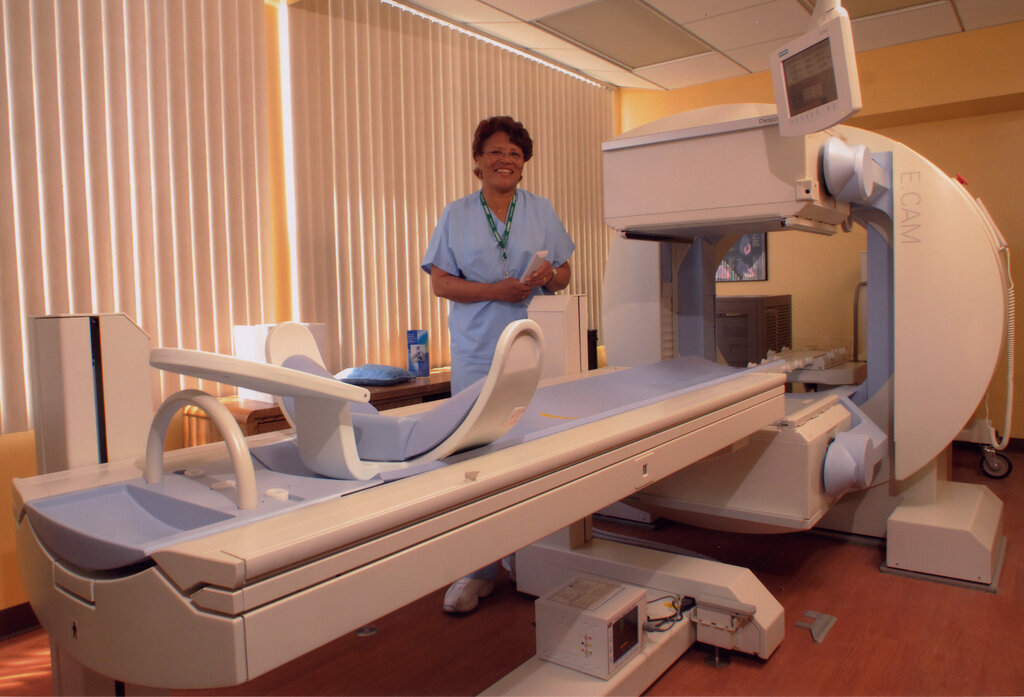
Major advancements came with the invention of the cyclotron in the 1930s by Ernest Lawrence, which allowed for the creation of new artificial radioisotopes suitable for medical use. By the mid-20th century, researchers were using radioactive iodine to study and treat thyroid conditions. The development of the first scanners, like the gamma camera in the 1950s, finally made it possible to create detailed images of how these tracers were distributed throughout the body.
The Physics of Function
To understand nuclear medicine, we need to touch on some basic physics. It all starts with atoms. As you may remember, atoms have a central nucleus made of protons and neutrons. The number of protons determines the element (e.g., six protons is always carbon). However, the number of neutrons can vary. Atoms of the same element with different numbers of neutrons are called isotopes.
isotope
noun
Variants of a particular chemical element which differ in neutron number. All isotopes of a given element have the same number of protons but different numbers of neutrons in each atom.
Some isotopes have an unstable combination of protons and neutrons. To become stable, they release energy in a process called radioactive decay. The energy released is radiation. The specific unstable isotopes used in medicine are called radionuclides.
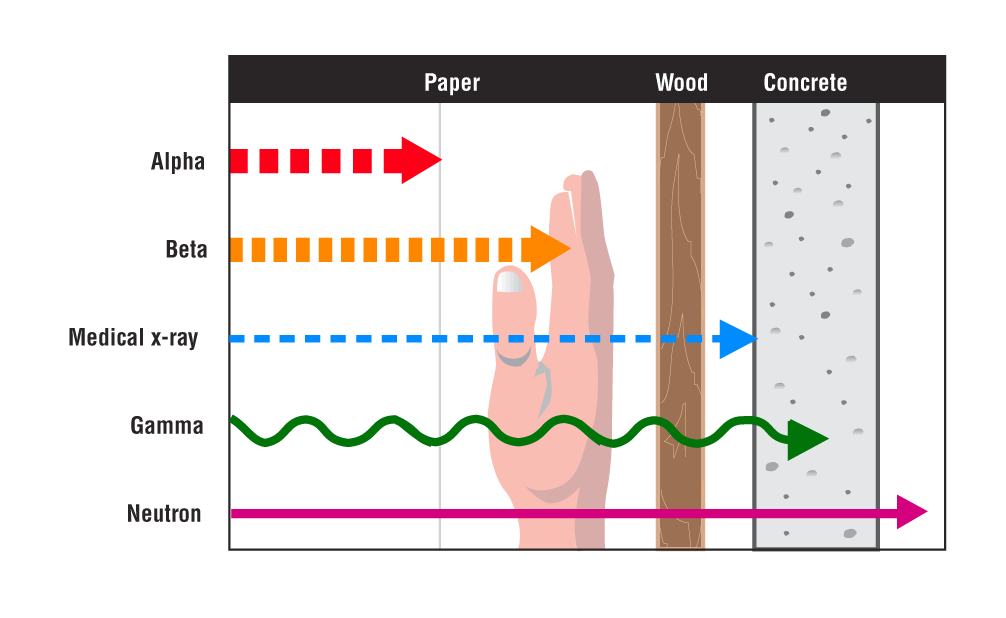
There are different types of radiation, such as alpha particles, beta particles, and gamma rays. For diagnostic imaging, gamma rays are ideal. They are high-energy light waves that can easily pass out of the body and be detected by a special camera, allowing us to see where the radionuclide has traveled.
Radiopharmaceuticals: Smart Probes
The key to nuclear medicine isn't just the radionuclide; it's how it's delivered. A radionuclide on its own wouldn't know where to go in the body. That's why it's attached to a specific molecule, called a pharmaceutical. Together, they form a radiopharmaceutical.
The pharmaceutical part acts as a courier, designed to be taken up by a specific organ, tissue, or type of cell. For instance, to image bones, a radionuclide can be attached to a compound that naturally accumulates in areas of bone growth or repair. To track cancer, it might be attached to a glucose-like molecule, since many tumors consume large amounts of sugar.
Once the radiopharmaceutical is administered, usually by injection, it travels through the body to its target. The radionuclide then emits gamma rays, and a gamma camera tracks these signals to create an image showing the location and concentration of the radiopharmaceutical. This gives doctors a picture of physiological function, not just structure.
Radiopharmaceutical = Radionuclide (the signal) + Pharmaceutical (the courier)
This same principle can also be used for therapy. By choosing a radionuclide that emits cell-damaging particles (like alpha or beta particles) and attaching it to a molecule that targets cancer cells, doctors can deliver radiation directly to a tumor while minimizing harm to surrounding healthy tissue. It’s a way of sending a tiny, targeted treatment right where it's needed most.
What is the fundamental distinction between nuclear medicine imaging and anatomical imaging techniques like CT scans or X-rays?
Who first established the "tracer principle" by using radioactive isotopes to study biological processes in plants?