Nuclear Fusion Explained
Introduction to Nuclear Fusion
Combining Atoms for Energy
At the heart of every star, including our sun, a powerful process is constantly at work. It’s called nuclear fusion. Simply put, fusion is the process of taking two light atomic nuclei and combining, or fusing, them into a single, heavier nucleus. This process isn't just a simple merger; it releases an enormous amount of energy.
Think of it like squishing two small, fluffy balls of dough together to make a single, denser one. In the process, some of the original mass is converted directly into energy, following Einstein's famous equation, . This conversion is what makes stars shine and what scientists hope to harness for clean energy on Earth.
The Recipe for a Star
If fusion is so powerful, why don't atoms all around us just fuse together? It’s because atomic nuclei have a natural resistance to getting close. Nuclei are positively charged, and just like trying to push the north poles of two magnets together, they strongly repel each other. This repulsive force is called the Coulomb barrier.
To overcome this barrier and achieve fusion, two extreme conditions are needed: incredible temperature and immense pressure.
Temperature: The nuclei must be heated to millions of degrees Celsius. At these temperatures, electrons are stripped from their atoms, creating a superheated soup of charged particles called plasma. The high temperature gives the nuclei enough kinetic energy to move at tremendous speeds, allowing them to slam into each other with enough force to overcome the Coulomb barrier.
Pressure: The plasma must be confined at extremely high pressure. This pushes the nuclei close together, dramatically increasing the chances that they will collide and fuse.
Inside a star, the immense gravitational force provides both the high pressure and the high temperature needed to sustain fusion reactions in its core.
Fusion vs. Fission
Nuclear fusion is often confused with its opposite, nuclear fission. While both processes release vast amounts of energy from atomic nuclei, they work in fundamentally different ways. Fission is what powers today's nuclear power plants. It involves splitting a single, heavy, and often unstable nucleus, like uranium-235, into two or more smaller nuclei.
Fusion combines light nuclei, while fission splits heavy ones. Both release energy, but the mechanisms are inverses of each other.
| Feature | Nuclear Fusion | Nuclear Fission |
|---|---|---|
| Process | Joins light nuclei (e.g., hydrogen) | Splits a heavy nucleus (e.g., uranium) |
| Required Conditions | Extremely high temperature and pressure | Typically initiated by a neutron collision |
| Natural Example | Powers the sun and other stars | Occurs rarely in nature |
| Byproducts | Generally produces stable elements like helium | Produces radioactive waste |
The Sun's Power Source
Every second, the Sun converts about 600 million tons of hydrogen into helium through fusion. The core of the Sun is a natural fusion reactor, with temperatures around 15 million degrees Celsius and pressure that is over 200 billion times greater than the atmospheric pressure on Earth. These conditions are perfect for smashing hydrogen nuclei together.
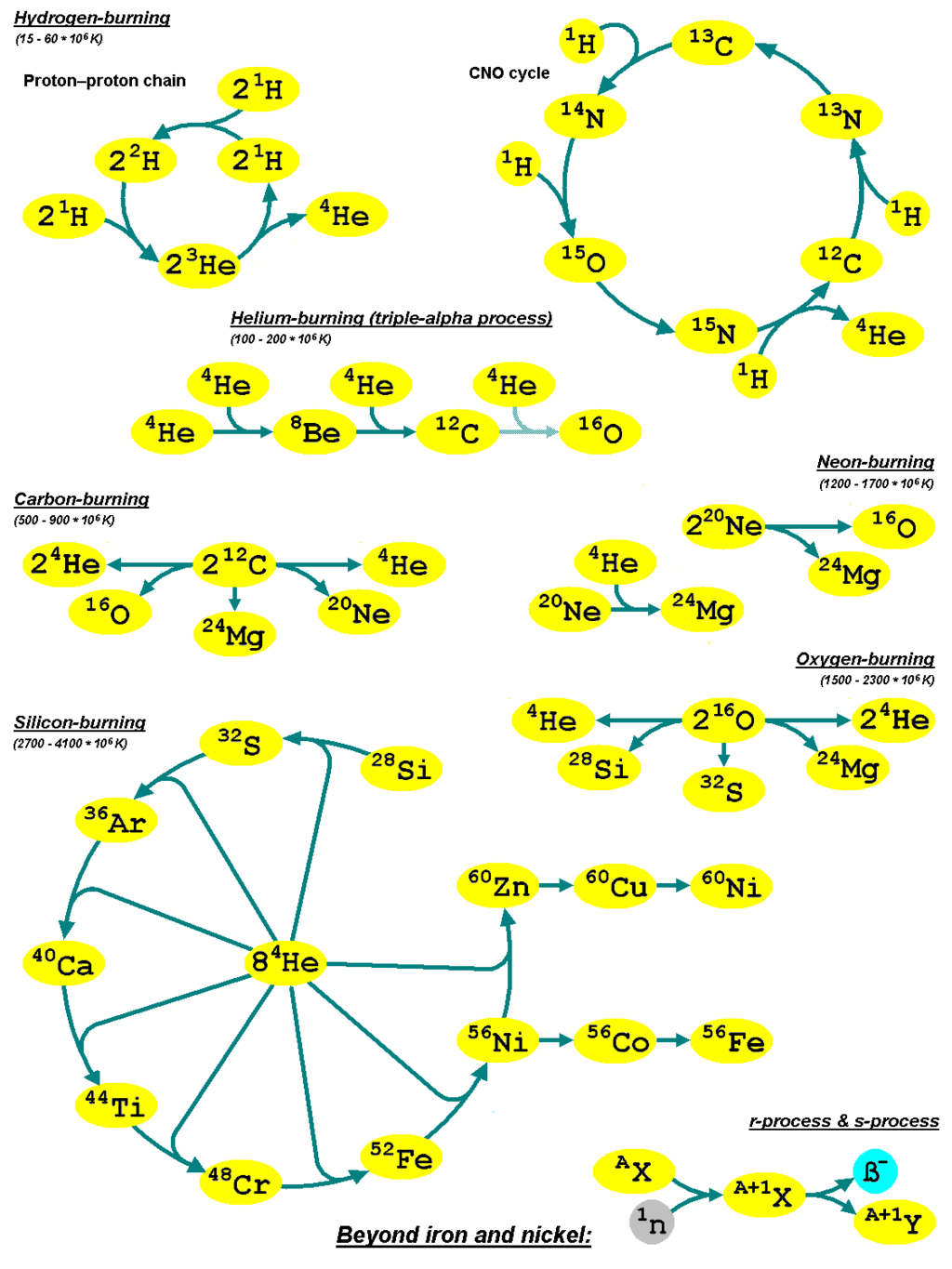
This stellar furnace is what has powered our solar system for billions of years, providing the light and heat necessary for life to exist on Earth. The quest to replicate this process on our planet is one of the biggest challenges in science and engineering, with the promise of a nearly limitless, safe, and clean source of energy.
Let's check your understanding of these core concepts.
What is the fundamental process of nuclear fusion?
Why are extremely high temperatures necessary for nuclear fusion to occur?
Understanding fusion is the first step toward appreciating the forces that shape our universe and could one day power our world.