Nuclear Fusion Explained
Introduction to Nuclear Fusion
The Power of Stars
At its heart, nuclear fusion is about building things up. It’s the process of taking two light atomic nuclei and merging them into a single, heavier one. This process might sound simple, but it releases an astonishing amount of energy. It’s the same reaction that has powered our sun, and every other star in the universe, for billions of years.
Nuclear fusion, the physical process that powers our sun, occurs when atoms are pushed together at extremely high temperatures and pressure, causing them to release tremendous amounts of energy by merging into heavier atoms.
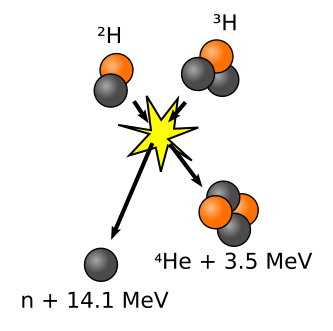
Think of atomic nuclei like two magnets with their positive poles facing each other. They naturally repel. To get them to touch, you have to push them together with incredible force. In the world of atoms, this force comes from immense speed and proximity. When two light nuclei, such as isotopes of hydrogen, are forced together, they can fuse into a heavier element like helium. The new nucleus has slightly less mass than the two original nuclei combined. This missing mass isn't lost; it’s converted directly into energy, following Einstein's famous equation, .
Cosmic Furnaces
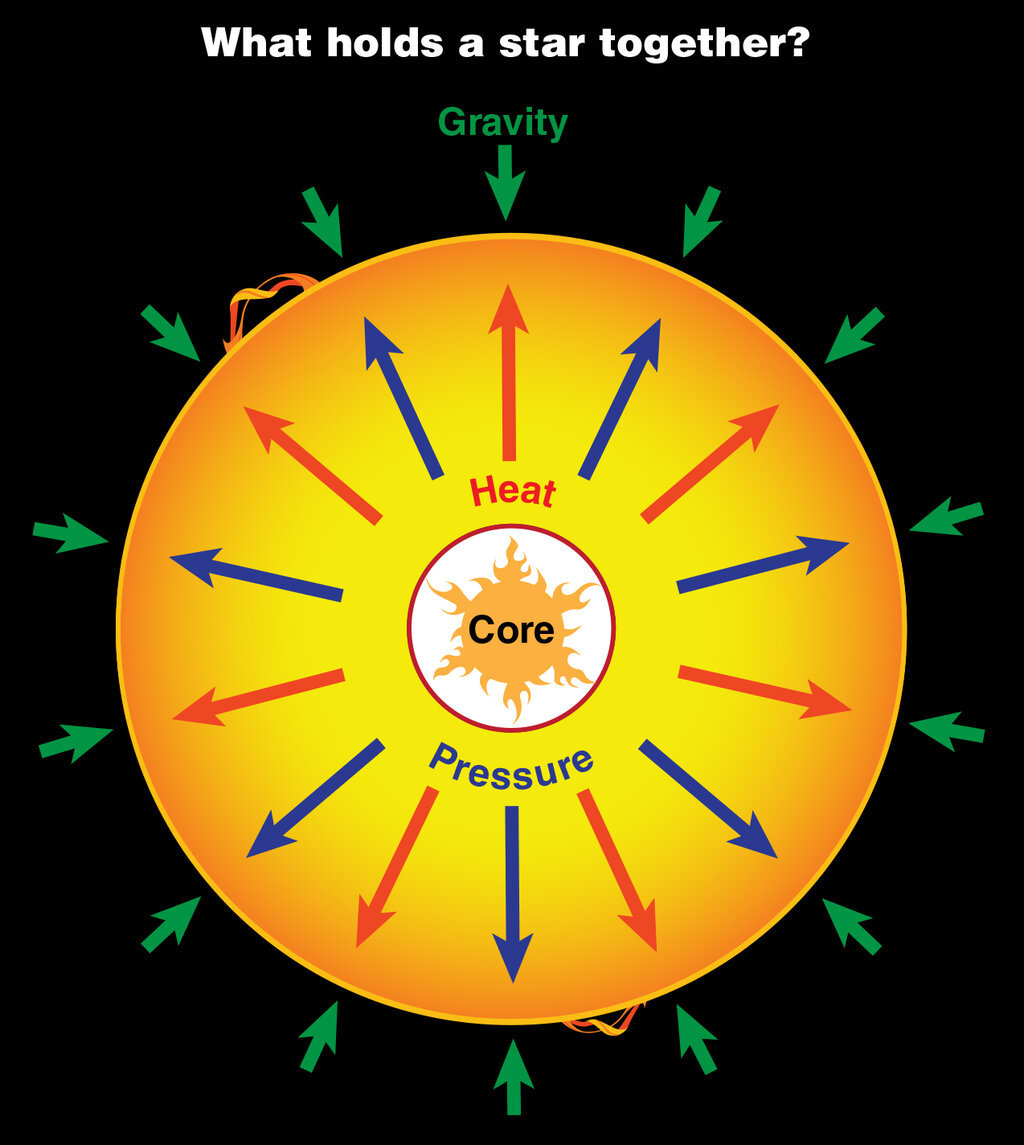
Forcing nuclei to fuse is no easy task. It requires conditions that are almost unimaginable here on Earth. Two key ingredients are needed: extreme temperature and crushing pressure.
First, temperature. To overcome their mutual repulsion, nuclei must be moving at incredible speeds. Temperature is just a measure of this kinetic energy. Fusion requires temperatures of millions of degrees Celsius, far hotter than the center of the sun. At these speeds, nuclei can slam into each other with enough force to fuse.
Second, pressure. The nuclei must also be packed together very tightly. High pressure increases the density of the material, making it much more likely that the fast-moving nuclei will collide. Stars like our sun have both of these conditions in spades. Their immense gravity creates unbelievable pressure and heat at their cores, creating the perfect environment for a continuous fusion reaction.
The Fourth State of Matter
Under the extreme temperatures required for fusion, matter doesn't behave like a solid, liquid, or gas. It enters a fourth state: plasma.
Plasma
noun
A state of matter where a gas is so hot that its atoms are stripped of their electrons, resulting in a mixture of positively charged ions and free-floating electrons.
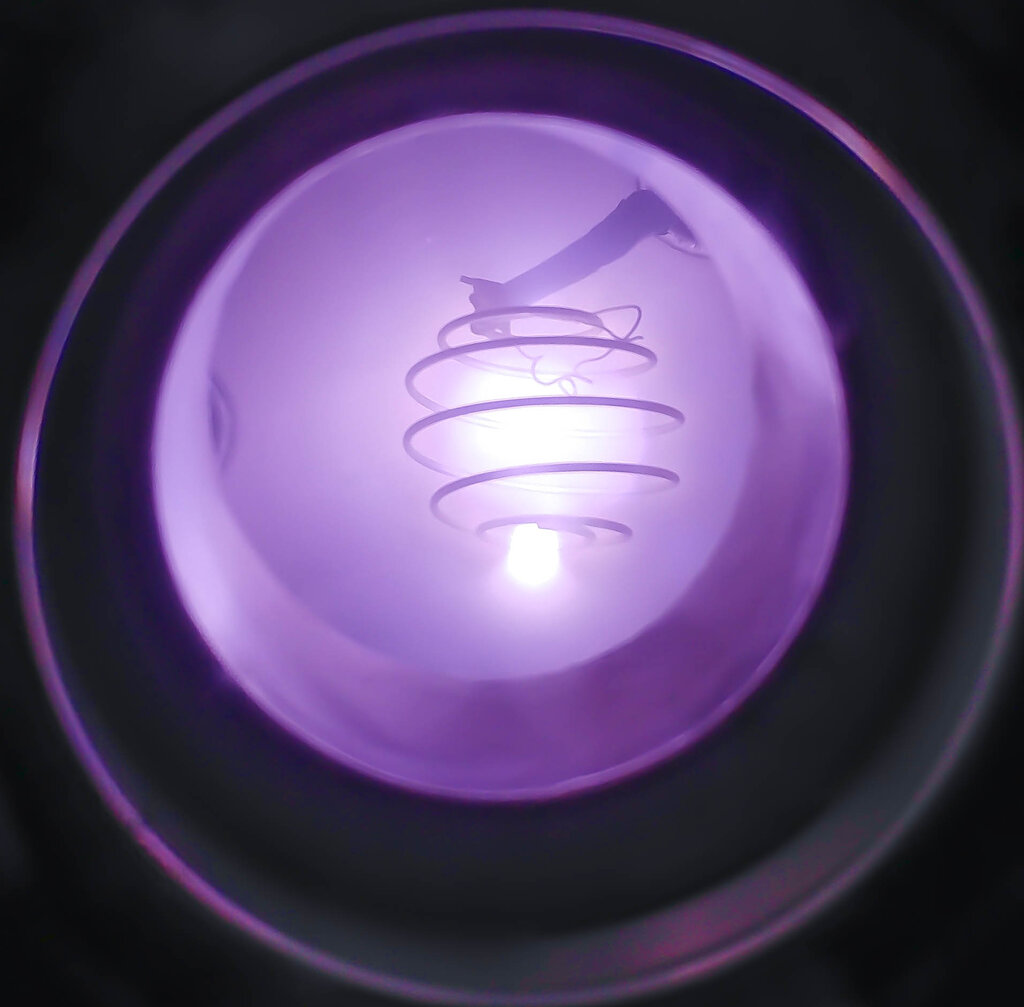
If you keep heating a gas, its atoms move faster and faster. Eventually, they move so fast that when they collide, their electrons are knocked loose. The result is an electrically charged soup of atomic nuclei (now called ions) and free electrons. This superheated, ionized gas is plasma. Because the nuclei are no longer shielded by their electron shells, they can get close enough to one another to fuse. Over 99% of the visible universe, including all the stars, is in a plasma state.
Understanding fusion begins with these core concepts: combining light elements, overcoming atomic repulsion with heat and pressure, and creating the plasma state. It is the fundamental engine of the cosmos.
What is the fundamental process of nuclear fusion?
In the context of nuclear fusion, what does Einstein's equation explain?