NREMT Cardiac Mastery
2025 AHA Guidelines Update
The 2025 AHA Updates
The 2025 American Heart Association guidelines streamline cardiac arrest response. The most significant change is the move to a single, Unified Chain of Survival for all patients, regardless of age or whether the arrest occurs in or out of a hospital (IHCA vs. OHCA). This simplifies training and emphasizes a core sequence of actions for every resuscitation attempt.
Another core focus of the 2025 updates is the renewed emphasis on and prioritizing a 30:2 compression-to-ventilation ratio for all single-rescuer scenarios. The science has reinforced that adequate oxygenation is critical and that continuous compressions without ventilation can be detrimental, especially in prolonged events or arrests with a respiratory cause. For EMS practitioners, this means focusing on achieving visible chest rise with each breath, delivered over one second, and avoiding excessive ventilation.
Revised Choking Protocols
The guidelines for managing a Foreign Body Airway Obstruction (FBAO), or choking, have been updated to a clear, sequential process. The new protocol is designed to be more effective and easier to recall under pressure.
| Victim | Responsive Protocol |
|---|---|
| Adult / Child | 5 back blows followed by 5 abdominal thrusts. Repeat cycle until effective. |
| Infant | 5 back blows followed by 5 chest thrusts. Repeat cycle until effective. |
| Pregnant/Obese | Perform 5 back blows and 5 chest thrusts (instead of abdominal). |
For a responsive adult or child, you will now administer five firm back blows between the shoulder blades with the heel of your hand. If the object is not dislodged, you'll immediately transition to five abdominal thrusts (the Heimlich maneuver). You continue this "5 and 5" cycle until the object is expelled or the person becomes unresponsive.
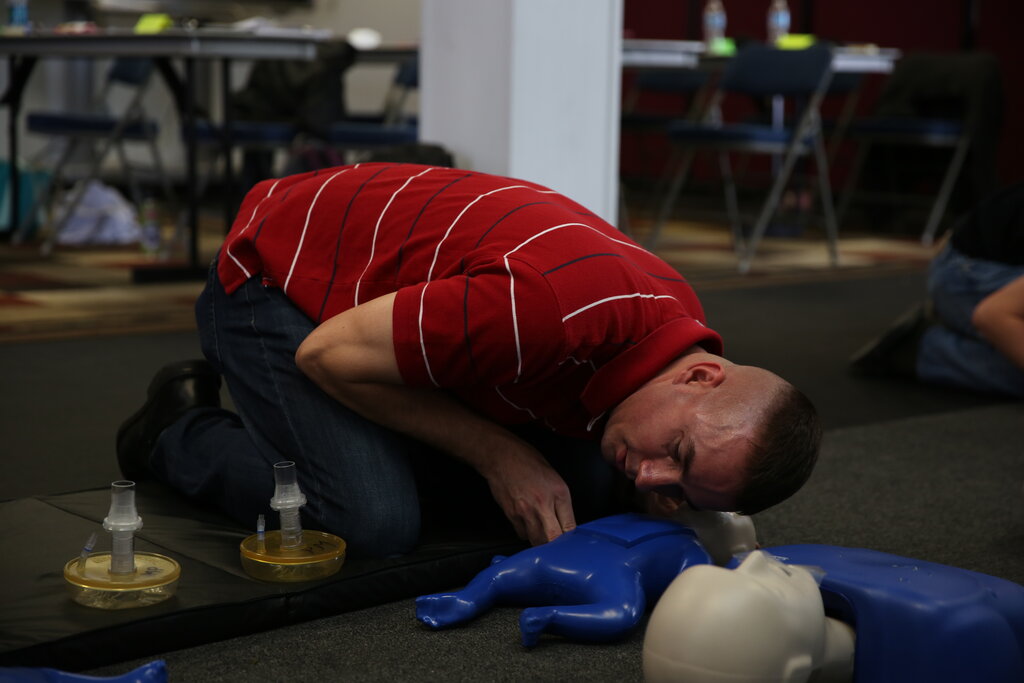
If the person becomes unresponsive at any point, gently lower them to the ground and begin CPR, starting with chest compressions. Before giving breaths, look in the mouth for the object. If you see it, remove it. If you don't, attempt breaths and continue CPR.
Equipment and Aftermath
The 2025 guidelines also address the role of technology and the human element of resuscitation. There is a notable update regarding based on recent large-scale studies. The new classification is 'routine use not recommended.' While these devices can be useful in specific situations (like CPR during transport in a moving ambulance), data shows they do not offer a survival benefit over high-quality manual compressions in most cases. The emphasis remains on perfecting manual CPR skills.
Finally, the guidelines now include stronger recommendations for death notification and team debriefing. After a resuscitation attempt ends, it is critical to provide a clear, compassionate notification to the family. Furthermore, structured emotional debriefing for the EMS crew is encouraged to manage the psychological stress of these events and identify opportunities for clinical improvement.
Now, let's test your knowledge of these crucial updates.
What is the most significant change to the Chain of Survival in the 2025 AHA guidelines?
Under the new guidelines for a responsive adult with a Foreign Body Airway Obstruction (choking), what is the correct sequence of actions?
Mastering these changes ensures your practice aligns with the latest science, providing the best possible care during a critical emergency. They are foundational for the 2025 NREMT exam.