Novel Writing with George Saunders
Intuition and Iteration
Beyond the Outline
Many writers believe the first step to a novel is a detailed plan. They map out every plot point, character arc, and thematic turn before writing the first sentence. This approach comes from a place of control, what we might call the 'authorial ego'. It's the voice that insists it knows the entire story from the outset.
But there's another way, one that prioritizes discovery over planning. It begins with the philosophy of 'not-knowing'. Instead of starting with a map, you start with a single sentence and a willingness to follow where it leads. The story isn't a blueprint to be executed; it's a living thing you discover through the act of writing.
This method trades the security of a plan for the excitement of genuine surprise. The writer becomes the story's first reader, figuring things out right alongside the characters.
Your Internal Meter
To navigate without a map, you need a compass. In writing, this compass is your intuition, an internal meter that tells you what's working and what isn't. It's a tool for making thousands of micro-decisions at the sentence level. This is the core of the 'intuition plus iteration' method.
Author George Saunders describes this as a Positive/Negative (P/N) feedback loop. It's a simple, moment-to-moment process:
- Write a line.
- Read it back.
- Register your immediate, gut reaction. Is it a 'P' (positive) or an 'N' (negative)?
This isn't a deep intellectual analysis of prose quality. It's a quick, physical pulse. A 'P' feels like a small burst of energy, a sense of interest or rightness. An 'N' feels flat, boring, or false. Your only job is to react to that pulse.
Iteration as Discovery
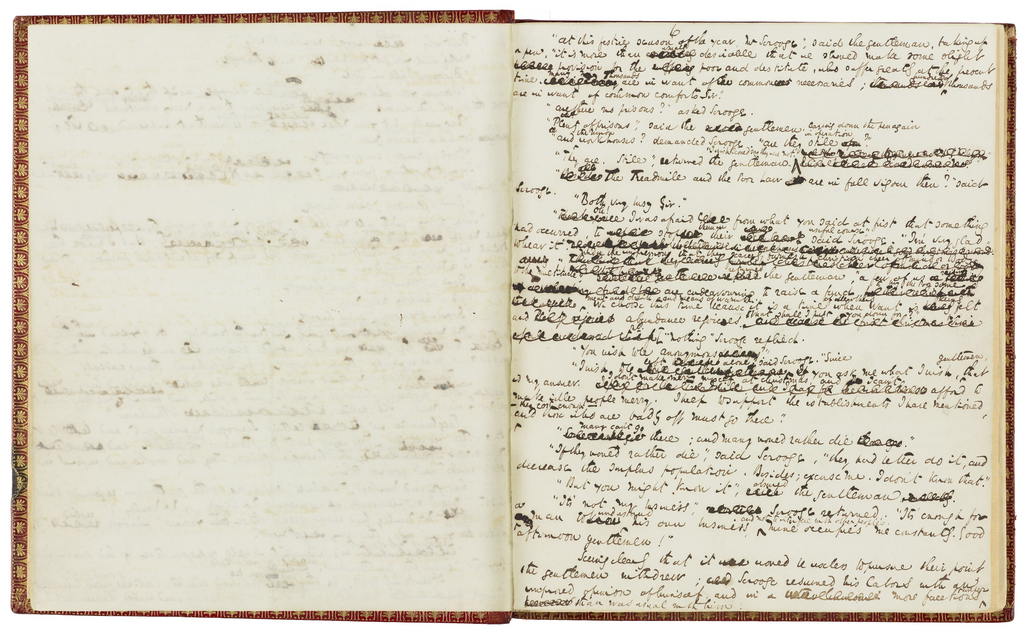
If you get a 'P', you write the next sentence, trying to earn another 'P'. If you get an 'N', you revise the sentence until it turns into a 'P'. That’s it. You repeat this process over and over, line by line. The story builds itself through these small, iterative adjustments.
Your authorial ego might try to intervene, telling you where the plot should go. But the P/N loop asks you to trust your meter instead. By consistently choosing the more energetic sentence, you follow a path of rising interest. The plot, characters, and themes emerge organically from these choices, rather than being imposed from above.
Exploring alternative ideas by rewriting text is integral to the writing process.
A draft created this way isn't a failed attempt at a perfect story; it's a necessary step in the discovery process. Each draft gets you closer to what the story wants to be. You aren't just editing words—you're refining your understanding of the narrative itself. This process feels less like construction and more like excavation. The story is already there, waiting to be uncovered, one sentence at a time.
Ready to test your understanding of this intuitive approach?
What is the core philosophy behind the writing method described in the text?
What does the 'P' in George Saunders's P/N feedback loop represent?
By trusting your internal meter and embracing revision, you allow for a more surprising and often more resonant story to emerge.