Novel Writing Essentials
Understanding Storytelling
The Blueprint of a Story
Every compelling story, from a simple fairy tale to a blockbuster movie, has a skeleton holding it together. This is its narrative structure. Think of it as a roadmap that guides the audience from a clear beginning to a satisfying end. Without it, a story would be a confusing jumble of events with no direction or purpose.
One of the most fundamental structures is a simple cycle of balance, upset, and resolution. It reflects a pattern we see in life all the time.
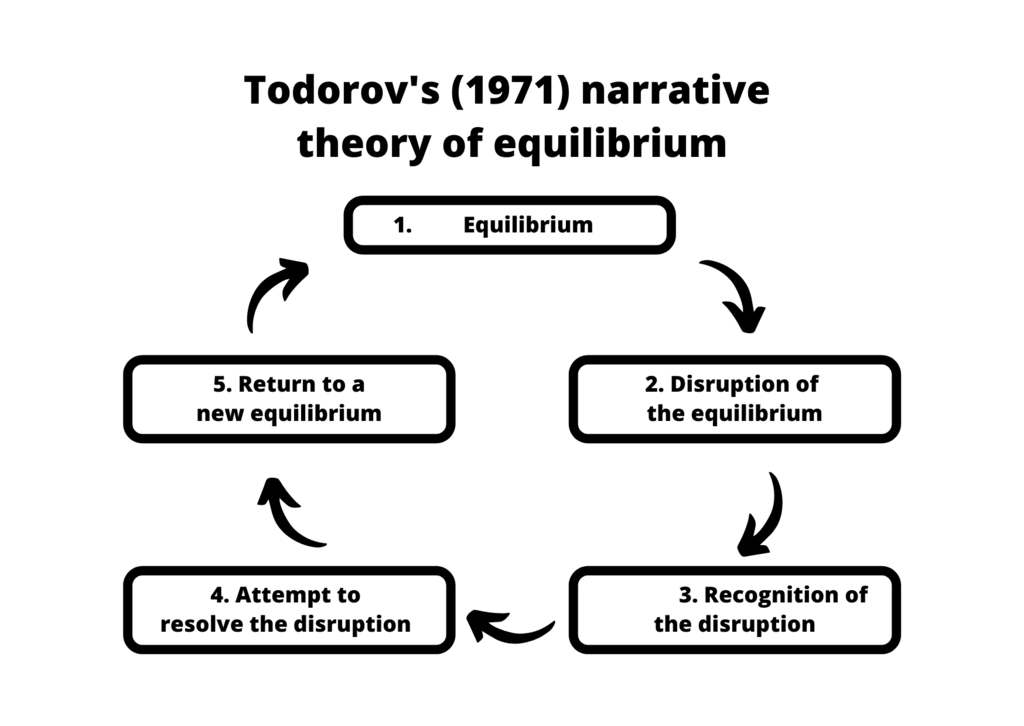
This diagram shows a five-step journey that forms the backbone of countless tales. Let's walk through it with a familiar story: The Wizard of Oz.
- Equilibrium: The story begins in a state of normalcy. Dorothy lives on a gray farm in Kansas. It's her ordinary world.
- Disruption: An event shatters the normal state. A tornado hits, whisking Dorothy and her house away to the magical Land of Oz.
- Recognition: The main character understands the problem. Dorothy realizes she's not in Kansas anymore and her main goal becomes clear: she must find a way back home.
- Attempt to Resolve: The character takes action to fix the disruption. Dorothy follows the Yellow Brick Road, meets new friends, and confronts the Wicked Witch to get help from the Wizard.
- New Equilibrium: The story ends in a new state of balance. Dorothy returns to Kansas, but she's changed. She appreciates her home and family more than ever. The world is back to normal, but it's a new normal, colored by her adventure.
Nearly every story follows this pattern: a character's world is thrown into chaos, and they must act to restore order, ending up transformed by the experience.
Bringing Characters to Life
A strong structure is useless without characters we care about. Characters are the heart of a story; they are the ones who experience the disruption and drive the plot forward. For an audience to get invested, a character needs to feel like a real person, even a simple one.