Norse Power and Global Networks
Viking Naval Engineering
The Secret of the Flexible Hull
Viking ships dominated the seas not because they were rigid fortresses, but because they were engineered to be flexible. The core of this design was the clinker-built hull. Instead of laying planks edge-to-edge, Norse shipwrights overlapped them, creating a series of strakes running the length of the ship. Think of it like overlapping shingles on a roof, but for the side of a boat.
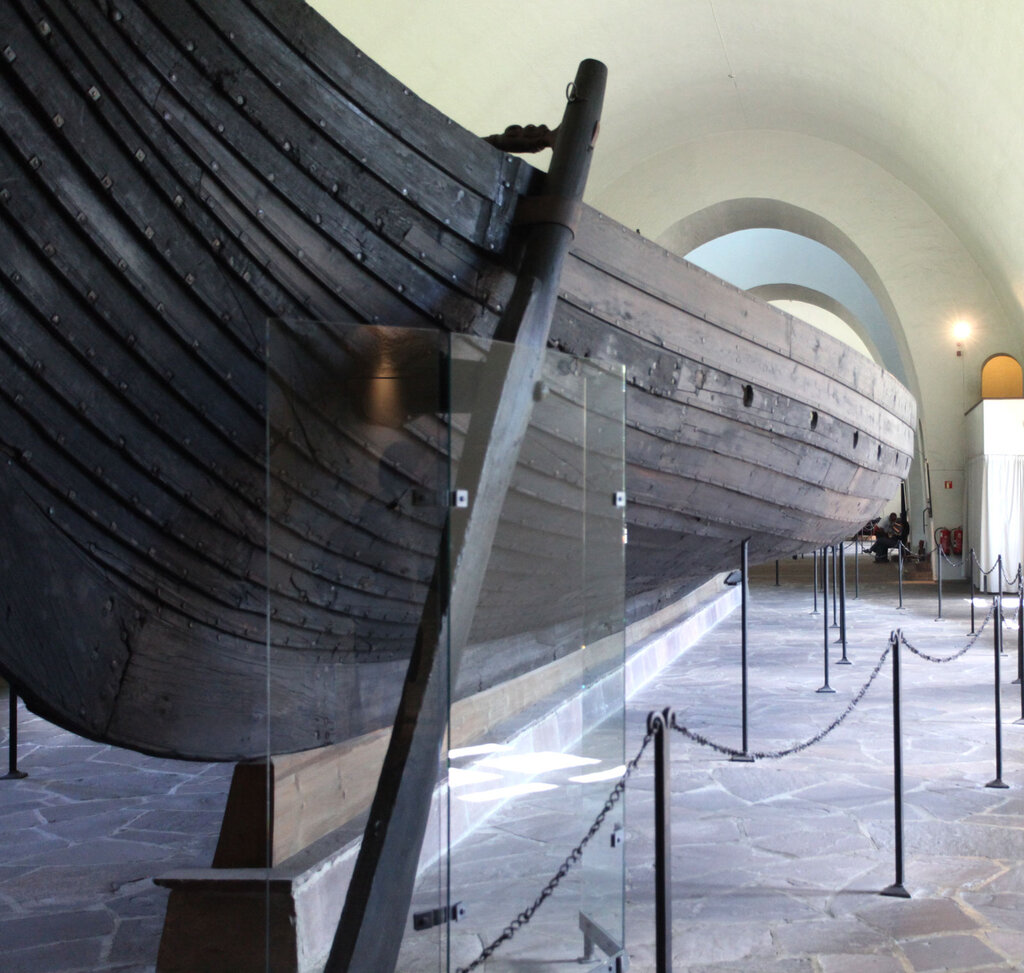
This overlapping construction allowed the hull to twist and bend in rough seas. While other ships might fight the waves, a Viking ship would ride them, absorbing the energy of the ocean rather than resisting it. This flexibility was crucial for surviving the violent storms of the North Atlantic.
To fasten the planks, shipwrights drove iron rivets through the overlap from the outside. On the inside, a small diamond-shaped metal plate called a rove was placed over the rivet's end, which was then hammered flat to lock the planks together. This system held the strakes tight but still allowed for slight movement.
Strength from the Grain
The choice of wood and how it was processed was just as critical as the hull design. Vikings preferred oak, a strong and durable timber. But instead of sawing logs into planks, they split them radially. This technique, called riving, ensures the plank's grain runs uninterrupted from end to end. A riven plank is far stronger and more flexible than a sawn one, which cuts across the wood's natural fibers and creates weak points.
Riving wood follows the grain, preserving its inherent strength. Sawing cuts through the grain, weakening it.
For the ship's internal skeleton, they sought out 'grown' timber. These were branches or tree trunks that had naturally grown into the curved shapes needed for frames and ribs. By using the wood's existing shape, they avoided having to bend timber against its grain, which would compromise its structural integrity. Every piece was chosen to work with nature, not against it.
Two Ships, Two Missions
Viking engineering produced two primary types of ships, each perfectly adapted for its purpose: the longship and the knarr.
| Feature | Longship | Knarr |
|---|---|---|
| Primary Use | Warfare, raiding, exploration | Cargo transport, trade, colonization |
| Hull Shape | Long, narrow, sleek | Short, wide, deep |
| Draft | Shallow (sits high in the water) | Deep (sits low in the water) |
| Propulsion | Oars and a single sail | Primarily a single sail |
| Capacity | Many warriors, little cargo | Small crew, much cargo |
| Advantage | Speed and maneuverability | Stability and carrying capacity |
The longship was a war machine. Its long, narrow hull and shallow draft meant it was incredibly fast and could navigate shallow rivers, allowing for surprise attacks far inland. It was powered by both a large square sail and rows of oarsmen, giving it a tactical advantage in any wind condition.
The knarr was the workhorse. Wider and deeper than a longship, it sacrificed speed for stability and cargo space. Its design was better suited for the open ocean and could carry colonists, livestock, and trade goods across vast distances, like the voyages to Iceland, Greenland, and North America. The knarr relied almost entirely on its sail, with a much smaller crew dedicated to sailing rather than rowing.
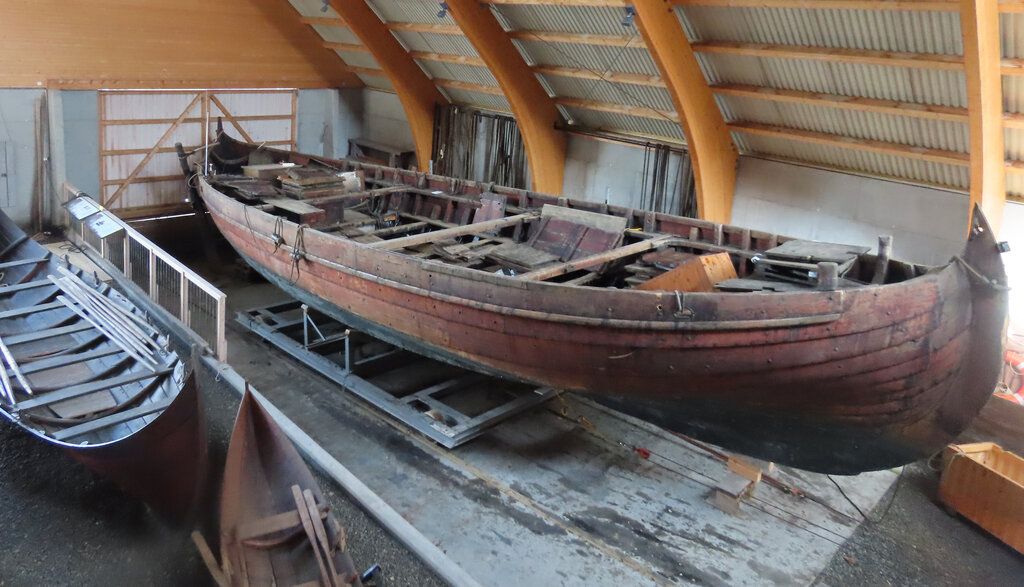
These two designs highlight the sophistication of Norse naval engineering. They didn't have one perfect ship; they had the right ship for the job, built from a deep understanding of wood, water, and mechanics.
What was the defining characteristic of the clinker-built hull used in Viking ships?
The primary advantage of a flexible Viking ship hull was its ability to:
The principles behind these ancient ships—flexibility, working with natural materials, and designing for a specific purpose—remain timeless lessons in engineering.