Node.js Fundamentals
Introduction to Node.js
JavaScript Beyond the Browser
For a long time, JavaScript had one job: to make web pages interactive. It lived and worked exclusively inside web browsers. If you wanted to build the part of an application that runs on a server, handling data and business logic, you had to use a different language like Python, Java, or PHP.
Then, in 2009, everything changed. A developer named Ryan Dahl created Node.js, a tool that allowed JavaScript to run outside the browser. Suddenly, the same language used to create pop-up alerts and image sliders could also be used to build powerful, high-performance back-end services.
Node.js is an open-source, cross-platform JavaScript runtime environment.
Let's break that down. A runtime environment is the software that interprets your code and tells the computer's hardware what to do. Your browser is a runtime environment for front-end JavaScript. Node.js is a runtime environment for back-end JavaScript. It's built on Chrome's V8 engine, the same high-performance engine that powers the Google Chrome browser, which makes it incredibly fast.
Key Features
The ability to use one language for both the front-end and back-end is a massive advantage. It simplifies the development process, allowing teams to share code and work more cohesively. This concept is often called "JavaScript everywhere."
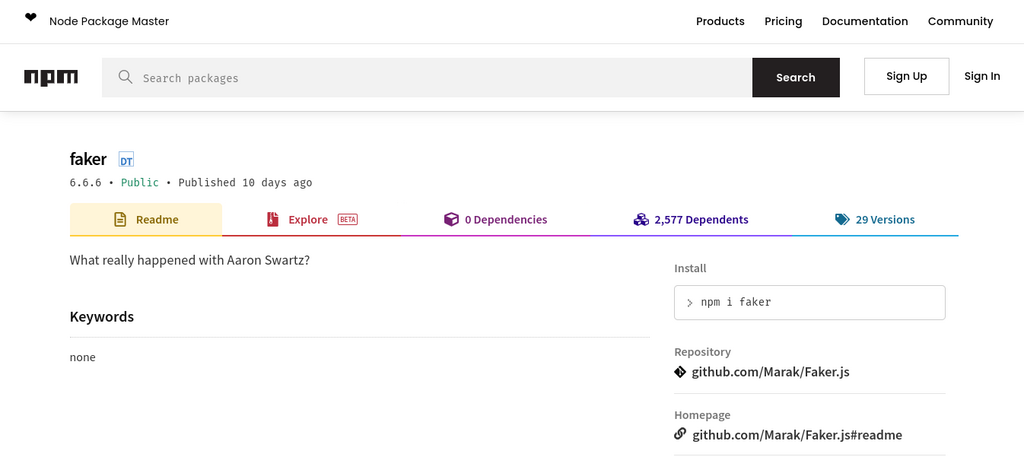
Another key to Node.js's success is its package manager, npm (Node Package Manager). It’s the world's largest software registry, a massive public library of free, reusable code modules. Need to work with dates, connect to a database, or handle user authentication? There's almost certainly an npm package for that, saving developers countless hours of work.
What is it Used For?
Node.js is particularly well-suited for applications that need to handle many simultaneous connections and a lot of input/output operations. Its architecture makes it efficient for building certain types of applications.
| Use Case | Description |
|---|---|
| APIs | Building fast and scalable RESTful APIs that serve data to front-end applications. |
| Real-time Apps | Powering applications like online games, chat apps, and collaborative tools where instant communication is key. |
| Microservices | Creating small, independent services that work together to form a larger application. |
| Data Streaming | Handling streams of data efficiently, such as for video and audio processing. |
Companies like Netflix, Uber, and PayPal rely on Node.js for critical parts of their services. Its combination of speed, scalability, and the vast npm ecosystem makes it a popular choice for modern web development.
What was the primary role of JavaScript before the creation of Node.js in 2009?
Node.js is a runtime environment. What does this mean?