No-Code Automation for SMEs
Introduction to n8n
What is n8n?
Think of all the repetitive tasks you do every day. Maybe it's copying information from an email into a spreadsheet, or sending a welcome message to every new customer. These small jobs add up, taking time away from more important work. This is where a tool like n8n comes in.
n8n is a workflow automation tool. It connects different applications and services, allowing them to talk to each other and perform tasks automatically. You don't need to be a programmer to use it.
Instead of writing code, you use a visual editor to build a sequence of steps, like putting together digital building blocks. Each block represents an action, like "read an email," "add a row to Google Sheets," or "send a Slack message." By connecting these blocks, you create a workflow that runs on its own.
Your Automation Building Blocks
Every automation in n8n is built from two fundamental concepts: nodes and workflows. Understanding these is the key to getting started.
Workflow
noun
The entire automated process you build, from start to finish. It's the complete set of instructions for a task you want to automate.
Node
noun
A single step within a workflow. Each node performs a specific action, such as starting the workflow, fetching data, or sending a notification.
Think of it like a recipe. The entire recipe is the workflow. Each individual instruction—like "chop the onions" or "preheat the oven"—is a node. You connect the nodes in a specific order to get the final result.
There are two main types of nodes:
- Trigger Nodes: These always start a workflow. They wait for a specific event to happen, like receiving a new email, a form being submitted, or a scheduled time being reached.
- Action Nodes: These perform a task. They can get data from a service, send information to another app, or manipulate the data passing through the workflow.
Getting Around the Interface
When you first open n8n, you'll see the workflow editor, which is where you'll spend most of your time. It might look a little empty at first, but it's a powerful canvas for your automations.
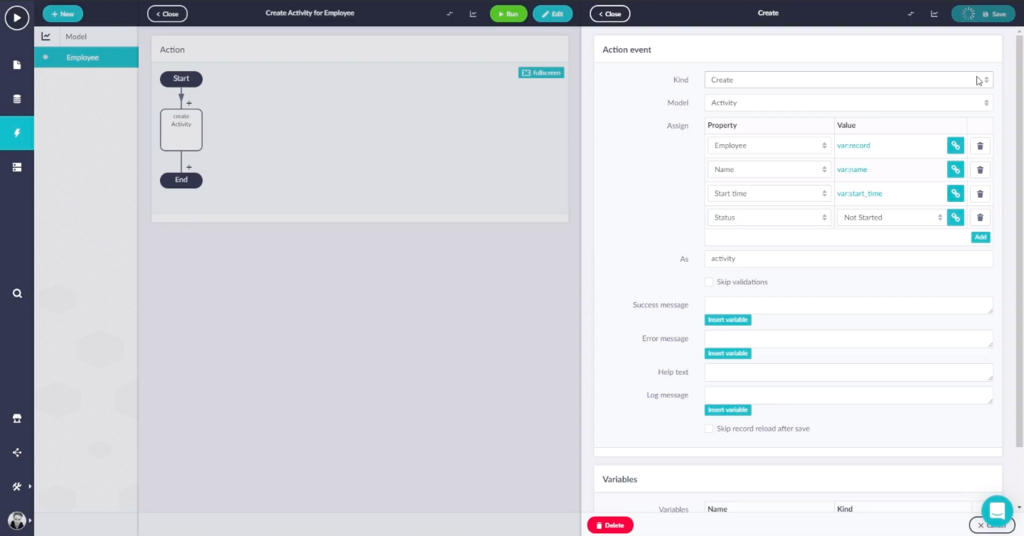
The main parts of the interface are:
- The Canvas: This is the large, central area where you'll build your workflow by adding and connecting nodes.
- The Nodes Panel: This is where you find all the available nodes. You can search for the app you want to connect to (like Gmail, Stripe, or Twitter) and drag its nodes onto the canvas.
- The Parameters Panel: When you select a node on the canvas, this panel opens up. It shows you the settings for that specific node, like which account to use or what data to send.
The best way to learn is by doing. Start by dragging a simple trigger node onto the canvas, like the 'Manual' trigger, which lets you start the workflow by clicking a button. Then, try adding an action node and connecting them.
Small and medium-sized businesses can get huge benefits from this kind of automation. It frees up your team from manual data entry, ensures important tasks are never forgotten, and helps create smooth, consistent processes for everything from marketing to customer support. By handling the repetitive work, n8n lets your team focus on what really matters: growing the business.
In the n8n analogy of a recipe, what does a 'node' represent?
Which type of node is always used to start a workflow?