No-Code AI Automation with Python
Introduction to No-Code AI Automation
Putting Repetitive Tasks on Autopilot
Think about your workday. How much of it is spent on small, repetitive tasks? Things like copying data from an email to a spreadsheet, categorizing customer support tickets, or renaming files. These jobs are necessary, but they're also time-consuming and prone to human error. This is where automation comes in.
Automation
noun
The use of technology to perform tasks with reduced human assistance.
At its core, automation is about creating a set of rules for a computer to follow. If X happens, then do Y. For example, you could set up a rule that automatically saves any email attachment from your boss into a specific folder. This is simple, but it saves you a few clicks every time. Over a year, that adds up to a lot of saved time and mental energy.
The main benefits are clear: you boost productivity, reduce mistakes, and free yourself up to focus on more creative and strategic work—the kind of work that requires a human touch.
Adding AI to the Mix
Traditional automation is great for straightforward, rule-based tasks. But what about tasks that require a bit of judgment? That's where Artificial Intelligence (AI) takes things to the next level.
AI doesn't just follow a rigid script. It can analyze information, understand context, and make decisions. Think of it as the difference between a simple calculator and a helpful assistant. The calculator follows instructions perfectly, but the assistant understands what you're trying to achieve.
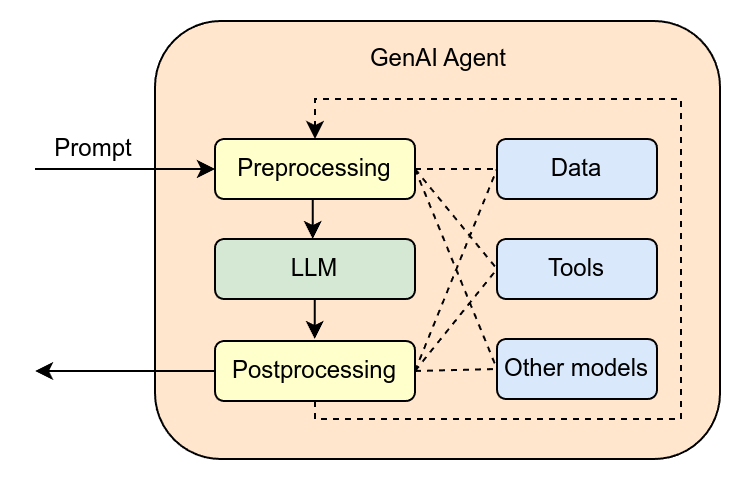
This ability to "think" allows AI to handle complex and unstructured data. For instance, instead of just filing an email with an invoice, an AI-powered automation can open the email, read the attached PDF, extract key details like the invoice number, amount due, and payment date, and then update your accounting software automatically. No manual data entry required.
Your Toolbox, No Code Required
Historically, building this kind of smart automation required a team of software developers. Today, that's no longer the case thanks to no-code platforms.
These tools offer a visual, drag-and-drop interface for building automated workflows. You can connect different apps and services—like your email, a spreadsheet, and a project management tool—and define how you want them to interact. You’re essentially building a small, custom robot to do your bidding, all without writing a single line of code.
No-code AI tools let you build smart workflows, automate repetitive tasks, and launch intelligent apps—all without writing a single line of code.
Popular platforms like Zapier, Make, and n8n act as the glue between your favorite applications. They provide pre-built connections and AI modules that you can piece together like building blocks to create powerful, custom automations. This accessibility means anyone, regardless of technical background, can start streamlining their work.
What is the fundamental principle of automation described in the text?
According to the text, what distinguishes AI-powered automation from traditional automation?