NMT vs LLM Understanding the Differences
Introduction to Neural Machine Translation
A New Way to Translate
For a long time, computers translated text by playing a game of probabilities. This method, called Statistical Machine Translation (SMT), worked by analyzing huge amounts of human-translated texts. It would look at a phrase in one language and calculate the most likely translation in another, piece by piece. SMT was a clever approach, but it often produced clunky, literal translations that missed the nuance of human language. The sentences could feel disjointed because the system was just stitching together the most probable word sequences.
Then came a breakthrough: Neural Machine Translation (NMT). Instead of relying on statistical analysis of individual words or phrases, NMT uses neural networks, which are complex systems inspired by the human brain. This allows the machine to read and understand the entire meaning of a source sentence before it even starts translating. This holistic approach helps capture context, tone, and complex grammatical structures, leading to much more fluid and accurate translations.
NMT models don't just translate words; they translate meaning. This shift from statistical probability to contextual understanding is what makes them so powerful.
The Encoder-Decoder Model
At the core of most NMT systems is an architecture called the encoder-decoder model. You can think of it as a two-person team working together to translate a message. The first person is the Encoder, and the second is the Decoder.
The Encoder's job is to read the original sentence in its source language, say, Spanish. It processes the sentence word by word and condenses all of its meaning into a compact numerical representation. This representation, often called a context vector or 'thought vector', contains the essence of the sentence—the grammar, the vocabulary, and the relationships between the words.
Once the Encoder has created this thought vector, it passes it to the Decoder. The Decoder's job is to take this numerical summary and unpack it, word by word, into the target language, like English. It uses the context vector as a guide to generate a new sentence that accurately reflects the meaning of the original.
This process works well for shorter sentences. However, trying to cram the meaning of a long, complex paragraph into a single, fixed-size vector is like trying to summarize a whole book in one sentence. Details get lost, and the translation quality suffers. This is where another key innovation comes in.
The Power of Attention
To solve the long-sentence problem, researchers developed the attention mechanism. Instead of forcing the Encoder to compress everything into one static thought vector, the attention mechanism allows the Decoder to 'look back' at the entire source sentence at every step of the translation process.
Imagine a human translator working on a long sentence. As they write each word of the translation, they focus on different parts of the original text that are most relevant to the word they're currently writing. The attention mechanism mimics this process. When the Decoder is generating a new word, it doesn't just look at the summarized context vector; it also gives more 'attention' to the specific source words that are most useful for predicting the next word in the target language.
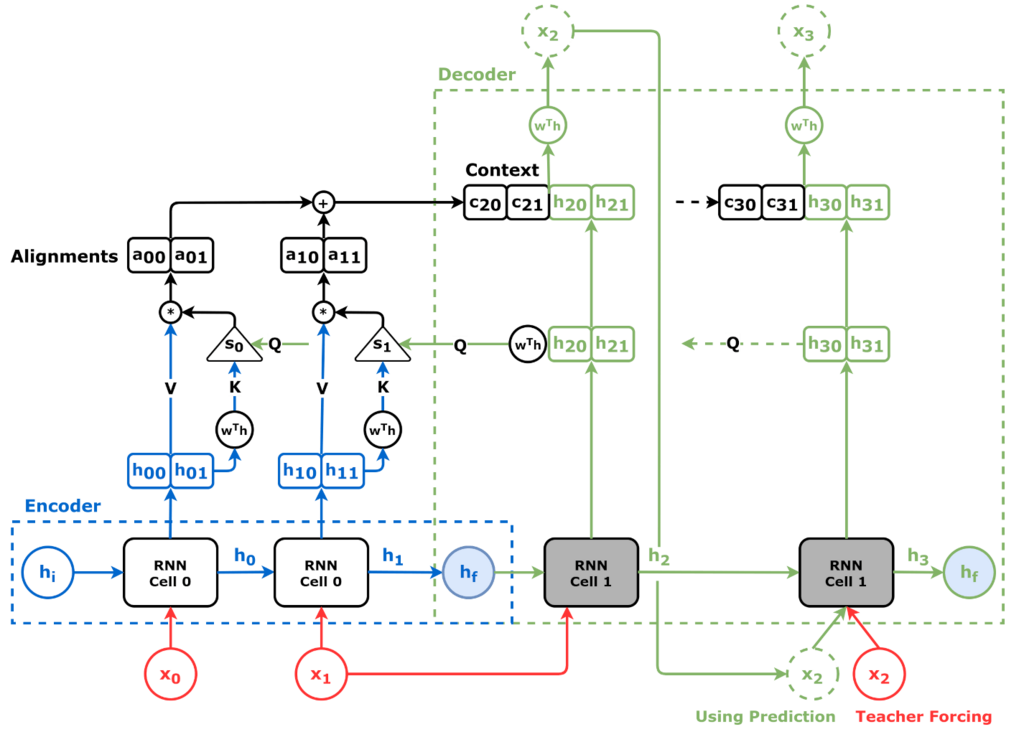
This ability to dynamically focus on relevant parts of the input makes a huge difference. For example, when translating a sentence from a gendered language like French to English, the model can pay attention to the gender of a noun at the beginning of the sentence to correctly choose pronouns like 'he' or 'she' much later. Attention gives NMT systems the flexibility and context-awareness needed to produce translations that are not only accurate but also sound natural.