NLP Sentence Abstraction
Introduction to NLP
Teaching Computers to Read
Natural Language Processing, or NLP, is a field of artificial intelligence that gives computers the ability to understand, interpret, and generate human language. Think of it as teaching a computer to read. Not just to recognize letters and words, but to grasp meaning, nuance, and intent just like a person does.
This field sits at the intersection of computer science, AI, and linguistics. It's the power behind many tools we use daily, from spell check to sophisticated digital assistants. At its core, NLP tries to bridge the gap between human communication and computer understanding.
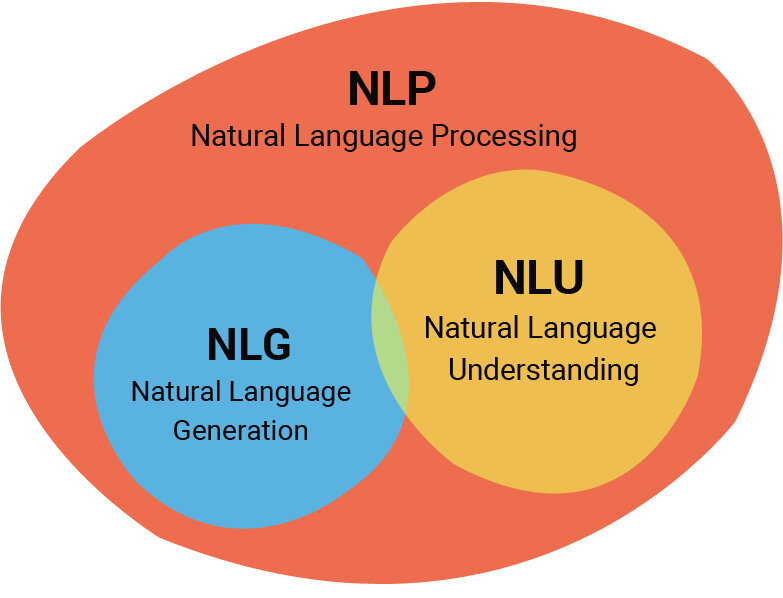
NLP can be broken down into two main areas. Natural Language Understanding (NLU) focuses on the "reading" part—making sense of text and speech. This involves figuring out grammar, meaning, and context. Natural Language Generation (NLG) is the "writing" part, where the computer constructs human-like sentences to present information or respond to queries.
From Rules to Patterns
The journey of NLP began decades ago. Early systems were based on complex, hand-written rules. Experts would try to write down all the grammatical rules of a language for a computer to follow. This was like giving a computer a massive, rigid grammar textbook. It worked for simple sentences but quickly fell apart with real-world language, which is often messy and breaks the rules.
In the late 1980s and 90s, the approach shifted. Instead of rules, researchers started using statistical methods. They fed computers vast amounts of text and let them learn the patterns on their own. This was a huge leap forward, allowing for more flexible and accurate models. Modern NLP uses deep learning, a type of machine learning, which can recognize incredibly complex patterns in language, bringing us closer than ever to true language understanding.
NLP in the Wild
You probably use NLP every day without realizing it. It's the engine behind many of the technologies that make our digital lives smoother and more intuitive. Here are a few common applications:
| Application | What It Does | Real-World Example |
|---|---|---|
| Machine Translation | Automatically translates text from one language to another. | Google Translate converting a webpage from Japanese to English. |
| Sentiment Analysis | Determines the emotional tone behind a piece of text. | A company analyzing tweets to see if customer feedback is positive or negative. |
| Spam Detection | Identifies and filters out unwanted emails. | Your email provider moving a suspicious message to the spam folder. |
| Chatbots & Assistants | Powers conversational agents that answer questions. | Asking Siri or Alexa for the weather forecast. |
| Text Summarization | Condenses a long document into a short, coherent summary. | An app that gives you the key points of a long news article. |
The Challenges of Language
Human language is incredibly complex, which makes it a tough nut for computers to crack. One of the biggest hurdles is ambiguity. A single sentence can often have multiple possible meanings.
Consider the sentence: "I saw a man on a hill with a telescope." Who has the telescope? Are you using it to see the man? Is the man holding it? Or is the telescope just sitting on the hill? A human can often infer the correct meaning from context, but a computer struggles.
Understanding context is another major challenge. The meaning of words can shift dramatically based on the surrounding conversation, the speaker's intent, and shared cultural knowledge. Sarcasm is a great example. When someone says "Oh, fantastic" after spilling coffee on their shirt, they mean the opposite of what the words literally say. Teaching a machine to pick up on that kind of subtlety is one of the frontiers of NLP research.
Ready to check your understanding? This quiz will test you on the core concepts of Natural Language Processing.
What is the primary goal of Natural Language Processing (NLP)?
Which subfield of NLP is primarily concerned with a computer's ability to 'read' and make sense of text, including its grammar and context?
That's a brief look at NLP. It's a dynamic field that continues to evolve, powering more and more of the technology we interact with every day.