NJAC versus Collegium System Conflict
Pre-NJAC Appointment History
The Primacy Puzzle
The power to appoint judges to India's higher courts has been a source of tension between the judiciary and the executive for decades. The heart of the matter lies in a single word within Article 124(2) of the Constitution, which states that the President shall appoint judges after "consultation" with the Chief Justice of India (CJI) and other judges. For the first few decades after independence, the executive branch held the upper hand. The government's interpretation was considered final.
This changed with the controversial in 1981. In S.P. Gupta v. Union of India, the Supreme Court upheld the executive's primacy. It ruled that "consultation" did not mean "concurrence." The President was not bound by the CJI's recommendation. This decision gave the central government significant control over judicial appointments, a power that critics argued could be used to influence the judiciary's independence.
The Judiciary Strikes Back
The judiciary did not accept the status quo established by the First Judges Case. The perception of executive interference grew, leading to a legal challenge that aimed to reclaim the judiciary's autonomy. This culminated in a landmark 1993 decision that completely altered the landscape of judicial appointments in India.
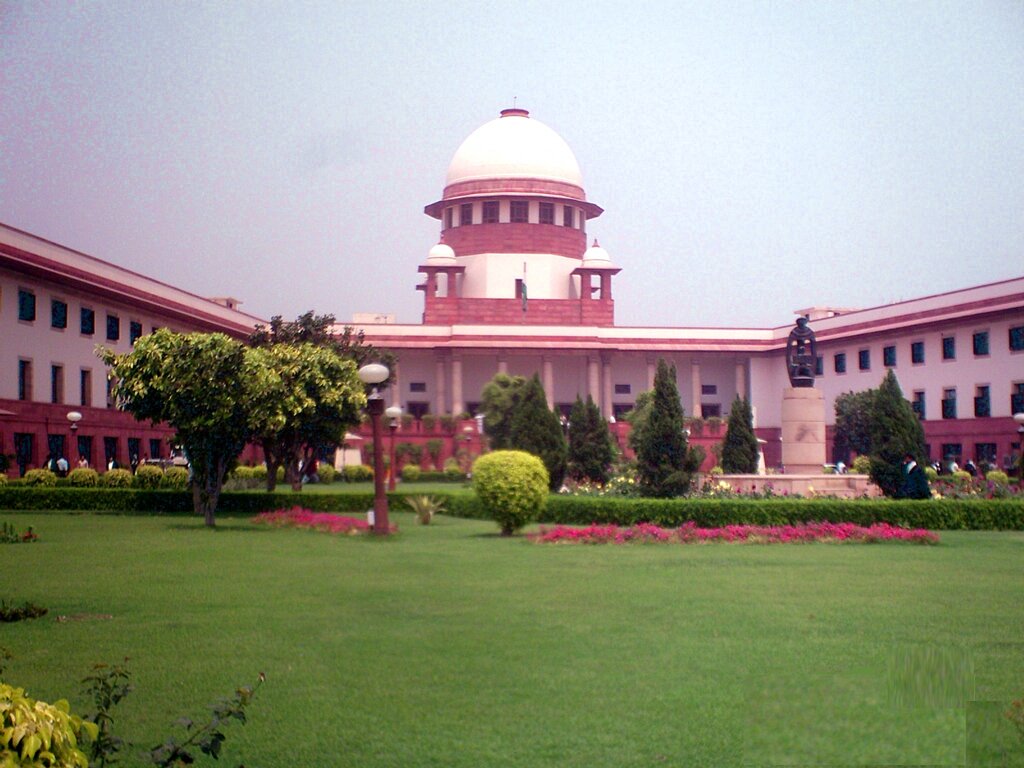
In the (Supreme Court Advocates-on-Record Association v. Union of India, 1993), a nine-judge bench of the Supreme Court dramatically overturned the S.P. Gupta ruling. The court reinterpreted Article 124(2), concluding that in the matter of judicial appointments, "consultation" actually meant "concurrence." The opinion of the Chief Justice of India was not just a suggestion; it was binding on the executive.
This judgment established that the CJI's recommendation, formed in consultation with the two most senior judges of the Supreme Court, was paramount. This was the birth of the Collegium system.
The Collegium system, born from this judicial interpretation, is unique. It's a mechanism for appointments and transfers of judges that was not explicitly written into the Constitution but was created by the judiciary for the judiciary. The goal was to insulate the appointment process from political influence, ensuring that merit and suitability were the primary considerations.
Expanding the Collegium
While the Second Judges Case established the Collegium, questions remained about its precise functioning. How broad should the CJI's consultation be? Was the CJI's personal opinion enough, or did it need to represent an institutional viewpoint? To clarify these ambiguities, the President of India sought the Supreme Court's opinion through a in 1998.
This event, known as the Third Judges Case, didn't overturn the previous ruling but expanded upon it. The court clarified that the CJI's opinion must be formed through a consultative process with a broader group of senior judges. The Collegium was institutionalized and enlarged. The CJI's view was no longer a solo opinion but the collective wisdom of the senior judiciary.
| Appointment Type | Collegium Composition |
|---|---|
| Chief Justice of India | By seniority; no Collegium recommendation needed. |
| Supreme Court Judges | CJI + 4 senior-most Supreme Court judges. |
| High Court Chief Justices | CJI + 2 senior-most Supreme Court judges. |
| High Court Judges | CJI + 2 senior-most SC judges, plus the Chief Justice of the relevant High Court. |
This three-case evolution completely shifted the balance of power from the executive to the judiciary. What began as a process where the government had the final say became one where the judiciary's recommendation was binding. This system, where judges appoint judges, remained in place for over two decades, but its perceived lack of transparency and accountability eventually led to calls for reform and the subsequent introduction of the 99th Amendment.
Now, let's test your understanding of this constitutional tug-of-war.
What was the Supreme Court's interpretation of the word "consultation" in Article 124(2) in the First Judges Case (S.P. Gupta v. Union of India, 1981)?
The landmark Second Judges Case (Supreme Court Advocates-on-Record Association v. Union of India, 1993) is most famous for establishing which system for judicial appointments?
Understanding this history is crucial, as it provides the context for the next major development in India's judicial appointment process.