Nikola Tesla and the Engineering of the Modern World
Polyphase System Mechanics
The Rotating Field
Direct current (DC) motors of the late 19th century had a glaring weakness: the commutator. This mechanical switch, essential for reversing current direction and keeping the motor spinning, was a constant source of friction, sparks, and wear. It was the system's Achilles' heel.
Nikola Tesla's elegant solution was to eliminate the commutator entirely. Instead of mechanically switching the current in the spinning part (the rotor), he designed a system where the magnetic field itself rotated. He achieved this by using multiple alternating currents in the stationary part (the stator), each slightly out of sync with the others. As each current wave peaked in sequence around the stator, it created a smoothly revolving magnetic field. This field then induced a current in the rotor, pulling it along like a ghostly hand—no sparks, no brushes, just pure electromagnetic interaction.
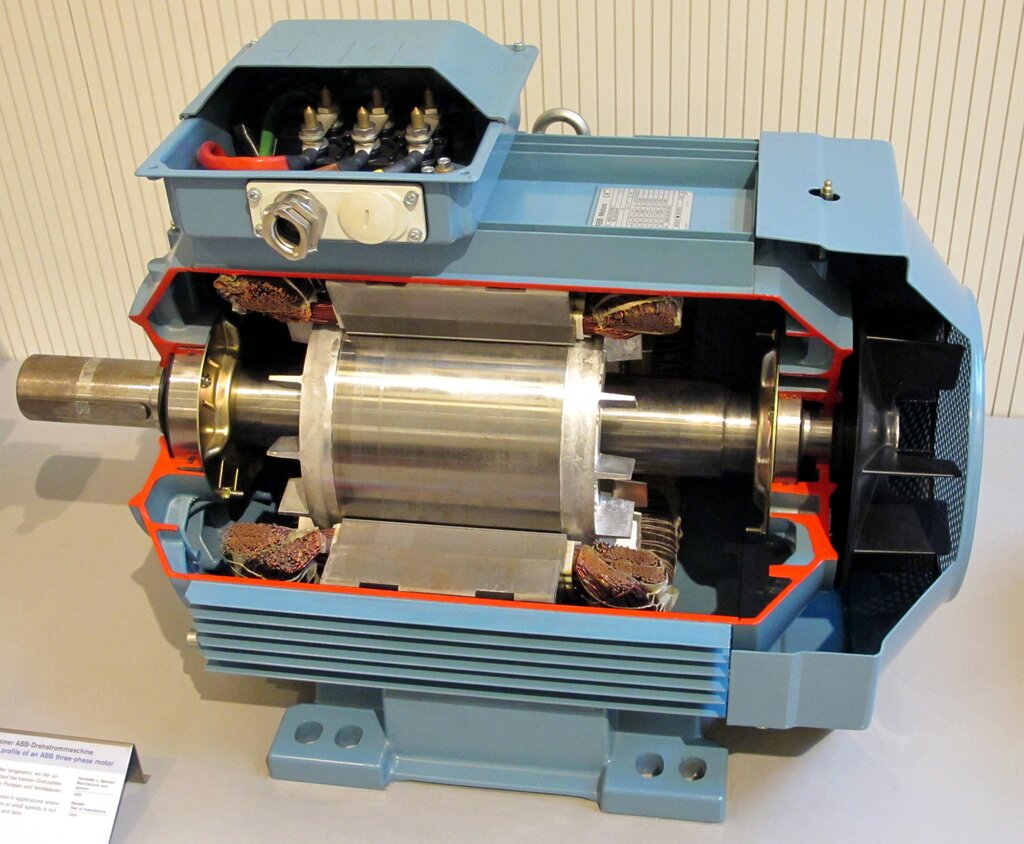
The magic lies in the stator's design. It isn't just one big electromagnet. Instead, it's a series of distinct windings arranged geometrically around the rotor. By feeding each winding a separate, out-of-phase AC signal, the magnetic poles effectively chase each other around the stator's inner ring, creating the rotational force.
Phase Angles and Torque
The key to a smooth rotation is the mathematical relationship between the phases. Tesla initially worked with a two-phase system. In this setup, two AC currents are offset by 90 degrees, or a quarter of a cycle. One current hits its peak strength just as the other one is at zero, then the second one rises to its peak as the first one falls. This creates a somewhat jerky, but effective, rotating field.
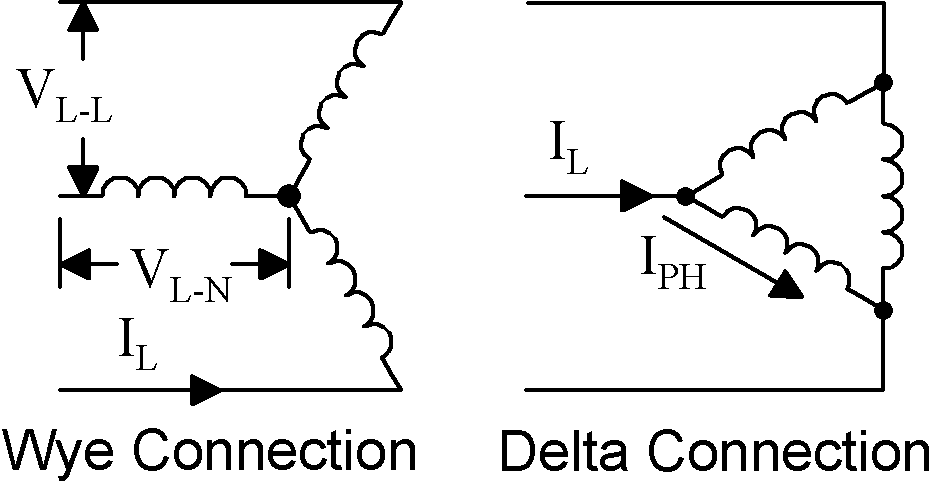
However, the industry quickly adopted the more efficient three-phase system. Here, three currents are offset from each other by 120 degrees. This arrangement delivers a much more constant and uniform torque to the rotor. Because the power delivery from the three phases overlaps, the total power supplied to the motor never drops to zero. This results in smoother operation, less vibration, and higher efficiency. The voltages for each phase can be represented as sine waves, each beginning its cycle one-third of the way after the last.
This principle of creating a rotating field with out-of-phase currents powered the , a device so robust and simple that its fundamental design remains a cornerstone of modern industry. The rotor often consists of simple conductive bars shorted at the ends, forming what's known as a "squirrel cage." The rotating magnetic field from the stator induces a powerful current in these bars. This current creates its own magnetic field, which interacts with the stator's field, causing the rotor to spin.
Power and Practicality
While elegant, the polyphase system presented a practical trade-off: wiring complexity. A single-phase AC system needs two wires. A two-phase system needs four (or three with a common return), and a three-phase system needs three or four. More copper meant more cost and more complex infrastructure. So why bother?
The answer is efficiency. A three-phase system can transmit significantly more power than a single-phase system using the same amount of copper. The continuous power delivery makes motors more efficient and allows for the construction of larger, more powerful generators. For industrial applications and long-distance transmission, the benefits vastly outweighed the cost of extra wiring.
The ultimate proof of concept was the in 1895. This monumental undertaking harnessed the immense power of the falls to generate electricity and transmit it over 20 miles to Buffalo, New York. It was the first large-scale hydroelectric plant in the world, and it was built entirely around Tesla's polyphase AC system. The project's success vindicated the AC approach, demonstrating that polyphase systems could reliably power not just motors, but entire cities, paving the way for the modern electrical grid.
Let's test your understanding of how these systems work.
What was the primary mechanical weakness of late 19th-century DC motors that Nikola Tesla's AC induction motor was designed to eliminate?
How does an AC induction motor create a rotating magnetic field in the stator?
The polyphase induction motor was more than an invention; it was the key that unlocked the potential of alternating current for practical, industrial power.