Nietzsche's God is Dead
Introduction to Nietzsche's Philosophy
Questioning Everything
Friedrich Nietzsche was a philosopher who took a hammer to the foundational beliefs of Western civilization. He wasn't interested in small adjustments; he wanted to examine the very pillars holding up our ideas of truth, morality, and God. He asked uncomfortable questions: Where do our values of 'good' and 'evil' actually come from? Are they absolute truths, or just ideas we've inherited?
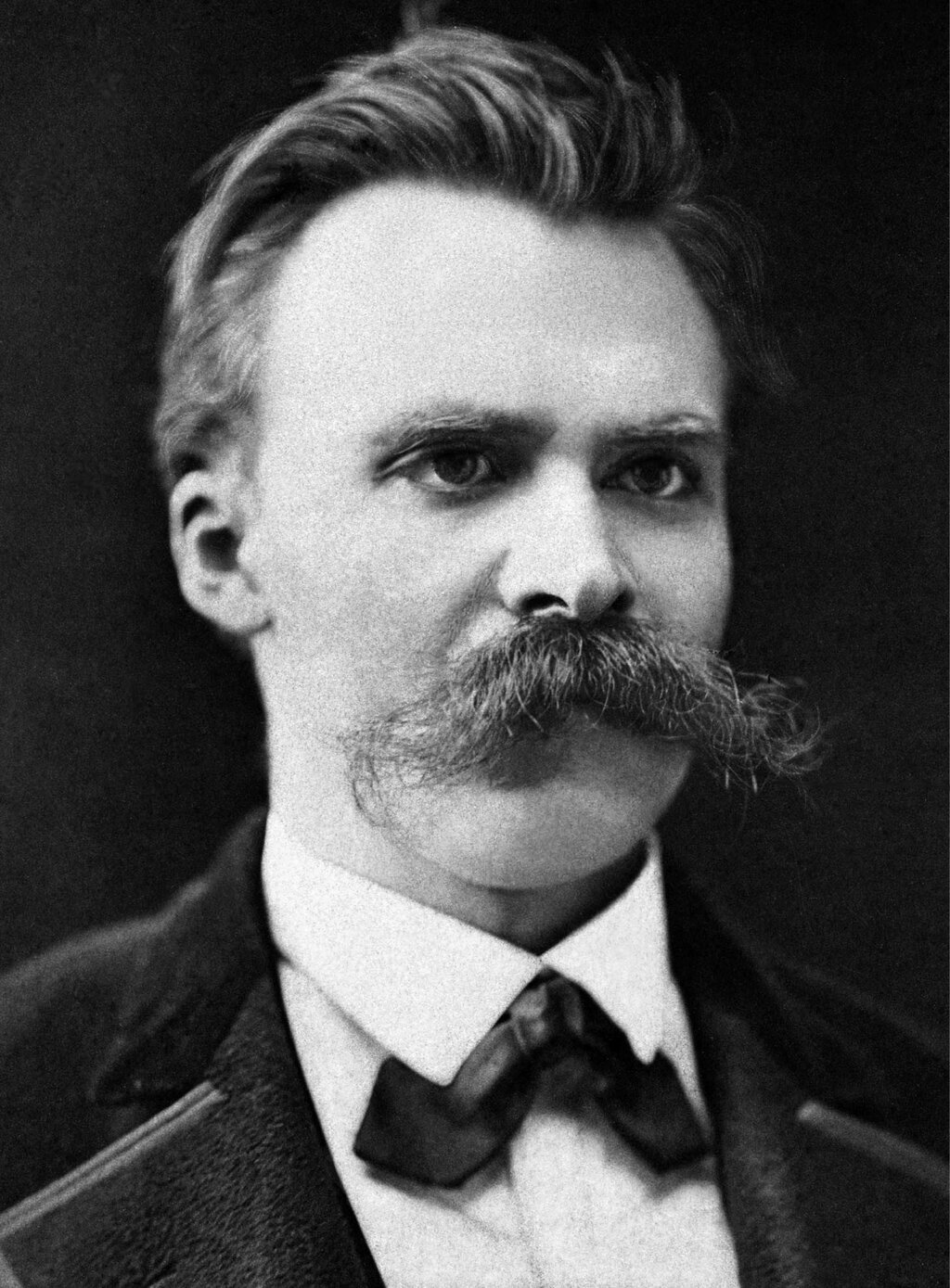
Nietzsche argued that traditional Judeo-Christian morality, which praised qualities like humility, compassion, and piety, was not a divine command. Instead, he saw it as a human invention. He called it a "slave morality," a system created by the weak and oppressed to restrain the powerful. By labeling the qualities of the powerful (like pride, ambition, and creativity) as "evil," the masses could feel virtuous in their own meekness.
This was a radical idea. It suggested that our deepest-held beliefs about right and wrong weren't objective facts about the world, but rather a set of values that had won a long-ago historical battle. He wasn't necessarily saying we should be cruel or selfish; he was saying we need to be honest about why we value what we value.
The Coming Void
If our values are not anchored in divine truth, what happens when people stop believing in that truth? Nietzsche foresaw a major crisis looming for Western culture: the rise of nihilism.
Nihilism
noun
The belief that life is without objective meaning, purpose, or intrinsic value. It suggests that all values are baseless and that nothing can be truly known or communicated.
For centuries, religion had provided the answers to life's big questions. It told people their purpose, gave them a moral compass, and promised ultimate justice. But Nietzsche saw that the rise of science and rational thinking was eroding this foundation. People were beginning to realize that the universe didn't seem to operate with their well-being in mind.
As belief in God faded, so too would the moral system built upon that belief. The result would be a deep sense of disorientation and meaninglessness. If there is no God, no cosmic plan, and no absolute morality, then why should we do anything? This is the core of the nihilistic crisis.
With the death of God comes nihilism, the sense that life is void of intrinsic meaning or value.
God is Dead
This brings us to Nietzsche's most famous, and most misunderstood, proclamation: "God is dead." He first wrote these words in his book The Gay Science, where a madman runs into a marketplace shouting the news.
The point wasn't to celebrate. Nietzsche wasn't gleefully announcing that atheism had triumphed. He was sounding an alarm. The madman cries, "God is dead. God remains dead. And we have killed him."
The "death of God" was a cultural diagnosis, not a simple statement of atheism. It meant that the idea of God was no longer the central, organizing principle of society.
He argued that the Enlightenment, with its emphasis on reason and science, had made belief in the Christian God intellectually untenable for modern people. Humanity, in its quest for knowledge, had systematically dismantled the foundations of its own moral and spiritual world. We had "killed" God with our own intellectual tools.
Nietzsche was terrified by the implications. Without a divine anchor, the entire system of Western values would collapse. There would be no objective basis for saying murder is wrong or that compassion is good. We would be left in a void, a state of nihilism where "the highest values devalue themselves." This was the great danger he believed modern humanity was facing, and the central problem he sought to overcome.