NGO Establishment and Fundraising Mastery
Understanding NGOs
What is an NGO?
At its core, a Non-Governmental Organization (NGO) is a private, non-profit group organized around a specific cause or issue. The key part of the name is "non-governmental." This means it operates independently from any government's control, although it might receive government funding or work in partnership with government agencies.
Non-Governmental Organization
noun
A non-profit, voluntary citizens' group which is organized on a local, national or international level to address issues in support of the public good.
Unlike businesses, NGOs are not driven by profit. Any surplus revenue they generate is reinvested back into their mission, whether that’s protecting the environment, defending human rights, or providing clean water. This mission-driven focus is what defines them.
You might hear the terms "NGO" and "non-profit organization" (NPO) used interchangeably. While all NGOs are non-profits, the term NGO is often used to describe organizations that work on an international scale or focus on issues like humanitarian aid, development, and advocacy. NPO is a broader legal term that can include anything from a local sports club to a university.
| Feature | Governmental Org | NGO | For-Profit Business |
|---|---|---|---|
| Primary Goal | Public administration & services | Social or political mission | Generate profit |
| Funding | Taxes, government revenue | Donations, grants, membership | Sales, investments |
| Control | Government | Independent board | Owners, shareholders |
| Accountability | The public, elected officials | Donors, members, the public | Shareholders, investors |
A Quick History
The idea of citizens organizing for a common cause is not new. Groups like the anti-slavery societies of the 18th and 19th centuries and the International Committee of the Red Cross, founded in 1863, were early examples of what we would now call NGOs. They operated across borders to address humanitarian crises and advocate for social change.
However, the term "Non-Governmental Organization" only came into common use after the United Nations was established in 1945. The UN Charter included a provision, Article 71, that allowed for consultative roles for organizations that were not governments or member states. This officially recognized the important part these independent groups play in global affairs.
The number of international NGOs grew from around 1,000 in 1950 to tens of thousands today, a massive expansion fueled by globalization, new communication technologies, and a greater awareness of global challenges.
The Many Roles of NGOs
NGOs are incredibly diverse. They range from small, volunteer-run community groups to massive international organizations with multi-million dollar budgets. We can categorize them by their level of operation and their primary orientation.
Operationally, an NGO might be a community-based organization (CBO) working in a single village, or it could be a national or international NGO (INGO) working across continents. By orientation, their work can be described as:
- Charitable: Focusing on meeting the needs of disadvantaged people, often through direct aid like food or shelter.
- Service: Providing services like healthcare, family planning, or education.
- Participatory: Characterized by self-help projects where local people are involved in implementation.
- Empowering: Aiming to help people develop a clearer understanding of the social, political, and economic factors affecting their lives and to strengthen their awareness of their own potential power to control their lives.
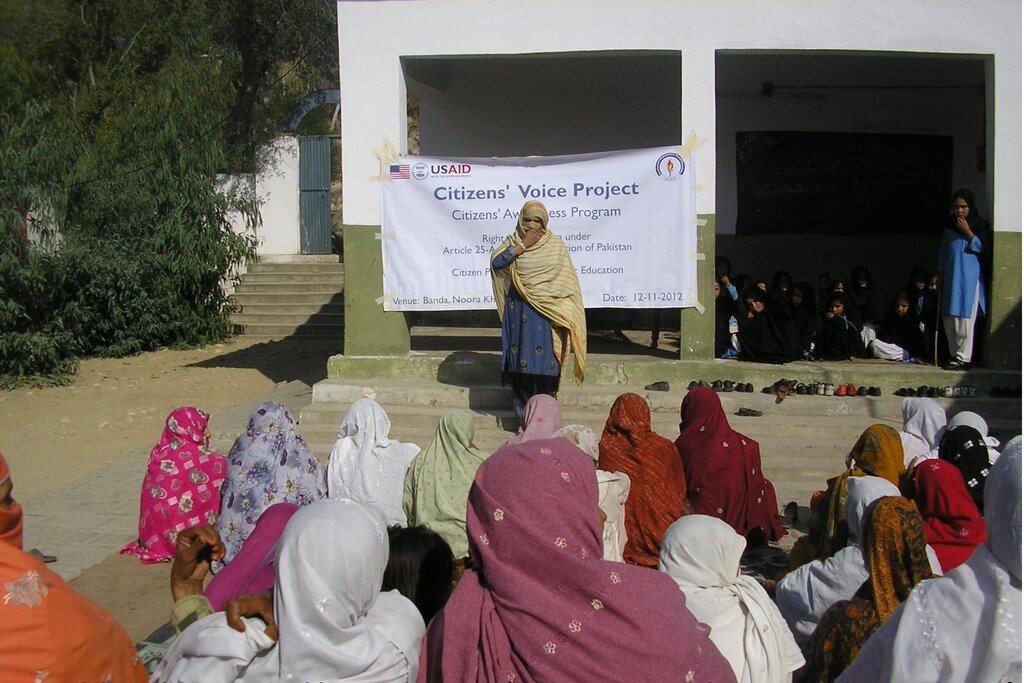
These organizations are the backbone of civil society, filling gaps left by governments and the private sector. They act as implementers, delivering aid and services directly to people in need. They also serve as catalysts for change, advocating for policy shifts and raising public awareness about critical issues. In many cases, they are also watchdogs, monitoring governments and corporations to ensure they are held accountable for their actions and commitments.
Civil society organizations serve as the crucial bridge between citizens and government, influencing public policy through strategic advocacy, expert knowledge, and grassroots mobilization.
By operating on the ground, often in the world's most difficult environments, NGOs provide essential support and give a voice to marginalized communities. Their independence allows them to tackle sensitive issues and challenge the status quo in ways that government bodies often cannot.
Ready to check your understanding?
What is the primary characteristic that defines a Non-Governmental Organization (NGO)?
The term 'Non-Governmental Organization' became widely used after the establishment of which international body?
This foundational knowledge of what NGOs are, where they came from, and the roles they play is the first step in understanding their vital place in our global society.