NFT Utility Beyond Digital Art
Introduction to NFTs
What Makes an NFT Unique?
At its core, a Non-Fungible Token (NFT) is a one-of-a-kind digital certificate of ownership. It's stored on a secure public ledger called a blockchain, which makes it easy to verify who owns what.
The key to understanding NFTs is the term "non-fungible."
Non-fungible
adjective
Something that is unique and cannot be replaced with something else. It has distinct properties that make it one of a kind.
Think of it this way: a one-dollar bill is fungible. You can trade it for any other one-dollar bill, and you still have the same value and item. An NFT, on the other hand, is like a signed concert ticket from your favorite band's first show. There might be other tickets, but only that specific one is yours, with its unique history and condition. This uniqueness is what gives an NFT its potential value.
Non-fungible tokens, known as NFTs, are electronic identifiers confirming a digital collectible is real by recording the details on a digital ledger or database known as a blockchain.
Not Your Typical Crypto
While NFTs and cryptocurrencies like Bitcoin or Ethereum both use blockchain technology, they serve very different purposes. Cryptocurrencies are designed to be fungible, acting as a medium of exchange, just like traditional money.
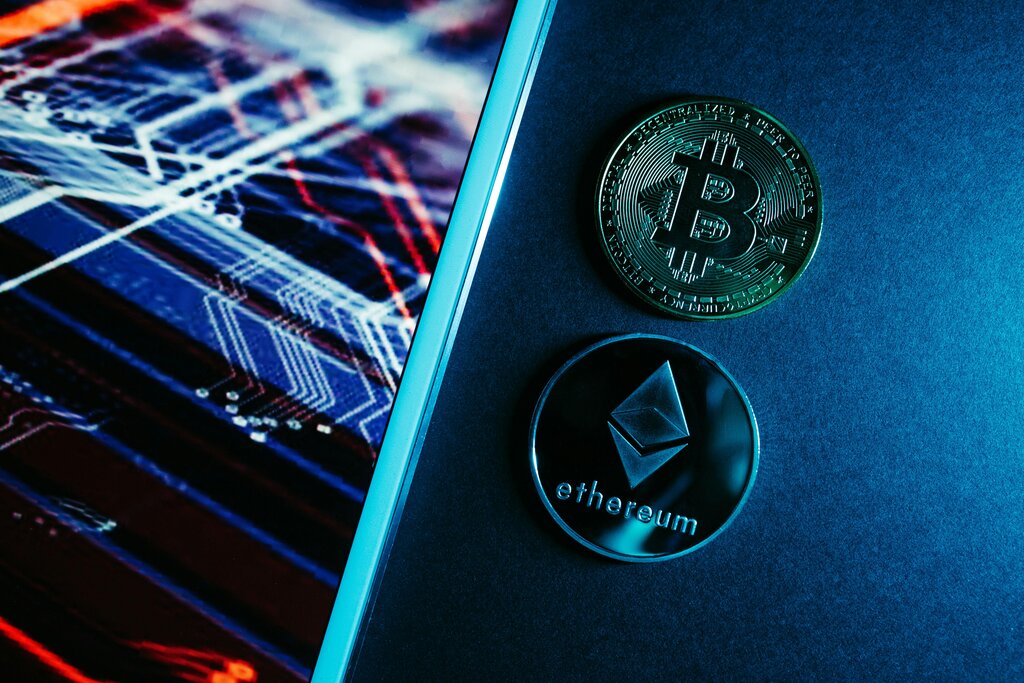
NFTs, however, represent ownership of a specific asset. You can't exchange one NFT for another and expect them to be the same, because each one is tied to a different unique item. Here's a quick breakdown of the differences:
| Feature | NFTs (Non-Fungible) | Cryptocurrencies (Fungible) |
|---|---|---|
| Interchangeability | Each token is unique and cannot be swapped 1-for-1. | Each unit is identical and can be swapped 1-for-1. |
| Value | Each token has a unique value based on its specific asset. | All units have the same value. |
| Divisibility | Generally indivisible; you can't own a fraction of an NFT. | Divisible into smaller units (e.g., 0.001 Bitcoin). |
| Purpose | To prove ownership of a unique asset. | To act as a medium of exchange or store of value. |
The Tech Behind the Token
NFTs get their power from blockchain technology. A blockchain is a decentralized, distributed ledger that records transactions across many computers. This distribution makes the record incredibly secure and transparent. Once a transaction is added to the blockchain, it's virtually impossible to alter, creating an immutable (unchangeable) record of ownership.
But how does the blockchain know what an NFT represents and what you can do with it? That's where smart contracts come in.
A smart contract is a self-executing contract with the terms of the agreement directly written into code. It's like a digital vending machine: you put in a coin (cryptocurrency), and the machine automatically dispenses your item (the NFT) according to the programmed rules.
These contracts are stored on the blockchain and automatically run when certain conditions are met. For an NFT, the smart contract contains all the essential information: its unique ID, its creator, its history of ownership, and any rules for its transfer or sale. This automates the process of buying and selling digital assets without needing a middleman.
Setting the Standard
To ensure that NFTs can be easily bought, sold, and displayed across different platforms and digital wallets, developers created standard protocols. Think of these as universal blueprints that everyone agrees to use. Two of the most common standards on the Ethereum blockchain are ERC-721 and ERC-1155.
ERC-721 was the first major standard for NFTs. It's simple and robust, defining a contract for creating truly one-of-a-kind tokens. Each ERC-721 token is unique and has its own ID. This standard is perfect for digital art, collectibles, or any other asset where every single item must be distinct.
ERC-1155 is a multi-token standard that came later. A single ERC-1155 contract can manage multiple types of tokens at once, including both fungible and non-fungible items. This is extremely useful in gaming, where a developer might need to issue thousands of identical items (like potions) and a few unique, legendary items (like a special sword). It's more efficient because it bundles everything into one contract.
Now that you understand the basics of what NFTs are and how they work, let's test your knowledge.
What is the core function of a Non-Fungible Token (NFT)?
Which of the following items is the best example of something that is "fungible"?
By grasping these core concepts—non-fungibility, blockchain security, smart contracts, and token standards—you have a solid foundation for understanding the role of NFTs in the digital world.