NFT Utility Beyond Art
Introduction to NFTs
More Than Just JPEGs
You've probably heard of NFTs, or Non-Fungible Tokens. Maybe you've seen headlines about digital art selling for millions or seen a pixelated monkey avatar on social media. But what exactly is an NFT?
At its core, an NFT is a unique digital certificate of ownership. It’s a way to prove you own a specific item, whether that item is digital art, a piece of music, or even a virtual piece of land. The key to understanding them lies in the name itself, specifically the term "non-fungible."
Non-Fungible Tokens (NFTs) are unique cryptographic tokens that exist on a blockchain and cannot be replicated.
Fungible vs. Non-Fungible
To get what “non-fungible” means, let’s first look at its opposite: fungible. Something is fungible if it can be replaced by another identical item. Money is a perfect example.
A one-dollar bill in your pocket is worth the exact same as a one-dollar bill in someone else's pocket. You can trade them, and you'll still have one dollar. They are interchangeable. This is fungibility.
Most cryptocurrencies, like Bitcoin or Ethereum, are also fungible. One Bitcoin is functionally identical to any other Bitcoin.
Non-fungible items, on the other hand, are one-of-a-kind. Think of the Mona Lisa. There is only one original. You can take a photo of it or buy a print, but you can't swap it for the real thing. A concert ticket for a specific seat, a family heirloom, or your car—these are all non-fungible. They have unique properties that make them irreplaceable.
| Feature | Fungible Tokens | Non-Fungible Tokens |
|---|---|---|
| Uniqueness | Identical | Unique |
| Interchangeable | Yes, 1-to-1 swap | No, cannot be swapped |
| Divisible | Yes (e.g., 0.001 BTC) | Generally no |
| Example | Dollar bill, Bitcoin | Original painting, concert ticket |
The Blockchain Connection
So, how do you prove ownership of a digital item that can be copied endlessly with a right-click? This is where blockchain technology comes in.
NFTs exist on a blockchain, which is a decentralized and public digital ledger. Think of it as a giant, shared, and unchangeable notebook that records every transaction. When an NFT is created (or "minted"), its information—like who created it, who has owned it, and who owns it now—is recorded on this ledger.
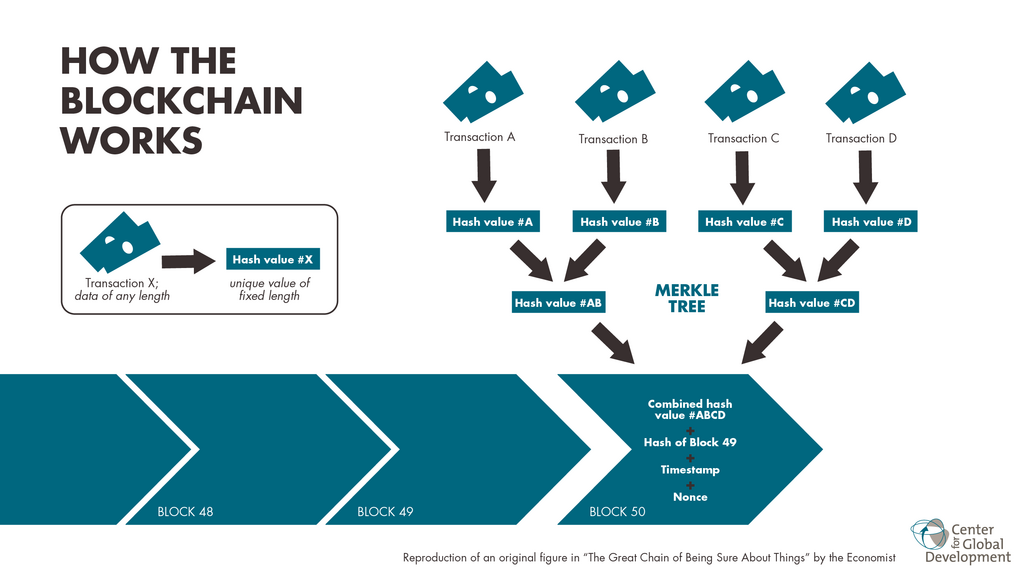
This process of converting a unique item into a digital asset on the blockchain is called tokenization. The token represents your claim to that asset. Because the blockchain is maintained by thousands of computers worldwide, the record of ownership is transparent, verifiable, and extremely difficult to tamper with. You don't have to trust a single company or person to keep the record straight; the network does it collectively.
A Brief History
While NFTs exploded in popularity in 2021, the idea has been around for a while. The concept can be traced back to "colored coins," which were experiments on the Bitcoin network around 2012. These were attempts to represent real-world assets like stocks or property using small fractions of a bitcoin.
However, the first major milestone for NFTs as we know them was the launch of CryptoPunks in 2017. This project consisted of 10,000 unique, algorithmically generated pixel art characters on the Ethereum blockchain. Later that same year, a game called CryptoKitties let users buy, sell, and breed unique digital cats. Its popularity famously congested the Ethereum network, but it also showed the world the potential of unique digital assets.
Ready to test your knowledge?
What is the primary function of a Non-Fungible Token (NFT)?
An item is considered ______ if it is unique and cannot be replaced by an identical item.
From simple colored coins to complex digital art, NFTs established a new way to think about ownership in the digital world.