NFT Utility Beyond Art
Introduction to NFTs
What Are NFTs?
Let's start with the idea of 'fungibility.' A twenty-dollar bill is fungible. If you and a friend both have $20 bills, you can swap them without any loss of value. They are identical and interchangeable. Most currencies, both physical and digital, work this way.
Now, think about something non-fungible, like the original Mona Lisa painting. There is only one. You can't swap it for another painting and have the exact same thing. It's unique and irreplaceable. Non-Fungible Tokens, or NFTs, bring this concept of unique ownership to the digital world.
Non-Fungible Token
noun
A unique digital identifier that cannot be copied, substituted, or subdivided, that is recorded in a blockchain, and that is used to certify authenticity and ownership.
An NFT is essentially a digital certificate of ownership for an asset, whether it's digital art, a piece of music, an in-game item, or even a ticket to an event. This certificate is recorded on a blockchain, which is a secure and transparent digital ledger. This public record proves who owns the original asset.
Non-fungible tokens however are unique, and they are used to prove that an item is one of a kind and are aimed at solving a problem central to digital collectibles: how to claim ownership of something that can be easily and endlessly duplicated.
NFTs vs. Cryptocurrencies
It's a common point of confusion, but NFTs are not cryptocurrencies, even though they are built using similar technology. The main difference comes down to that word again: fungibility.
A cryptocurrency like Bitcoin or Ethereum is fungible. One Bitcoin is always equal in value to another Bitcoin, just like dollars. This interchangeability is what makes them effective as a currency.
NFTs are the opposite. Each one is unique and has its own distinct value. You can't trade one NFT for another and expect them to be the same, just as you can't trade a rare baseball card for a common one and call it an even swap.
| Feature | Cryptocurrency (e.g., Bitcoin) | NFT (e.g., Digital Art) |
|---|---|---|
| Fungibility | Fungible | Non-Fungible |
| Value | Uniform; interchangeable | Unique; varies per token |
| Purpose | Store of value, medium of exchange | Proof of ownership, digital collectible |
| Unit | Divisible (e.g., 0.001 BTC) | Indivisible; a whole unit |
How They Work
NFTs exist on a blockchain, which is a distributed, immutable ledger. Think of it as a shared digital record book that's duplicated and spread across a vast network of computers. Once a transaction is added to the blockchain, it's incredibly difficult to alter, making it highly secure. This technology is the backbone that verifies and protects an NFT's ownership.
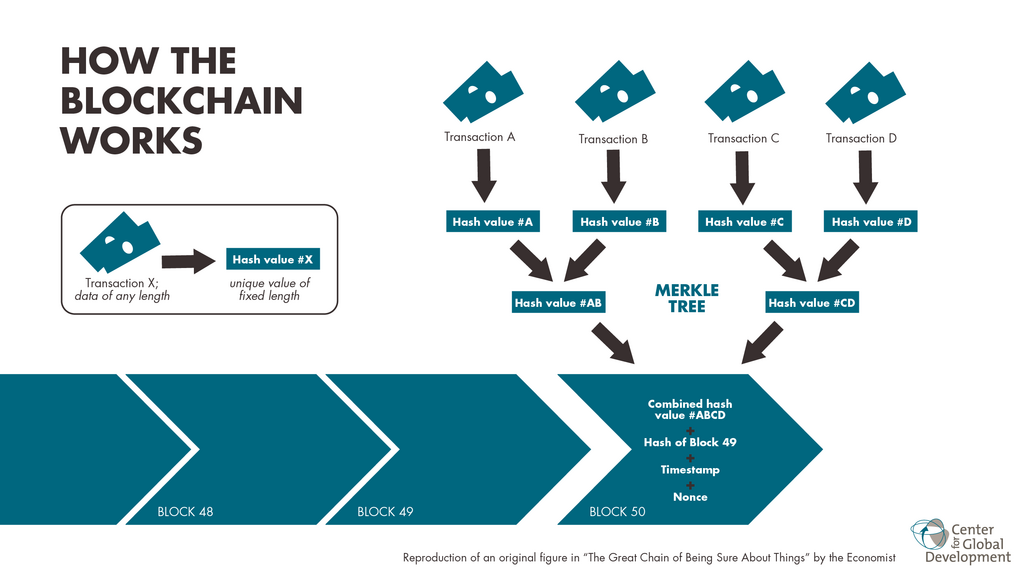
The process of creating an NFT is called 'minting.' During minting, a digital file (like a JPG or MP3) is converted into a digital asset on the blockchain. This process creates a 'smart contract'—a self-executing contract with the terms of the agreement directly written into code. The smart contract stores the NFT's unique information, such as its creator and ownership history, permanently on the blockchain.
Once minted, the NFT is stored in a digital wallet, which you can think of as a secure digital bank account for your crypto assets. From there, it can be bought, sold, or traded on NFT marketplaces. Every time the NFT changes hands, the transaction is recorded on the blockchain, creating a verifiable and transparent history of ownership from the moment it was created.
This public ledger ensures that anyone can trace the NFT back to its original creator, verify its authenticity, and see everyone who has ever owned it. It's this transparency and security that gives an NFT its value.
Ready to check your understanding? Let's see what you've learned about the basics of NFTs.
Which of the following best describes a 'fungible' asset?
True or False: The main difference between a cryptocurrency like Bitcoin and an NFT is that cryptocurrencies are non-fungible.
That's the basic idea behind NFTs. They are unique digital tokens on a blockchain that prove ownership of an asset. While often associated with digital art, their potential applications are just beginning to be explored.