NFT Utility Beyond Art
Introduction to NFTs
Understanding Digital Uniqueness
Let's start with a simple idea: fungibility. An item is fungible if it's interchangeable with another identical item. Think about a dollar bill. If you and a friend each have a dollar, you can swap them without any change in value. Your dollar is just as good as theirs. They are fungible.
Now, what about something that isn't interchangeable? Imagine you own the original Mona Lisa painting. Your friend owns a poster of the Mona Lisa. You couldn't just swap them. The original painting is unique and has a value all its own. It's non-fungible.
Non-fungible means one-of-a-kind and not interchangeable.
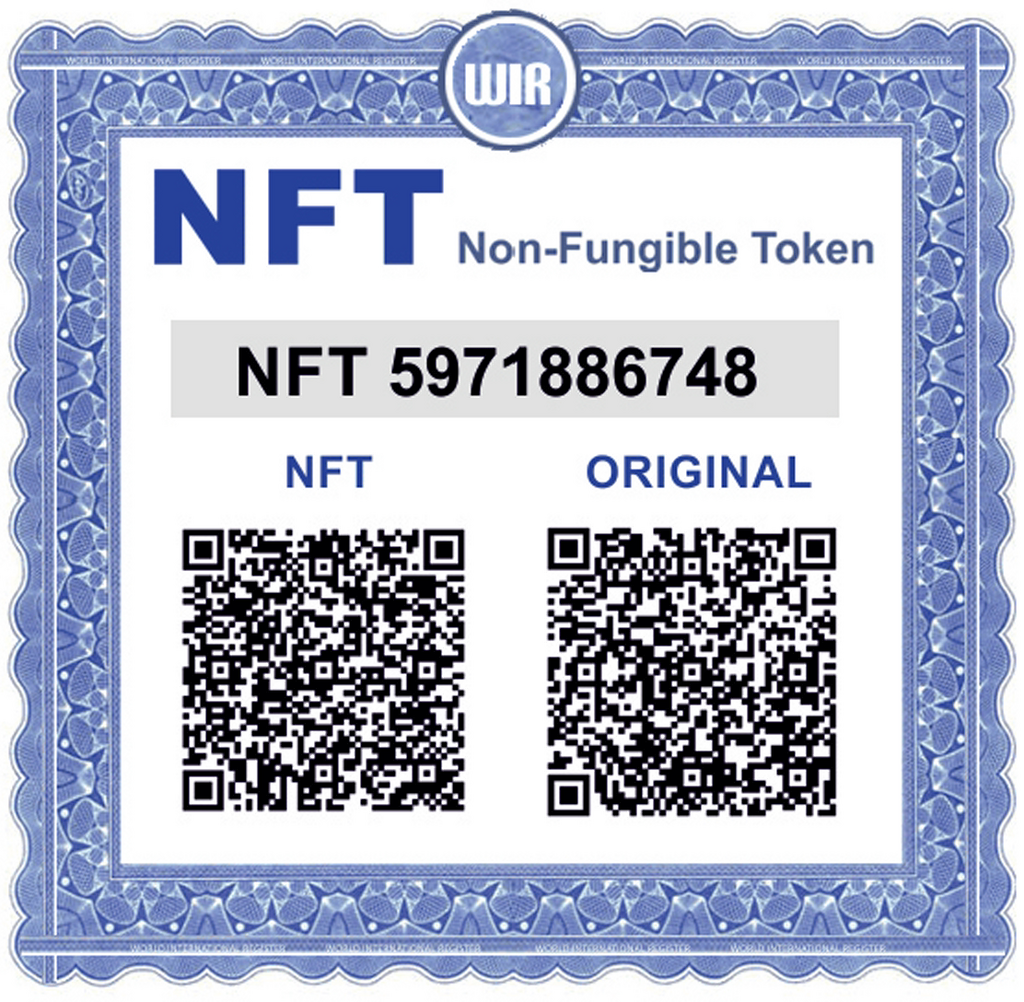
This brings us to NFTs. An NFT is a digital certificate that represents ownership of a unique item, whether it's a piece of digital art, a song, or even a ticket to an event. It's a way to prove you own a specific digital thing, just like a deed proves you own a house.
Non-Fungible Token
noun
A unique digital identifier recorded on a blockchain, used to certify ownership and authenticity of an asset, either digital or physical.
How NFTs Differ from Crypto
You might be thinking, "Aren't cryptocurrencies like Bitcoin also digital?" Yes, but they are fungible. One Bitcoin is exactly the same as any other Bitcoin, just like our dollar bill example. This interchangeability is what makes them work as currency.
NFTs, on the other hand, are built to be different from one another. Each NFT has a unique identifier and metadata that distinguishes it from every other NFT. You can't trade one NFT for another and expect them to be the same, just like you can't trade a rare baseball card for a common one and call it an even swap.
| Feature | Cryptocurrency (e.g., Bitcoin) | NFT (Non-Fungible Token) |
|---|---|---|
| Interchangeability | Fungible (Identical and swappable) | Non-Fungible (Unique) |
| Value | Each unit has the same value | Each token has a unique value |
| Use Case | Acts as a currency or store of value | Represents ownership of a unique asset |
The Role of the Blockchain
So, how does an NFT prove ownership? It uses blockchain technology, the same distributed ledger system that powers cryptocurrencies. When an NFT is created, or "minted," its unique information is stored on a blockchain.
The blockchain is a public, unchangeable record of transactions. For NFTs, it's a permanent record of ownership.
This record is distributed across thousands of computers worldwide, making it incredibly secure and virtually impossible to alter or fake. Anyone can look up an NFT on the blockchain to see its entire history: who created it, who has owned it, and who owns it now. This transparency is what gives an NFT its power to verify authenticity and ownership.
In a digital world where anything can be copied with a simple right-click, NFTs offer a solution. While anyone can save a copy of a digital image, only one person can own the original NFT linked to it. The blockchain provides the undeniable proof.
Which of the following best describes a "fungible" item?
Based on the concept of fungibility, which of these items is considered non-fungible?
That's the basic idea behind NFTs. They are unique digital certificates, secured by a blockchain, that prove ownership of an asset.