NFT Utility Beyond Art
Introduction to NFTs
One of a Kind
A Non-Fungible Token, or NFT, is a unique digital certificate stored on a secure public database called a blockchain. Think of it as a digital deed or a certificate of authenticity. It proves that you own a specific item, whether that item is digital (like a piece of digital art) or physical.
The key word here is "non-fungible." It sounds complicated, but the idea is simple. Something is fungible if it can be replaced by another identical item. Most money is fungible.
Fungible
adjective
Able to be replaced by another identical item; mutually interchangeable.
A one-dollar bill is just as good as any other one-dollar bill. They're interchangeable. In contrast, something is non-fungible if it's unique and can't be replaced with something else. The original Mona Lisa painting is non-fungible. You can take a photo of it or buy a print, but there's only one original.
NFTs are digital tokens that represent ownership of something unique. Each NFT is one of a kind.
Tokens vs. Coins
This uniqueness is what makes NFTs different from cryptocurrencies like Bitcoin or Ethereum. While both are built on similar technology, their purpose is different. Cryptocurrencies are designed to be fungible, acting like digital money.
One Bitcoin is always equal in value to another Bitcoin, just like dollars. This interchangeability is essential for a currency. NFTs, on the other hand, are created to be distinct. Each one has a unique identifier, making it different from every other NFT. You can't trade one for another and have the exact same thing.
| Feature | Cryptocurrency (e.g., Bitcoin) | NFT (Non-Fungible Token) |
|---|---|---|
| Nature | Fungible | Non-Fungible |
| Value | Uniform; one unit equals another | Unique; each token has a different value |
| Purpose | Acts as a currency or store of value | Represents ownership of a unique asset |
| Example | One Bitcoin can be swapped for another | The NFT for a specific digital artwork cannot be swapped for another artwork's NFT |
The Blockchain Backbone
So where is all this information stored? NFTs exist on a blockchain, which is a decentralized, digital ledger. Imagine a notebook that is copied thousands of times across a network of computers. When a transaction happens, it's recorded as a "block" of data. This block is then chained to the previous block, creating a timeline of events.
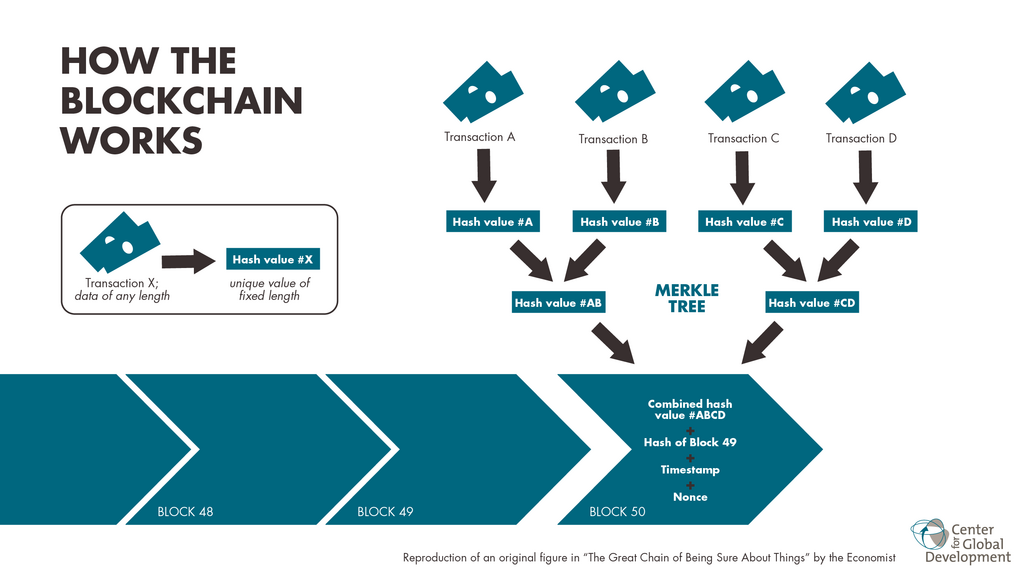
Because the ledger is distributed across so many computers, it's extremely difficult to alter or tamper with. Once a transaction is added to the blockchain, it's there for good. This creates a permanent and transparent record of ownership.
Proving You Own It
The process of creating an NFT is called "tokenization." This means converting the ownership rights of an asset into a digital token on a blockchain. The NFT itself isn't the actual artwork or item; it's the verifiable proof that you own it. This proof is tied to your digital wallet.
Non-Fungible Tokens (NFTs) are a type of digital asset that represents a proof of ownership over a particular digital item such as art, music, or real estate.
Anyone can look at the blockchain and see the entire history of an NFT, from its creation to every time it was sold or transferred. This transparency makes it easy to verify who the rightful owner is without needing a central authority like a bank or a government registry. The ownership is written into the code, secured by the entire network.
Time for a quick check on these new concepts.
What is the primary function of a Non-Fungible Token (NFT)?
Which of the following is the best example of a 'fungible' item?
In short, NFTs use blockchain technology to create a secure and transparent way to prove ownership over unique digital or physical items.