NFT Utility Beyond Art
Introduction to NFTs
What Makes an NFT Unique?
At its core, a Non-Fungible Token (NFT) is a digital certificate of ownership. Think of it as a unique, unforgeable title deed for a digital item, stored securely on a public ledger called a blockchain.
The key is in the name: "non-fungible." It sounds complicated, but the idea is simple. Something is fungible if it can be replaced by another identical item. A dollar bill is fungible. If you lend a friend a dollar, you don't need the exact same bill back, just any dollar bill will do. They are interchangeable.
non-fungible
adjective
Not interchangeable. An item that is unique and cannot be replaced with another identical item.
Non-fungible items are one-of-a-kind. A ticket to a specific seat at a concert is non-fungible. Your ticket for seat A7 can't be swapped for one in seat Z12; they represent different things. The original Mona Lisa painting is non-fungible. While you can buy countless posters of it, there is only one original.
NFTs apply this concept to the digital world. They are unique tokens that represent ownership of a specific asset, whether it's digital art, a piece of music, an in-game item, or even a ticket to an event. Each NFT is distinct and cannot be replaced by another.
Non-Fungible Tokens (NFTs) are a type of digital asset that represents a proof of ownership over a particular digital item such as art, music, or real estate.
NFTs vs. Cryptocurrencies
It’s a common point of confusion. Both NFTs and cryptocurrencies like Bitcoin or Ethereum are built on blockchain technology, but they serve very different purposes. The main difference comes back to that idea of fungibility.
Cryptocurrencies are fungible. One Bitcoin is always equal in value to another Bitcoin, just like dollar bills. They are designed to be a medium of exchange, a way to store and transfer value.
NFTs are non-fungible. Each one is unique and has a different value based on what it represents. You can't trade one NFT for another and expect them to be equivalent, just as you can't trade a concert ticket for a plane ticket and assume they have the same value or purpose.
| Feature | Cryptocurrency (e.g., Bitcoin) | NFT (Non-Fungible Token) |
|---|---|---|
| Type | Fungible | Non-Fungible |
| Value | Uniform; one unit is equal to another | Unique; each token has a different value |
| Interchangeability | Interchangeable | Not interchangeable; one of a kind |
| Purpose | Medium of exchange, store of value | Proof of ownership for a unique asset |
Digital Ownership and Scarcity
For years, proving ownership of a digital file was nearly impossible. Anything digital could be copied and pasted endlessly, with no way to distinguish the "original" from a perfect copy. This made it difficult to assign value to digital creations.
NFTs solve this problem. While a digital artwork can still be screenshotted or downloaded, the NFT associated with it acts as a public, verifiable proof of ownership. This record is stored on a blockchain, a decentralized database maintained by thousands of computers around the world. It’s incredibly secure and transparent, meaning anyone can see who owns the official version of the asset.
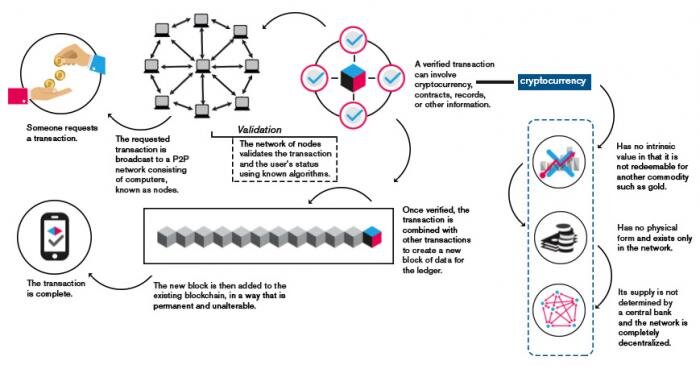
This creates the concept of digital scarcity. An artist can decide to release only one official version of their digital painting as an NFT, or a limited series of 100. Even if the image is copied millions of times, only the person who owns the NFT can claim ownership of the original piece. The blockchain acts as the ultimate authority on who the true owner is.
This system allows creators to sell their digital work directly to collectors, knowing that the ownership is secure and the scarcity is real. It fundamentally changes how we think about value in the digital realm.
Time to check what you've learned.
What is the primary function of a Non-Fungible Token (NFT)?
An item is considered 'fungible' if it is...
In short, NFTs provide a powerful new way to manage and verify ownership of unique items, both digital and physical. By leveraging the security of the blockchain, they introduce scarcity and authenticity to a world where things were once endlessly reproducible.