NFT Utility Beyond Art
Introduction to NFTs
What Are NFTs?
Let's break down the term "Non-Fungible Token." It sounds complex, but the idea is straightforward.
First, "fungible" means something is interchangeable. A $10 bill is fungible because you can trade it for any other $10 bill, and you still have the same value. They're identical in function and worth.
"Non-fungible" is the opposite. It means something is unique and can't be replaced with something else. Think of the Mona Lisa. There's only one original. You could have a print, but it's not the same thing. The original painting is non-fungible.
Non-Fungible Token
noun
A unique digital identifier that cannot be copied, substituted, or subdivided, that is recorded in a blockchain, and that is used to certify authenticity and ownership.
So, an NFT is a one-of-a-kind digital token. It acts as a verifiable proof of ownership for a specific item, which can be anything from digital art and music to virtual real estate or a ticket to an event. It's like a digital deed or certificate of authenticity.
How They Differ From Crypto
You might be thinking, "This sounds a lot like cryptocurrencies like Bitcoin or Ethereum." They both use similar technology, but their purpose and properties are very different. The key distinction comes back to that word: fungible.
Cryptocurrencies are fungible. One Bitcoin is always equal to another Bitcoin, just like one dollar is equal to another. This interchangeability makes them useful as a medium of exchange, or money.
NFTs are non-fungible. Each one is unique and has a distinct value. You can't trade one NFT for another and expect them to be equivalent, just as you can't trade a ticket to a baseball game for a ticket to a concert and call it an even swap. They are different assets with different values.
| Feature | Cryptocurrencies | NFTs |
|---|---|---|
| Fungibility | Fungible | Non-Fungible |
| Unit Value | All units are equal | Each unit is unique |
| Purpose | Medium of exchange | Proof of ownership |
The Technology Backbone
NFTs are built on blockchain technology, the same distributed ledger system that powers cryptocurrencies. A blockchain is essentially a chain of digital blocks that contain information. Each block is cryptographically linked to the one before it, creating a secure and unchangeable record.
When an NFT is created (a process called "minting"), information about it is stored on the blockchain. This includes who created it, who has owned it, and who owns it now. Because the blockchain is public and maintained by a network of computers, anyone can verify this information, but no single person can alter it. This transparency is what gives an NFT its proof of authenticity and ownership.
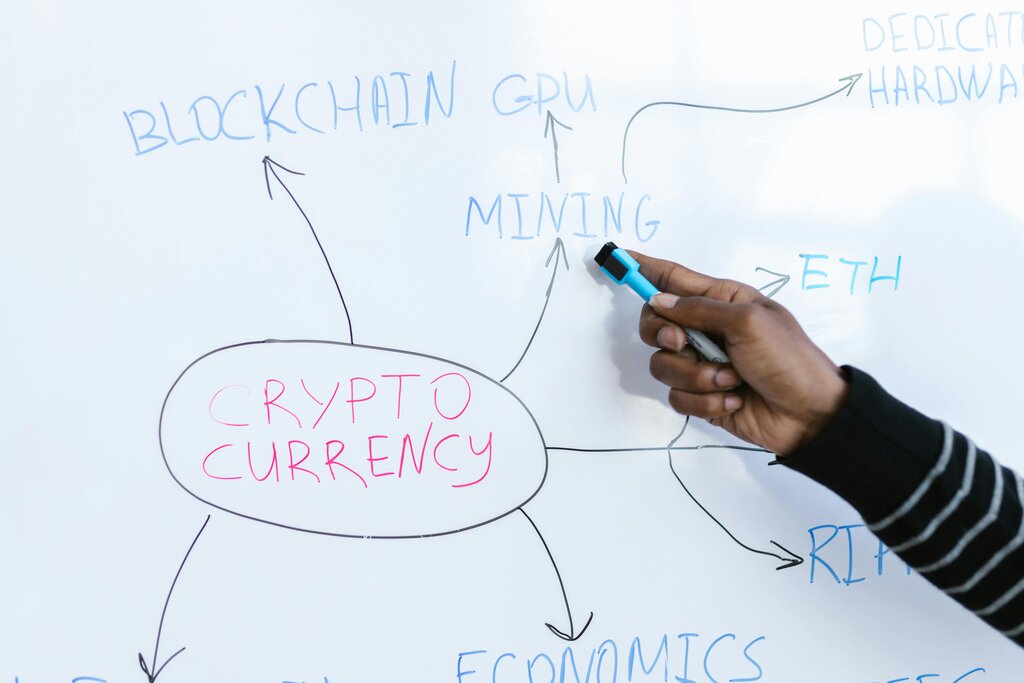
This public ledger ensures that the ownership history of an NFT is permanently recorded and easily traceable. It's like having a digital pedigree for your asset.
Core Characteristics
To sum up, NFTs have a few key properties that set them apart.
Uniqueness: Every NFT is one-of-a-kind. Even if two NFTs represent similar items, like two different pieces of digital art from the same series, they each have a unique digital signature that distinguishes them.
Indivisibility: NFTs cannot be broken down into smaller denominations. You can't buy half an NFT in the same way you can buy half a Bitcoin. You own the whole thing or nothing at all, just like you can't own 20% of a movie ticket.
This indivisibility is crucial because it protects the uniqueness of the asset. You own the entire, specific item that the NFT represents.
Verifiable Ownership: Because NFTs exist on a public blockchain, ownership can be easily and publicly verified. Anyone can trace the history of an NFT back to its creator, confirming its authenticity and preventing fraud. This creates a level of trust and transparency that is difficult to achieve with physical collectibles.
What does it mean for an asset to be "non-fungible"?
What is the primary difference between a cryptocurrency like Bitcoin and an NFT?