NFT Utility Beyond Art
Introduction to NFTs
What Exactly Is an NFT?
Let's start with a simple idea: fungibility. The dollar bill in your wallet is fungible. You can trade it for any other dollar bill, and you'll still have a dollar. They're identical in value and interchangeable.
Now, think about the Mona Lisa. There's only one original. You can't swap it for another painting and have the same thing. The Mona Lisa is non-fungible, meaning it's unique and can't be replaced with something else.
NFTs, or Non-Fungible Tokens, apply this concept to the digital world. An NFT is a one-of-a-kind digital certificate of ownership recorded on a secure public database called a blockchain. It acts as a deed, proving you own a specific digital item, whether it's a piece of art, a video clip, or even a ticket to an event.
Non-fungible tokens, known as NFTs, are electronic identifiers confirming a digital collectible is real by recording the details on a digital ledger or database known as a blockchain.
Before NFTs, it was hard to prove ownership of a digital file. Anyone could copy and paste a JPEG. An NFT solves this by creating a unique, verifiable token tied to that file. While anyone can still view or copy the file, only one person can own the original, authenticated version.
NFTs vs. Cryptocurrencies
People often confuse NFTs with cryptocurrencies like Bitcoin or Ethereum. It's an easy mistake to make, since both use the same underlying technology: the blockchain. But their purpose is completely different.
Cryptocurrencies are fungible, just like regular money. One Bitcoin is worth the same as any other Bitcoin. They're designed to be a medium of exchange. NFTs, on the other hand, are all about unique ownership. Each one has a distinct value based on what it represents.
| Feature | Cryptocurrency | NFT |
|---|---|---|
| Fungibility | Fungible | Non-Fungible |
| Value | Interchangeable | Unique |
| Purpose | Medium of exchange | Proof of ownership |
| Example | A Bitcoin | A unique digital artwork |
How Blockchain Powers NFTs
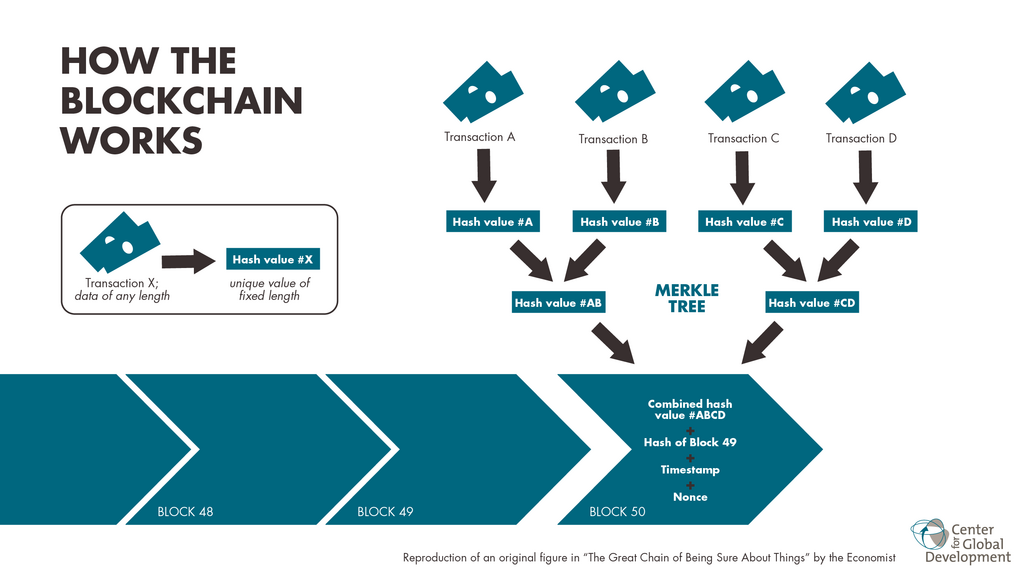
The magic behind an NFT's security and verifiable ownership is the blockchain. Think of a blockchain as a digital record book shared across thousands of computers worldwide. When a transaction happens, like someone buying an NFT, it's recorded as a "block" of data. This block is then cryptographically linked to the previous block, forming a chain.
This structure makes the record incredibly secure. To alter a transaction, a hacker would need to change not only that block but every single block that came after it, across thousands of computers, all at the same time. It's practically impossible.
This public, unchangeable ledger is what gives an NFT its power. It provides a clear, transparent history of ownership for a digital item that anyone can verify.
A Brief History
The idea of unique digital assets isn't brand new. Early experiments on the Bitcoin blockchain, called "Colored Coins," tried to attach real-world assets to small amounts of Bitcoin. But the concept really took off with the launch of the Ethereum blockchain, which made creating unique digital tokens much easier.
The first major breakthrough into public awareness came in 2017 with CryptoKitties. It was a game where users could buy, collect, and breed unique digital cats. Each cat was an NFT. The game became so popular that it famously slowed down the entire Ethereum network, proving there was real demand for digital collectibles.
From there, the focus shifted heavily towards digital art. Artists saw a new way to sell their work directly to collectors, with verifiable scarcity and built-in royalties. This led to a boom in NFT marketplaces and high-profile sales, cementing NFTs' place in popular culture as a new frontier for creators and collectors.
Now that you understand the basics, let's test your knowledge.
Which of the following best describes something that is "fungible"?
What is the primary difference between a Non-Fungible Token (NFT) and a cryptocurrency like Bitcoin?