Neutron Moderators Explained
Introduction to Nuclear Fission
Splitting the Atom
At the heart of every atom is a dense core called the nucleus. For some very large atoms, this nucleus is wobbly and unstable. Nuclear fission is the process of splitting that unstable nucleus into two or more smaller nuclei.
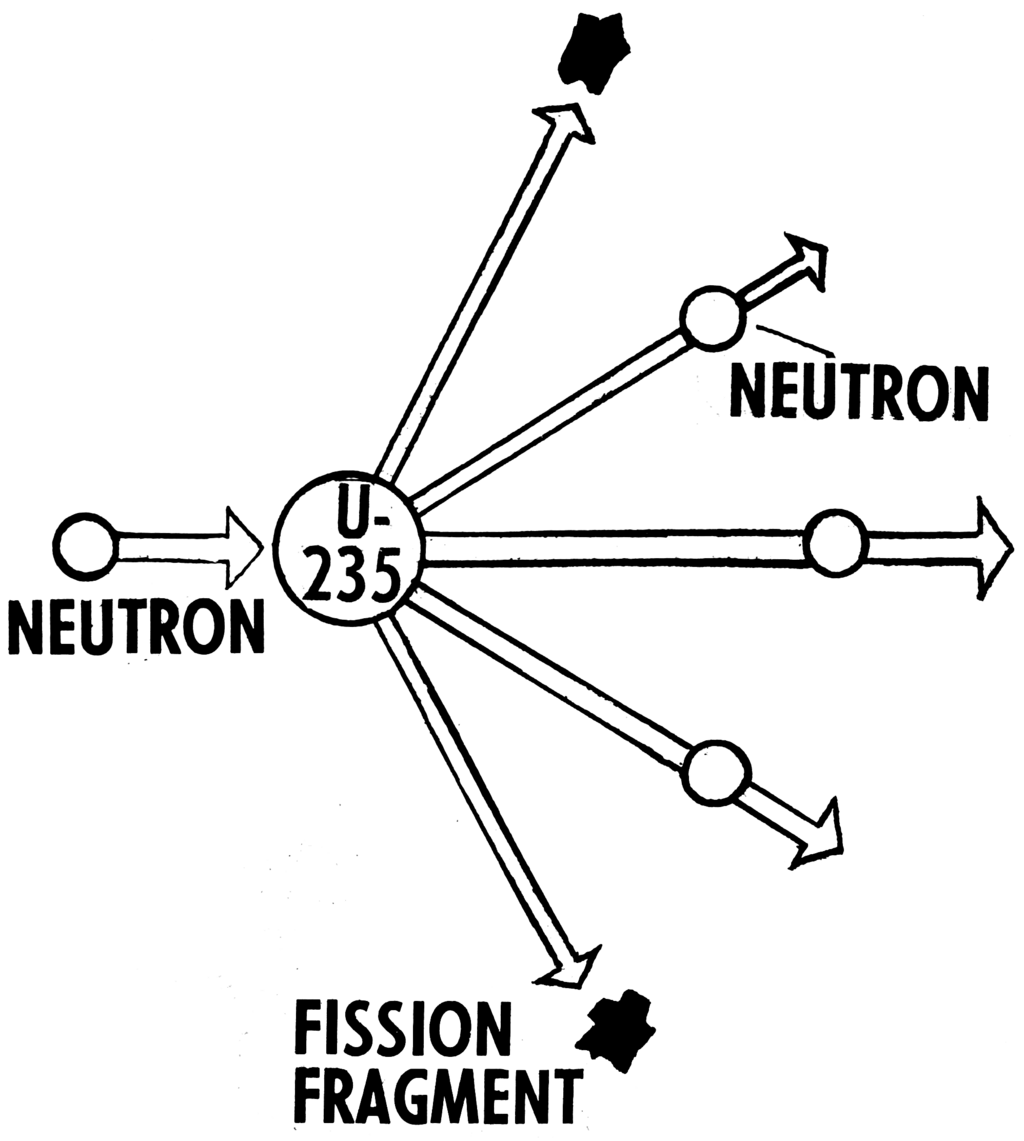
Think of a large, unstable nucleus like a drop of liquid that's shivering. If you flick it with just the right amount of force, it can break apart into smaller droplets. In nuclear fission, the “flick” is usually a tiny particle called a neutron. When a neutron with the right amount of energy hits a large, unstable nucleus, like that of uranium-235, the nucleus absorbs it. This new, combined nucleus is extremely unstable and can't hold itself together. Within a fraction of a second, it splits apart.
When the reactor is running, high-speed particles called neutrons strike the uranium atoms and cause them to split in a process known as nuclear fission.
This split results in several things: two smaller nuclei, called fission products, a few extra neutrons, and a huge amount of energy.
The Energy Payoff
Where does all this energy come from? It comes from mass itself. If you were to weigh the original uranium nucleus and the neutron that hit it, and then weigh all the pieces that came out after the split, you'd find something strange. The total mass of the fission products and the released neutrons is slightly less than the mass of the original atom and neutron. That tiny amount of missing mass hasn't disappeared. It has been converted directly into energy, following Einstein's famous equation:
In this equation, is energy, is the missing mass, and is the speed of light. Because the speed of light () is such an enormous number, and it's squared, even a minuscule amount of mass can be converted into a tremendous amount of energy. Most of this energy is released as the kinetic energy of the fission products and neutrons, which means they fly apart at very high speeds. The rest is released as gamma rays, a form of high-energy light.
What's Left Behind
The two smaller nuclei created during fission are called fission products. For uranium-235, these products aren't always the same. The split can happen in many different ways, creating a wide range of different elements, like barium, krypton, strontium, and cesium. A typical fission reaction might look like this:
One crucial property of these fission products is that they are almost always radioactive. The original uranium nucleus had a certain ratio of neutrons to protons. When it splits, the smaller nuclei that form are left with too many neutrons for their size to be stable. To become stable, they release energy over time through radioactive decay. This is why the waste from nuclear reactors is radioactive and must be handled carefully.