Neuroscience of Emotions and AEDP
Damasio's Somatic Marker Hypothesis
Your Body's Secret Adviser
How do you make a big decision? Many people believe it’s a purely logical process, a matter of weighing pros and cons. But neuroscientist Antonio Damasio proposed a different idea. He suggested that our bodies play a crucial role, sending subtle (and sometimes not-so-subtle) signals that guide our choices. This is the core of the somatic marker hypothesis.
The idea is that your choices aren't just driven by rational thought, but are heavily influenced by feelings generated from your body.
Imagine you're considering two job offers. Job A has a higher salary and a better title, but during the interview, you felt a strange tension in your chest. Job B offers a bit less money, but the office felt welcoming and you left feeling energized and light. The somatic marker hypothesis argues that those bodily feelings—the chest tension and the sense of lightness—are critical pieces of data. They are 'somatic markers'.
Somatic Marker
noun
A physiological reaction, like a gut feeling or a racing heart, that the brain links to a specific past experience and its outcome. These markers act as intuitive signals that help guide decision-making.
These markers are shortcuts. When you face a situation, your brain quickly accesses memories of similar past experiences and recreates the bodily sensations associated with them. A memory tied to a negative outcome might trigger an unpleasant gut feeling, warning you to stay away. A memory of a positive outcome could generate a warm, open sensation, signaling you to proceed.
This process is incredibly efficient. Instead of having to reason through every single possibility from scratch, your body gives you a quick summary: 'This feels good' or 'This feels bad.' It helps you filter your options quickly, leaving your conscious mind to analyze the most promising ones.
The Brain's Feeling-and-Thinking Hubs
So where does this all happen? Two brain regions are key players in this process: the amygdala and the ventromedial prefrontal cortex (vmPFC).
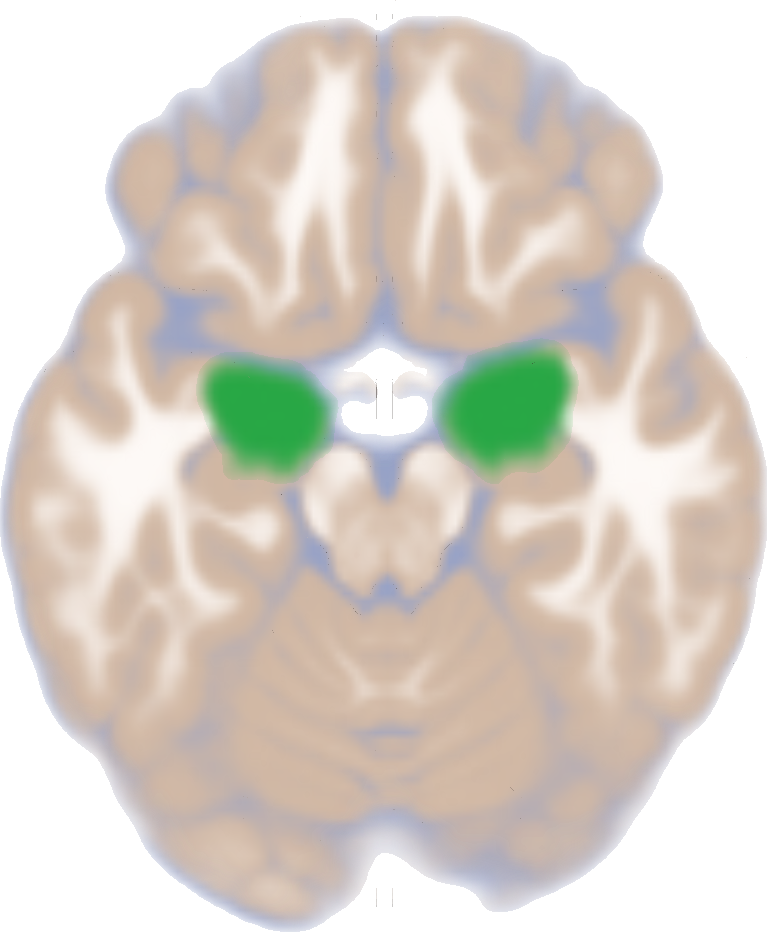
Think of the amygdala as the part of your brain that generates the initial emotional tag for an experience. It links a situation to a bodily state. When you first experience something rewarding or punishing, the amygdala forges a connection between the external event and the internal feeling. It's the engine that creates the somatic marker.
The ventromedial prefrontal cortex (vmPFC), located in the frontal lobe, acts as a decision-making hub. It receives the emotional signals generated by the amygdala and integrates them with other, more complex information. The vmPFC uses these bodily cues to evaluate choices and guide your behavior. It helps you understand what your gut is telling you and apply that wisdom to the situation at hand.
Damasio's work with patients who had damage to their vmPFC provided strong evidence for this hypothesis. These patients could still reason logically and score high on IQ tests, but their personal and social lives were a mess. They struggled to make good decisions, often acting impulsively or getting stuck in endless analysis. Without the input from their somatic markers, they had lost their intuitive guide.
Emotion Meets Cognition
The somatic marker hypothesis challenges the old idea that emotion is the enemy of reason. Instead, it shows that emotion and cognition are deeply intertwined. Feelings are not just noise that gets in the way of clear thinking; they are a vital source of information that helps us navigate a complex world.
An emerging consensus argues the contrary position--that our rational processes depend vitally on the 'lower' brain structures that mediate emotion, and that lack of emotion can be just as damaging to reason as its excess.
Understanding this connection has powerful implications. It highlights the importance of listening to our bodies. That knot in your stomach or feeling of excitement is your brain processing vast amounts of past experience and giving you a summary. It doesn't mean you should always follow your gut without question, but it does mean you should always listen to what it has to say. Your body is often a very wise adviser.
What is the central idea of the somatic marker hypothesis?
Which brain region is described as the 'engine' that creates the somatic marker by linking an external event to an internal bodily feeling?
This integration of body and mind provides a more complete picture of how we function, reminding us that effective decision-making isn't just about cold, hard logic, but about the rich interplay between our thoughts and our physical, emotional selves.