Neuroscience for Software Engineers
Neuroscience Basics
The Brain’s Building Blocks
Your brain is a complex network of about 86 billion specialized cells called neurons. These are the fundamental units of the nervous system, responsible for sending and receiving information throughout your body. Think of them as the wiring that powers everything you think, feel, and do.
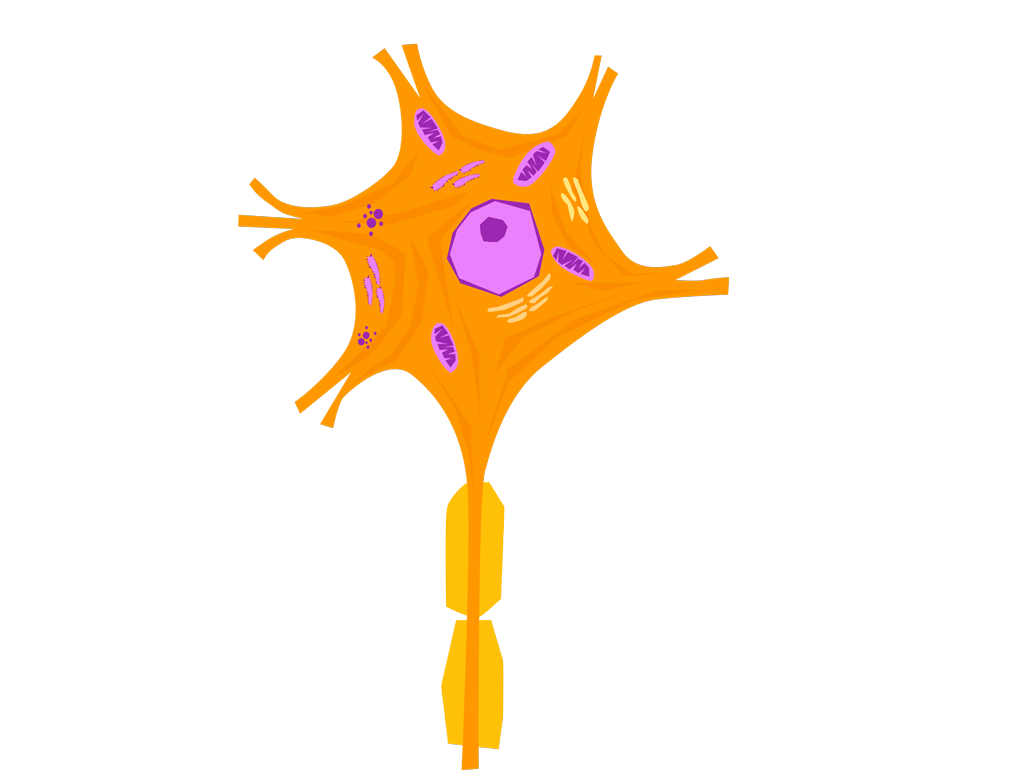
Each neuron has three main parts that work together to pass along messages.
- Soma (Cell Body): This is the neuron's core. It contains the nucleus and is responsible for the life of the cell, directing all its activities.
- Dendrites: These are the tree-like branches extending from the soma. Their job is to receive incoming signals from other neurons. You can think of them as the neuron's antennas.
- Axon: This is a long, cable-like projection that carries messages away from the cell body to other neurons, muscles, or glands. It acts as the primary transmission line.
The Neural Conversation
Neurons communicate with each other using a combination of electrical and chemical signals. When a neuron is activated, it fires an electrical impulse called an action potential. This impulse travels down the axon to its end.
But neurons don't physically touch. There's a microscopic gap between the axon of one neuron and the dendrite of another. This junction is called a synapse.
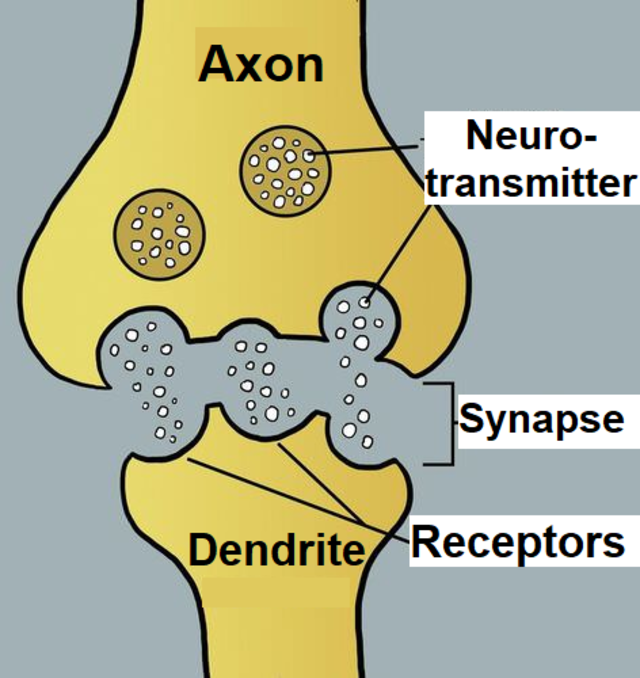
When the electrical signal reaches the end of the axon, it triggers the release of chemical messengers into the synapse. These chemicals are known as neurotransmitters.
neurotransmitter
noun
A chemical substance that is released at the end of a nerve fiber by the arrival of a nerve impulse and, by diffusing across the synapse or junction, causes the transfer of the impulse to another nerve fiber, a muscle fiber, or some other structure.
These neurotransmitters float across the synaptic gap and attach to specific sites, called receptors, on the dendrites of the receiving neuron. This binding can either excite the next neuron, making it more likely to fire its own action potential, or inhibit it, making it less likely to fire. This constant chatter of excitation and inhibition across trillions of synapses is what allows your brain to process information, form memories, and control your body.
The Grand Network
Individual neurons and their connections aren't random; they are organized into a vast, intricate network: the nervous system. This system is traditionally divided into two main parts.
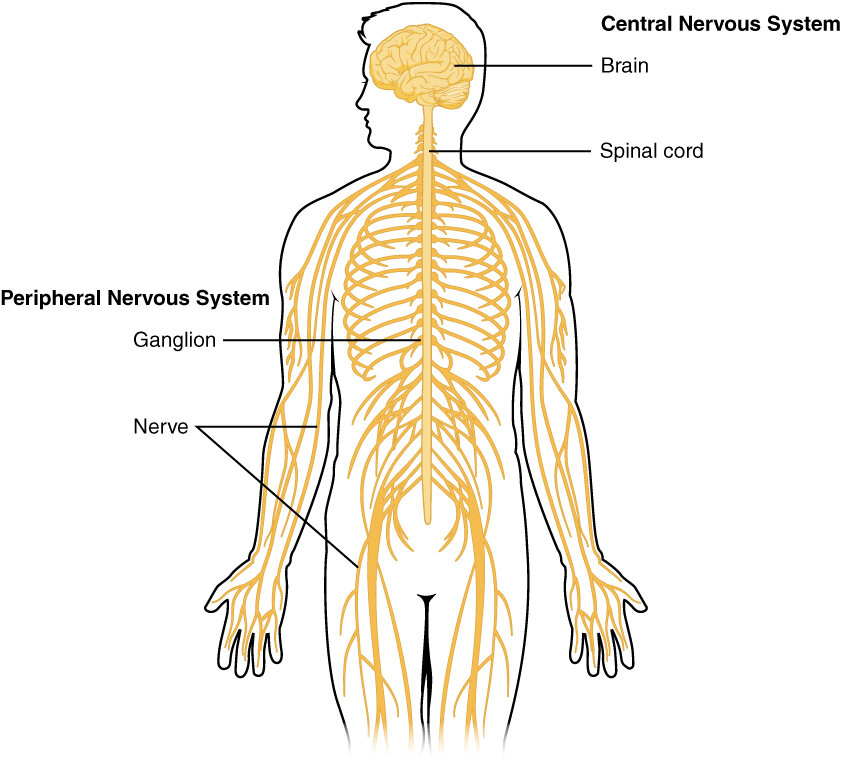
The Central Nervous System (CNS) is the command center, consisting of the brain and the spinal cord. The brain is the hub of thought, emotion, and control, while the spinal cord acts as the main highway, relaying messages between the brain and the rest of the body. It also handles reflexes, which are rapid, automatic responses to stimuli that don't require input from the brain.
The Peripheral Nervous System (PNS) is the network of nerves that extends from the CNS to all parts of the body. It's how the brain and spinal cord receive information from the outside world (like touch and sight) and send commands to the body (like moving a muscle). The PNS carries out the orders that the CNS issues.
Together, the CNS and PNS form a unified system that controls every aspect of your being, from breathing and blinking to solving complex problems.
Time to review these core concepts.
Now, let's check your understanding.
What is the primary function of a neuron's dendrites?
The microscopic gap between two neurons, where chemical messengers are released, is called a ______.
Understanding these fundamentals—the neuron, the synapse, and the structure of the nervous system—provides a foundation for exploring the more complex functions of the brain.