Neurology Essentials for Diploma Programs
Introduction to the Nervous System
Your Body's Command Center
Your nervous system is the intricate network that coordinates your actions and transmits signals between different parts of your body. Think of it as the body's electrical wiring, a high-speed communication system that controls everything from your breathing and heartbeat to your thoughts and emotions. It works faster than any supercomputer, processing information and making decisions in fractions of a second.
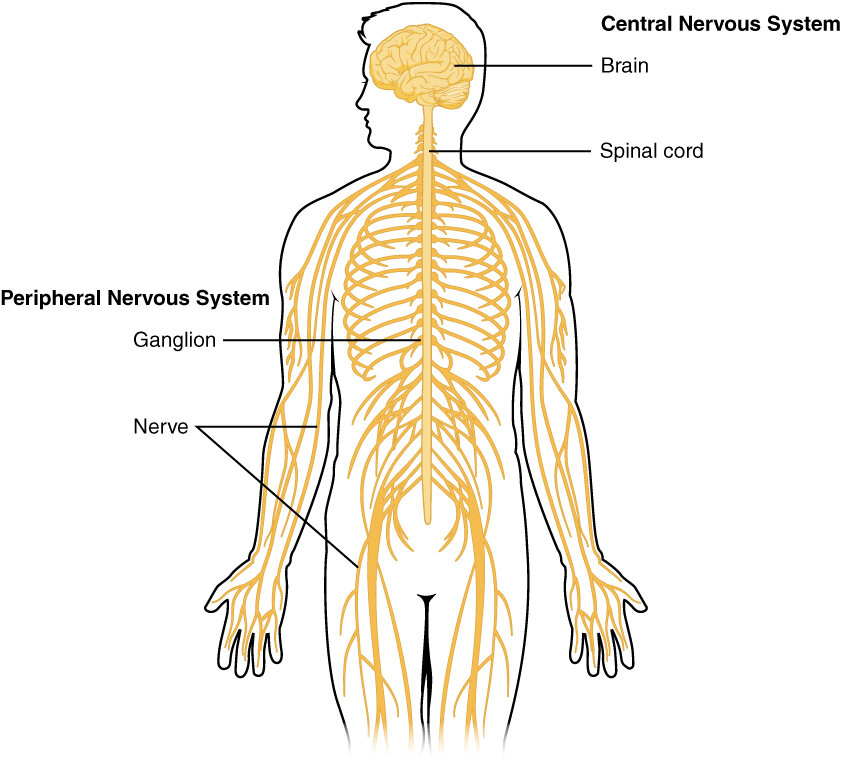
This vast network is organized into two main parts that work in constant partnership: the central nervous system and the peripheral nervous system. Understanding this division is the first step to appreciating how your body is so masterfully controlled.
The Two Main Divisions
The central nervous system, or CNS, is the main processing center. It consists of the brain and the spinal cord. Your brain is the command hub, responsible for thought, memory, and emotion. The spinal cord is the main pathway for information connecting the brain and the peripheral nervous system.
The CNS is where all the big decisions are made, interpreting information and issuing commands.
The peripheral nervous system, or PNS, is made up of all the nerves that branch out from the CNS and extend to other parts of the body, including muscles and organs. Its job is to carry messages back and forth. If the CNS is the command center, the PNS is the network of couriers, delivering reports and carrying out orders.
Its Three Basic Jobs
Regardless of which part we're talking about, the nervous system performs three fundamental jobs: receiving information, processing it, and responding to it.
Sensory Input
noun
The process of gathering information from the body's internal and external environments. Specialized nerve endings, called sensory receptors, detect changes like light, sound, temperature, and pressure.
Once information is gathered, it's sent to the CNS for the second job: integration. This is the process of interpreting the sensory input and deciding what should be done. It's like a detective analyzing clues to solve a case. For example, if you touch a hot stove, the sensory input (heat, pain) is rapidly integrated, and the brain determines this is a dangerous situation.
The final job is motor output. After integrating the information, the CNS sends out signals to muscles or glands to produce a response. In the hot stove example, the motor output is the signal sent to the muscles in your arm and hand, causing them to contract and pull your hand away from the heat. This entire sequence—sensory input, integration, and motor output—can happen in a split second.
What is the primary role of the nervous system in the human body?
The central nervous system (CNS) is composed of which two structures?
These core components and functions are the foundation of everything the nervous system does, from simple reflexes to complex creative thought.