Neurocritical Care Management of Japanese Encephalitis
Pathophysiology and Neurotropism
Neuroinvasion Strategies
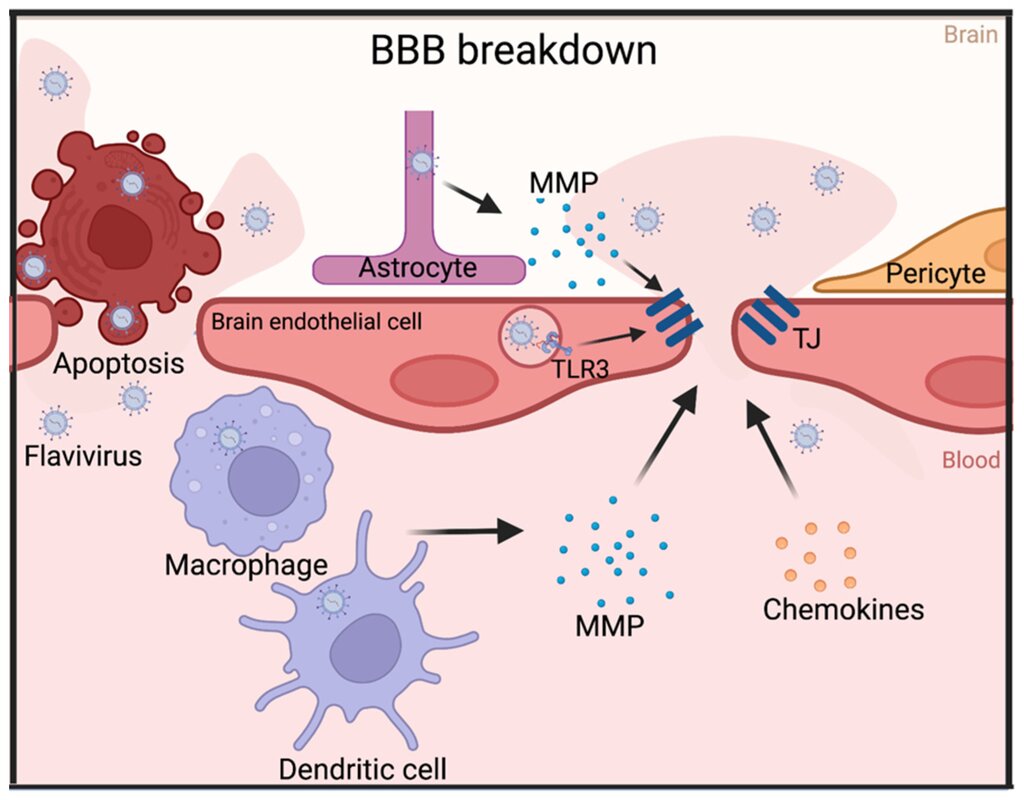
Japanese Encephalitis Virus (JEV) breaches the blood-brain barrier (BBB) through two primary, non-exclusive mechanisms. The first is a 'Trojan horse' strategy, where the virus infects peripheral leucocytes, particularly monocytes and macrophages. These infected cells traverse the BBB as part of routine immune surveillance, carrying the viral payload directly into the central nervous system parenchyma.
The second mechanism involves direct infection of the brain microvascular endothelial cells (BMECs) that constitute the BBB. JEV can replicate within these cells, leading to increased vascular permeability. This process is often facilitated by the upregulation of matrix metalloproteinases, such as MMP-9, which degrade the tight junction proteins (e.g., claudin-5, occludin) that maintain BBB integrity. The resulting disruption allows for both cell-free virions and infected leucocytes to extravasate into the brain.
Anatomical Predilection
Once inside the CNS, JEV exhibits a distinct neurotropism, preferentially targeting deep grey matter structures. The thalamus, basal ganglia (specifically the putamen and caudate nucleus), substantia nigra, and brainstem are consistently affected. This tropism is not random; it is dictated by the density of specific cellular receptors and the permissiveness of the local cellular environment to viral replication.
The clinical sequelae managed in neurocritical care are a direct consequence of this anatomical targeting. Damage to the thalamus often presents as altered consciousness and sensory deficits. The hallmark extrapyramidal symptoms, including parkinsonism (bradykinesia, rigidity, tremor) and dystonia, arise from the profound disruption of dopaminergic circuits within the nigrostriatal pathway. Viral replication within the dopaminergic neurons of the substantia nigra pars compacta leads to their dysfunction and death, mirroring the pathology of Parkinson's disease, but in an acute, inflammatory context.
The Inflammatory Cascade
Neuronal death in JEV infection is a dual-front assault. It results from both direct viral-induced cytopathic effects and, more significantly, from an aggressive, often overwhelming, host immune response. The primary immune effector cells within the CNS are microglia.
Upon detecting viral pathogen-associated molecular patterns (PAMPs), microglia become activated. This activation triggers the release of a potent cocktail of pro-inflammatory cytokines, including Tumour Necrosis Factor-alpha (TNF-α) and Interleukin-6 (IL-6), as well as chemokines that recruit peripheral immune cells. This 'cytokine storm' within the confined cranial space contributes substantially to secondary brain injury. It exacerbates BBB breakdown, promotes vasogenic oedema, and directly induces apoptosis in uninfected bystander neurons. The management of intracranial pressure and potential immunomodulatory strategies in the ICU are aimed at mitigating this immune-mediated damage.
The key neurocritical care challenge is balancing viral clearance with the mitigation of a destructive host inflammatory response. Much of the long-term neurological deficit is a consequence of this secondary, immune-mediated injury rather than direct viral lysis of neurons.
Japanese Encephalitis Virus (JEV) can enter the central nervous system by infecting immune cells that then cross the blood-brain barrier. What is this mechanism commonly called?
A patient with JEV develops severe parkinsonism, including rigidity and tremors. This is most likely due to the virus targeting which specific brain structure?
Understanding these specific pathophysiological mechanisms is crucial for interpreting the clinical presentation of JEV encephalitis and for anticipating the complications that arise in the neurocritical care setting.