Neurobiology and Clinical Treatment of Methamphetamine Addiction
Dopamine and Brain Rewiring
Hijacking the Dopamine System
Methamphetamine's powerful effects stem from its ability to manipulate the brain's dopamine system. Normally, neurons release dopamine into the synapse, the gap between cells, to send a signal. After the message is delivered, a protein called the dopamine transporter (DAT) acts like a vacuum, pulling dopamine back into the original neuron for reuse. This process keeps dopamine levels in check.
Methamphetamine breaks this system. It enters the neuron and forces the dopamine transporters to work in reverse, ejecting massive quantities of dopamine into the synapse while also blocking its reuptake. The result is a dopamine flood far beyond what any natural reward could produce.
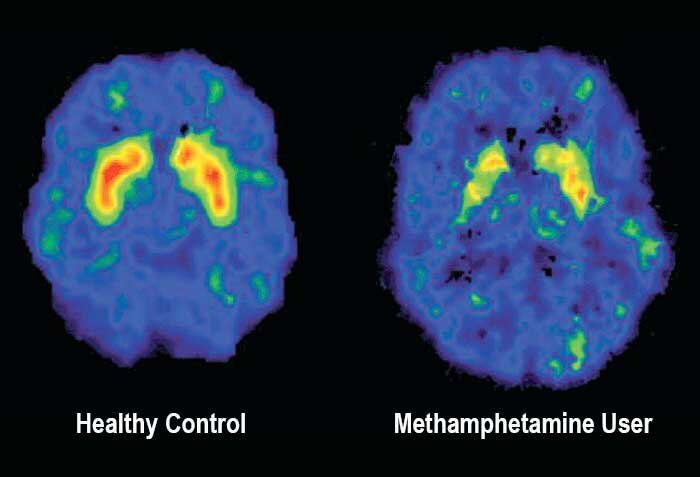
Methamphetamine increases the amount of the neurotransmitter dopamine in the brain.
The brain, overwhelmed by this chemical surge, initiates a defensive response. It begins to remove dopamine receptors from the surface of neurons, a process called downregulation. With fewer receptors, the same amount of dopamine has less effect. The brain also reduces the number of available dopamine transporters. This adaptation is the foundation of tolerance, forcing a person to use more of the drug to achieve the same initial high.
Damage to the Command Center
The consequences of this dopamine dysregulation extend to the brain's architecture, particularly in the prefrontal cortex (PFC). As the brain's hub for executive functions, the PFC governs decision-making, impulse control, and long-term planning. Chronic methamphetamine use leads to hypoactivity in this region, meaning it becomes less active and less effective.
Addiction doesn’t just affect the areas of the brain responsible for reward and motivation—it also alters the prefrontal cortex, the region involved in impulse control, self-regulation, and decision-making.
This isn't just a functional change; it's structural. The drug is directly neurotoxic, causing neurons in the PFC and other areas to wither and die through a process of oxidative stress—essentially, a form of cellular rust. This leads to measurable atrophy, or shrinking, of brain tissue. The communication line between the PFC and the striatum, a key reward center, becomes severely disrupted. As the PFC weakens, the more primitive, reward-seeking parts of the brain take over, making it incredibly difficult to resist cravings and make rational choices.
The Modern Landscape
The neurobiological damage is amplified by the drug's current formulation. In the Midwest, epidemiological data from 2024-2025 indicates a crisis fueled by methamphetamine of unprecedented purity, often exceeding 95%. This isn't the relatively low-potency drug made in small labs years ago.
This high-purity version accelerates the cycle of tolerance and neurotoxicity. The dopamine system is overwhelmed more quickly, and the damage to the frontal-striatal circuits becomes more severe and rapid. The loss of executive control is not a matter of willpower; it is a predictable outcome of profound, drug-induced changes to the brain's physical structure and chemical function.
Let's test your understanding of how methamphetamine alters brain function.
What is the primary role of the dopamine transporter (DAT) in a healthy brain?
How does methamphetamine cause the massive flood of dopamine in the synapse?
Understanding these mechanisms is crucial, as it reframes addiction not as a moral failing, but as a severe neurological condition driven by a substance that physically rewires the brain's most critical systems.