Neuroaesthetics The Science of Beauty
Introduction to Neuroaesthetics
Art and the Brain
Why does a particular painting move you to tears? Why does a certain melody give you chills? For centuries, these questions belonged to philosophers and art critics. But now, a new field is exploring these experiences by looking directly inside the brain.
Neuroaesthetics
noun
The scientific study of the neural bases for the contemplation and creation of a work of art.
Neuroaesthetics merges neuroscience, the study of the nervous system, with aesthetics, the branch of philosophy concerned with beauty and art. It's not just about famous paintings in a museum. This field investigates our brain's response to a wide range of aesthetic experiences, including music, dance, architecture, and even the beauty we find in nature. It seeks to understand the biological foundations of what we find beautiful and why.
A New Field with Deep Roots
While the term “neuroaesthetics” is relatively new, coined by neurobiologist Semir Zeki in 1999, the ideas behind it are much older. Philosophers have long speculated about the connection between the mind and beauty. For example, the ancient Greeks believed that certain mathematical ratios, like the golden ratio, were inherently pleasing to the eye.
The real launchpad for neuroaesthetics was the development of modern brain-imaging technology in the late 20th century. For the first time, scientists could observe the living brain in action as it engaged with art.
This ability to peek inside the skull gave researchers a powerful new toolkit to test age-old ideas about art and the human experience.
How We Study Beauty
Researchers in neuroaesthetics use several methods to study the brain's response to art. The most common are neuroimaging techniques, which create pictures of brain activity.
One popular tool is functional Magnetic Resonance Imaging (fMRI). An fMRI machine tracks blood flow in the brain. When a brain area becomes more active, it needs more oxygen, so blood flow to that area increases. By tracking these changes, scientists can map which parts of the brain are working when a person looks at a beautiful painting or listens to a moving piece of music.
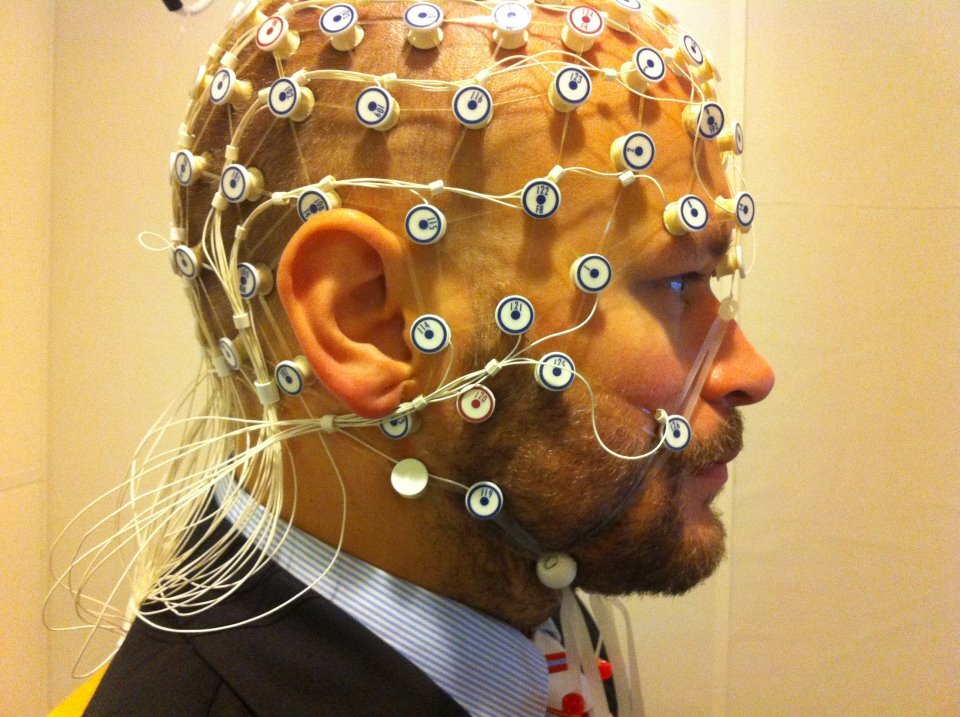
Another method is electroencephalography (EEG), which measures electrical activity in the brain using small electrodes placed on the scalp. EEG is great for tracking brain activity in real-time, capturing the precise moment a person has an aesthetic response.
A foundational study in the field might involve showing participants a series of images—some considered masterpieces, others just ordinary pictures—while they are in an fMRI scanner. Participants rate the beauty of each image. Researchers then analyze the brain scans to see if specific patterns of activity correlate with the experience of seeing something beautiful. These early studies helped establish that aesthetic experiences have a tangible, measurable basis in the brain.
Why It Matters
Understanding the neural basis of aesthetics does more than just satisfy our curiosity. It provides a bridge between two traditionally separate fields of human inquiry: the sciences and the humanities. By studying art through a scientific lens, we gain a deeper appreciation for both.
This research helps us understand a fundamental part of what it means to be human—our universal drive to create and appreciate beauty. It reveals that our response to art isn't just a matter of culture or personal taste, but is also rooted in the very wiring of our brains.
Ready to test your knowledge? Let's see what you've learned about the intersection of art and the brain.
What is the primary focus of neuroaesthetics?
A researcher wants to measure the precise timing of the brain's electrical response the instant a person finds a melody beautiful. Which tool would be most appropriate?
By exploring the biological underpinnings of our most profound aesthetic moments, neuroaesthetics opens a new window into the human mind.