Neural Networks Explained
Introduction to Neural Networks
What Are Neural Networks?
At its core, an artificial neural network is a computing system inspired by the human brain. It’s designed to recognize patterns in data, much like we learn to recognize faces or sounds. Think of it as a team of specialized workers. Each worker learns a very specific, small task. When they work together, they can solve incredibly complex problems, like translating languages or identifying objects in a photo.
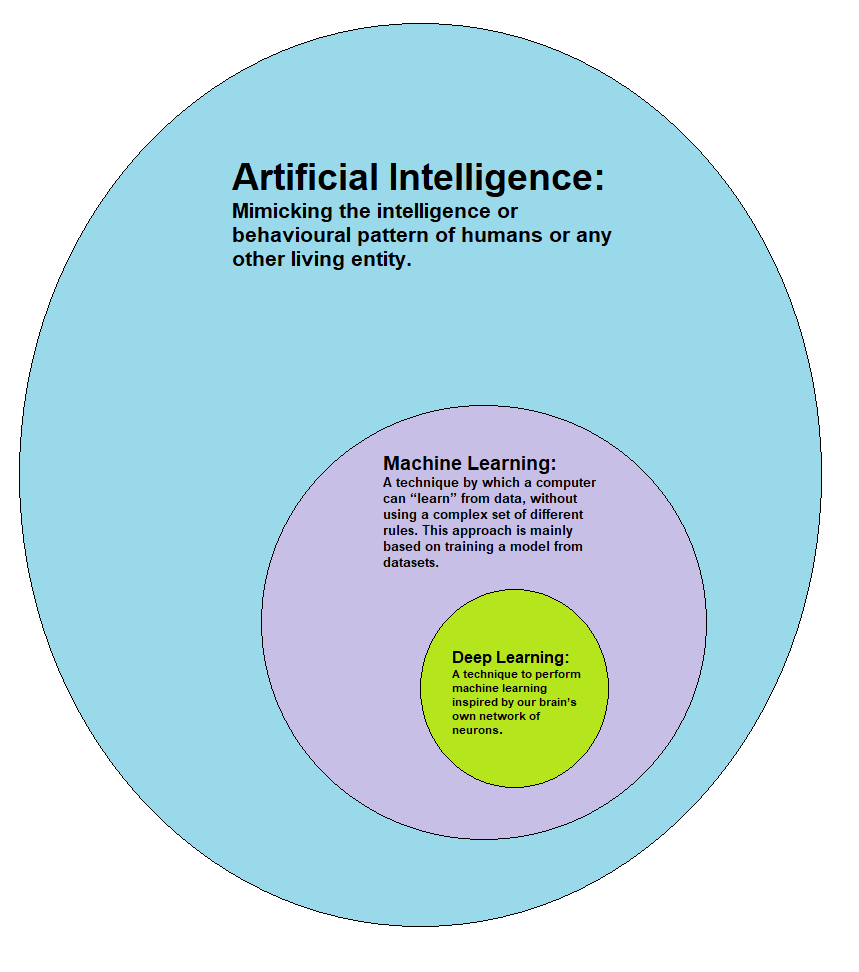
The main purpose of a neural network is to find relationships in data that are too complex for a human to program manually. Instead of writing explicit rules—for example, telling a computer exactly how to identify a cat by its pointy ears and whiskers—we show a neural network thousands of cat pictures and let it figure out the patterns for itself. This ability to learn from examples is what makes neural networks a cornerstone of modern machine learning.
The Brain as a Blueprint
The design of neural networks is directly inspired by the biology of our own brains. The brain is made up of billions of cells called neurons, which are connected in a vast network. These neurons receive signals, process them, and pass them on to other neurons. An artificial neural network mimics this structure with its own set of components.
The basic components are:
-
Neurons (or Nodes): These are the core processing units. Each neuron receives inputs from other neurons, performs a simple calculation, and then produces an output.
-
Weights: Every connection between two neurons has a weight. This weight determines the strength and importance of the signal. A positive weight excites the next neuron, making it more likely to activate, while a negative weight inhibits it.
-
Bias: You can think of a bias as a neuron's built-in predisposition. It's an extra number added to the mix that helps the network make better decisions by shifting the output up or down, making it easier or harder for the neuron to activate.
In short, inputs are multiplied by weights, a bias is added, and the result determines the neuron's output. The network learns by adjusting these weights and biases over and over again.
A Quick Trip Through History
The idea of creating an artificial brain is not new. The journey of neural networks has been one of exciting breakthroughs and periods of stagnation.
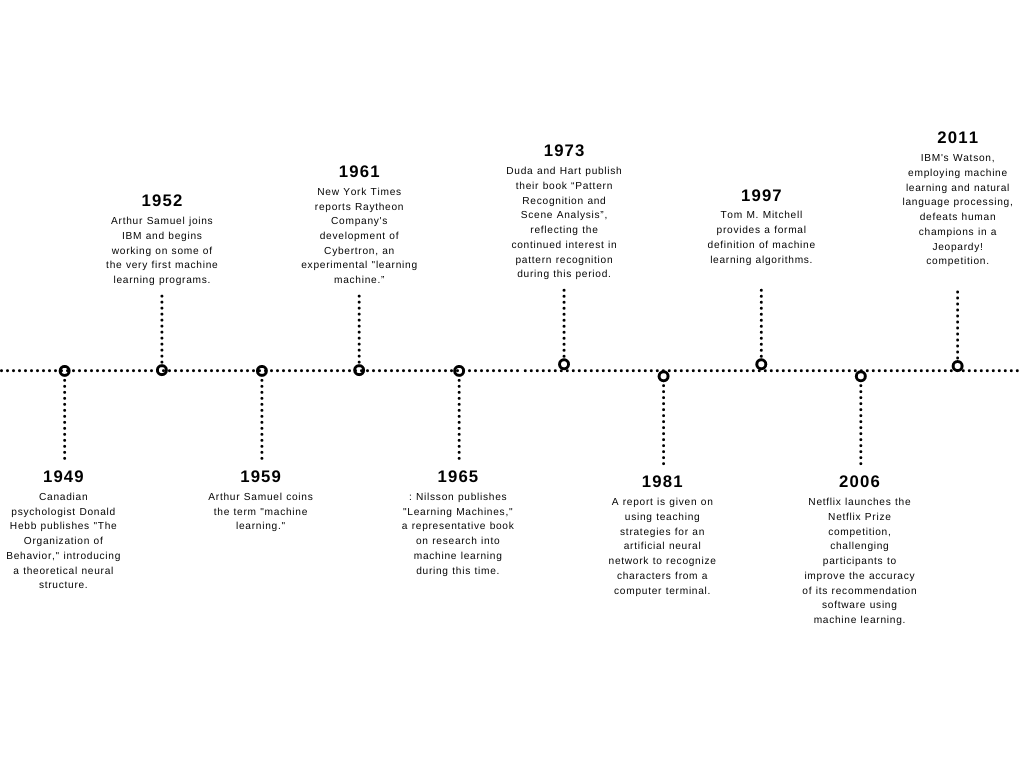
The concept first emerged in the 1940s, when scientists Warren McCulloch and Walter Pitts proposed a simple mathematical model of a biological neuron. In the 1950s, Frank Rosenblatt built on this idea to create the Perceptron, a very simple neural network that could learn to recognize basic patterns. This sparked a wave of optimism.
However, researchers soon discovered the limitations of these early models. By the 1970s, funding dried up, and the field entered a period known as the "AI winter." Progress slowed dramatically.
A revival began in the 1980s with new ideas, but the true revolution happened in the 2010s. The explosion of big data and the development of powerful graphics processing units (GPUs) for computation gave neural networks the fuel and horsepower they needed to tackle incredibly complex problems. This led to the deep learning boom that continues today.
Why They Matter in Machine Learning
Neural networks have become so significant because they excel at solving problems that are difficult to define with a fixed set of rules. They are masters of ambiguity.
Consider the task of identifying a dog in a photo. You could try to write code that looks for fur, four legs, and a tail. But what about a dog sitting behind a fence? Or a fluffy dog that looks like a mop? It's nearly impossible to account for every possibility with rules.
A neural network bypasses this problem entirely. By learning from thousands of examples of dogs in all shapes and sizes, it builds its own internal representation of what a "dog" is. This flexibility is what allows neural networks to drive advancements in everything from medical diagnostics and self-driving cars to natural language translation and art generation.
Now that you have a grasp of the basic concepts, let's check your understanding.
What is the primary purpose of an artificial neural network?
In a neural network, what is the role of a 'weight'?
Understanding these foundational ideas is the first step into the fascinating world of artificial intelligence.