Neural Networks and Your Finances
Introduction to Neural Networks
What is a Neural Network?
Artificial neural networks are computing systems inspired by the human brain. Just as our brains use a network of neurons to process information, these systems use interconnected nodes to find patterns in data. Their main job is to recognize relationships between vast amounts of information that would be too complex or subtle for a human to spot.
Think of it like learning to recognize a cat. You don't follow a strict set of rules. Instead, you've seen thousands of cats and your brain has learned to identify common features like pointy ears, whiskers, and feline eyes. A neural network does the same thing, but with data.
It takes in data, processes it through interconnected layers, and produces an output. That output could be anything from identifying a cat in a photo to forecasting stock prices or detecting fraudulent transactions.
The Building Blocks
A neural network is built from a few key components: neurons, layers, and connections. Understanding these parts is key to seeing how the whole system works.
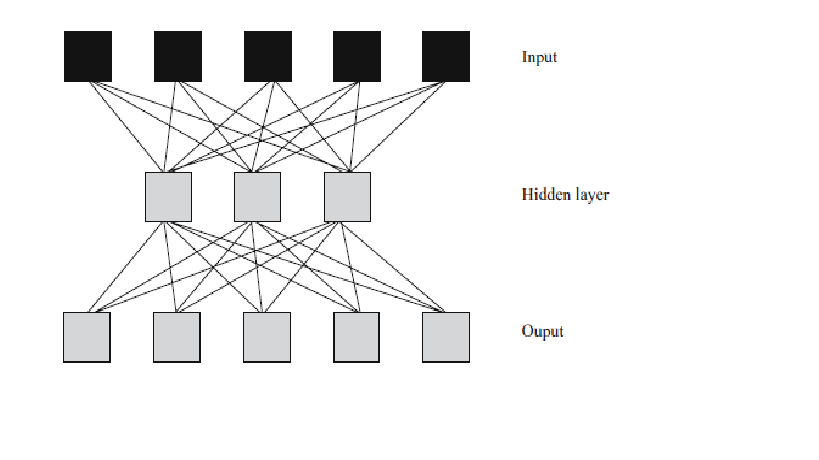
The small circles in the diagram are called neurons or nodes. Each neuron is a simple processing unit that holds a number, typically between 0 and 1. Think of it as a light switch that can be on, off, or somewhere in between.
These neurons are organized into layers:
- Input Layer: This is the network's front door. It receives the initial data. If you were feeding it a picture, each neuron might represent a single pixel's brightness.
- Hidden Layers: These are the layers between the input and output. This is where the network does its thinking. It weighs the inputs, identifies features, and passes its calculations on to the next layer. A network can have one hidden layer or many. The more hidden layers, the more complex the patterns it can learn.
- Output Layer: This is the final result. For a cat-or-dog classifier, the output layer might have two neurons, one for "cat" and one for "dog." The neuron with the higher value is the network's prediction.
The lines connecting the neurons are connections. Each connection has a weight, which is a number that determines the strength of the signal between two neurons. A higher weight means the signal is stronger. During training, the network adjusts these weights to improve its accuracy.
How a Network Learns
A neural network isn't programmed with rules; it learns them from data through a process called training. This involves a few key steps.
First is forward propagation. This is the process of data moving through the network. The input data is fed into the first layer, which activates certain neurons. These neurons then pass their signals to the next layer, and so on, until the signal reaches the output layer and a prediction is made.
Initially, the network is just guessing. Its internal weights are random, so its first predictions are almost always wrong.
Next, the network calculates how wrong its prediction was. It compares its output to the correct answer using a function that measures the error. This error value tells the network how much it needs to adjust.
This leads to backpropagation. The network works backward from the output layer, figuring out which connections were most responsible for the error. It then slightly adjusts the weights of those connections to reduce the error. This is where the learning happens.
This cycle of forward propagation, error calculation, and backpropagation repeats thousands or even millions of times. With each cycle, the network's weights get a little bit better, and its predictions become more accurate. The strategy used to adjust the weights is called an optimizer.
Common Network Types
While all neural networks share these basic components, they come in different architectures suited for different tasks.
Feedforward Neural Networks are the simplest type. Information flows in one direction, from the input layer to the output layer, without any loops. The network we've been describing is a feedforward network. They are good for many basic classification and regression tasks.
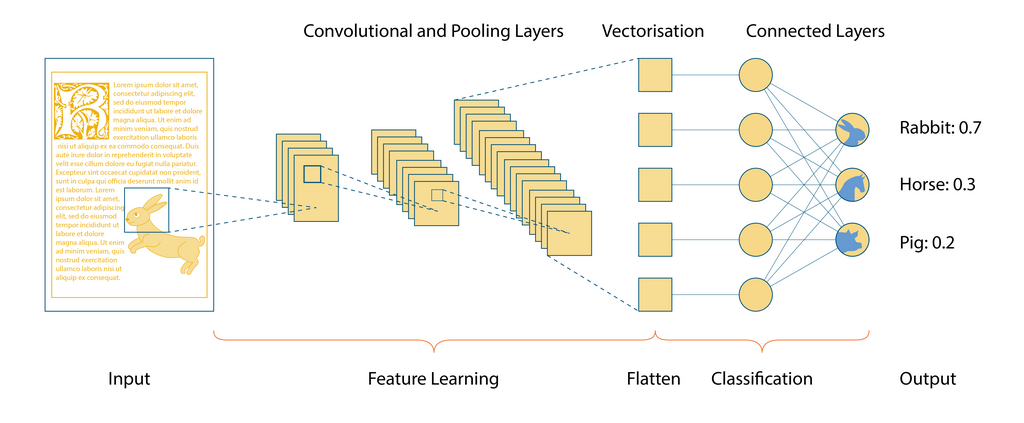
Convolutional Neural Networks (CNNs) are designed for processing data that comes in a grid, like images. They use special layers to scan for features (like edges, corners, or textures) no matter where they appear in the image. This makes them incredibly powerful for image recognition and computer vision.
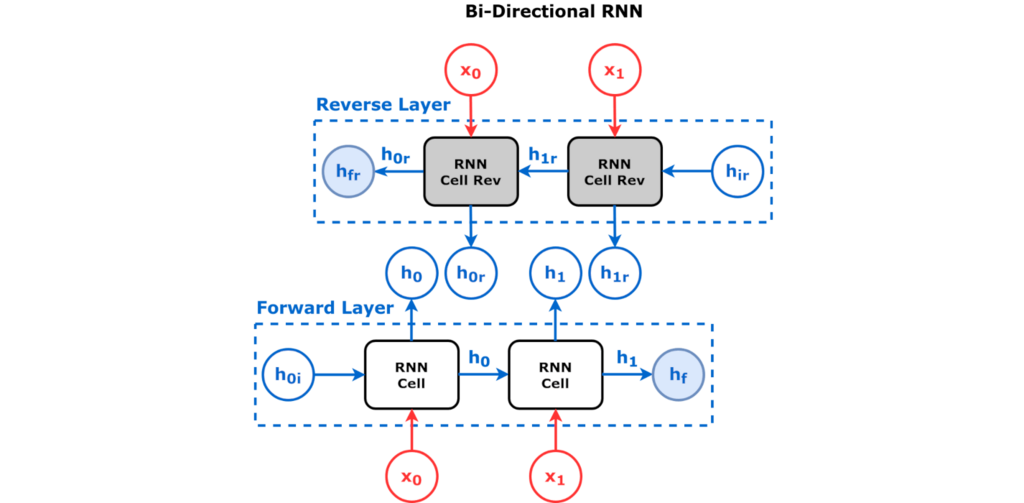
Recurrent Neural Networks (RNNs) are built to handle sequential data, where order matters. Think of stock prices over time, or the words in a sentence. RNNs have a kind of memory; they can remember information from previous steps in a sequence and use it to inform later ones. This makes them ideal for natural language processing, speech recognition, and time-series forecasting.
These foundational concepts are the basis for nearly all modern applications of artificial intelligence. By understanding how these networks are built and trained, you can begin to see how they're able to perform such complex tasks.
Now, let's test your understanding of these core ideas.
What is the primary function of an artificial neural network?
Which layer of a neural network is directly responsible for receiving the initial data?
With these basics in place, you're ready to explore how neural networks are applied in more specific and powerful ways.