Networking Cold Message Mastery
Understanding Cold Outreach
What is Cold Outreach?
Cold outreach is the act of contacting someone you don't know. It’s a proactive way to start a conversation, often with a specific goal in mind, like seeking advice, exploring a job opportunity, or proposing a partnership. While it can take many forms, including messages on platforms like LinkedIn, the most common method is the cold email.
Cold Email
noun
An unsolicited email sent to a receiver without prior contact.
It’s easy to think of a cold email as a sales pitch, but that's a common mistake. The real goal isn't to close a deal on the spot. It's about opening a door and starting a relationship with someone who might otherwise be unreachable.
The goal of a cold email is to start a conversation, not close the deal.
Why It's a Key Networking Skill
Your existing network is valuable, but it's also limited. Cold outreach allows you to connect with people beyond your immediate circle of colleagues and acquaintances. This could be an industry expert you admire, a founder of a company you'd love to work for, or a potential mentor who can offer guidance.
These connections can unlock opportunities that you won't find on job boards. Many positions are filled through referrals or direct contact before they're ever advertised. By reaching out thoughtfully, you can tap into this "hidden job market" and put yourself on the radar of key decision-makers.
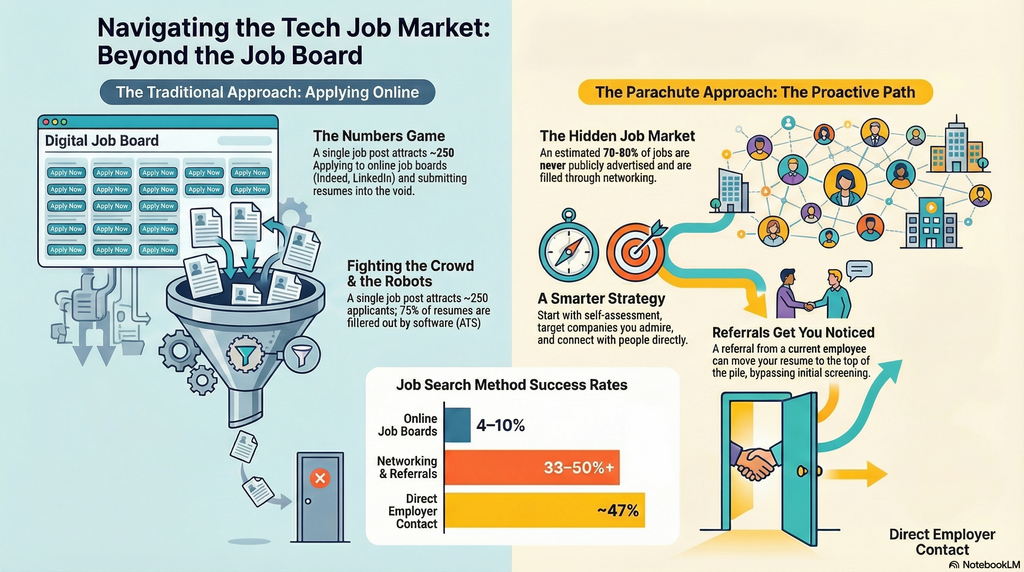
A strategic message can create a direct line to people who can influence your career path. It shows initiative and allows you to bypass the traditional gatekeepers, making a case for yourself personally.
Common Hurdles and Myths
Let's be honest: cold outreach has a reputation for being ineffective. Many messages end up in the trash, unanswered. The primary reason for this is a lack of strategy. An email that is generic, poorly researched, or focused entirely on the sender's needs is unlikely to get a response.
Most cold outreach fails because it's generic, self-serving, and lacks genuine personalization.
One of the biggest myths is that cold outreach is the same as spam. Spam is impersonal, irrelevant, and sent in bulk. Effective cold outreach is the opposite. It is highly targeted, well-researched, and customized to the individual recipient. The focus is on offering value and demonstrating a genuine reason for connecting, rather than just asking for something.
Another challenge is the fear of rejection or bothering someone important. It's true that not everyone will reply, and that's okay. Busy professionals understand that networking is part of the game. A polite, concise, and respectful message will rarely be seen as an annoyance, even if the person doesn't have time to respond.
Think of it this way: the worst-case scenario is silence. The best-case scenario is a new relationship that could change your career.
Let's check your understanding of these core concepts.
What is the primary goal of an effective cold outreach email?
What is the key difference between strategic cold outreach and spam?
Now that you have a solid foundation, you're ready to learn how to put these ideas into practice.