Network Security and Penetration Testing Fundamentals
Introduction to Network Security
What is Network Security?
Network security is the practice of protecting computer networks and the data flowing through them from unauthorized access, misuse, or theft. Think of it as the digital equivalent of locking the doors to your house, installing a security system, and hiring a guard to check IDs at the gate. The goal is to ensure that only the right people can access and use your network and information.
In short, network security is about keeping digital information safe and available, ensuring it remains confidential, unaltered, and accessible to authorized users.
Without it, sensitive information—from personal emails to corporate financial records and government secrets—would be vulnerable to attackers. This practice involves a combination of hardware, software, and policies designed to protect the integrity and accessibility of computer networks and data.
A Brief History of Security
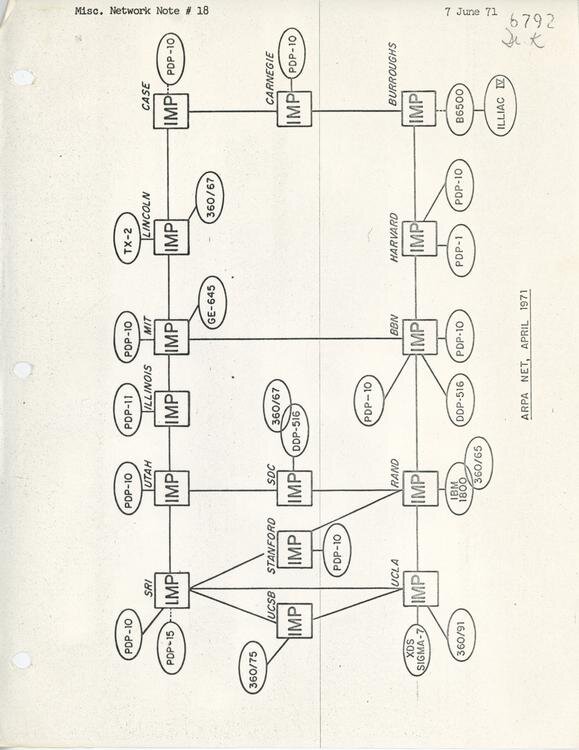
In the early days of the internet's predecessor, ARPANET, security wasn't a major concern. The network was a small, trusted community of researchers and academics. The focus was on connectivity and sharing information, not defending against threats. The idea that someone would intentionally disrupt the network was almost unthinkable.
This idyllic view began to change in the 1970s and 80s. One of the first notable events was the Creeper program in 1971, an experimental self-replicating program that displayed the message "I'm the creeper: catch me if you can!". It wasn't malicious, but it demonstrated that programs could move across networks on their own. In response, a program called Reaper was created to chase and delete Creeper, becoming one of the first examples of antivirus software.
The real wake-up call came in 1988 with the Morris Worm. A graduate student at Cornell University released a program that spread rapidly across the internet, infecting and slowing down an estimated 10% of the computers connected at the time. The Morris Worm was one of the first large-scale denial-of-service attacks, and it highlighted the urgent need for more robust security measures.
Building the Defenses
The Morris Worm incident directly spurred the development of the first commercial firewalls in the late 1980s. A firewall acts as a barrier or filter between a trusted internal network and an untrusted external network, like the internet. It examines incoming and outgoing traffic and decides whether to allow or block it based on a set of security rules.
Alongside firewalls, secure communication protocols became essential. Early protocols like FTP (File Transfer Protocol) and Telnet sent data, including passwords, in plain text. Anyone snooping on the network could easily read it. This led to the creation of secure alternatives:
- SSH (Secure Shell): Replaced Telnet for secure remote command-line access.
- SFTP (Secure File Transfer Protocol): Provided an encrypted way to transfer files, replacing FTP.
- SSL/TLS (Secure Sockets Layer/Transport Layer Security): This was a game-changer for the web. SSL, and its successor TLS, encrypts the data between your web browser and a website's server. It's the technology behind the padlock icon you see in your browser's address bar and the 'S' in HTTPS.
SSL
noun
Secure Sockets Layer. A standard security technology for establishing an encrypted link between a server and a client—typically a web server (website) and a browser. It has largely been replaced by the more modern and secure TLS (Transport Layer Security).
One of the foundations of cybersecurity is understanding how networks operate.
These developments created a layered approach to security. Instead of relying on a single defense, modern networks use multiple tools and protocols working together to protect information from different angles.
| Principle | Description |
|---|---|
| Confidentiality | Ensuring data is accessible only to authorized individuals. (Encryption is a key tool here.) |
| Integrity | Maintaining the consistency, accuracy, and trustworthiness of data over its entire lifecycle. (Data must not be changed in transit.) |
| Availability | Guaranteeing that information and resources are accessible to authorized users when needed. (Protecting against denial-of-service attacks.) |
These three principles—Confidentiality, Integrity, and Availability—form the cornerstone of network security, often called the "CIA triad." Every security measure, from a simple password to a complex firewall, is designed to support one or more of these goals.
Time to review what you've learned about the fundamentals of network security.
What is the primary goal of network security?
What major security incident in 1988 highlighted the urgent need for more robust network security measures by infecting about 10% of internet-connected computers?
Understanding the history and core principles of network security provides a solid foundation for learning about the specific threats and defenses that shape the digital world today.