Network Component Testing Essentials
Introduction to Component Testing
Testing in Isolation
Think about building a car. You wouldn't assemble the entire vehicle and then test the radio for the first time. You'd test the radio, the engine, and the brakes individually long before they're put together. This same logic applies to building and maintaining computer networks. This is the core idea behind component testing.
component
noun
The smallest testable part of a system. In networking, this could be a single function in a software-defined networking controller, a specific module in a firewall's firmware, or even a particular script that automates a network task.
Component testing, sometimes called module testing, is the practice of checking these individual pieces in isolation. The goal is to verify that each part works as expected on its own, without the influence or complexity of other parts of the system. By doing this, we can catch bugs and design flaws early, when they are much easier and cheaper to fix.
One of the fundamental principles of effective testing is isolating components/modules to ensure accurate results.
Imagine a network router's software. It has different components for handling different tasks: one for routing traffic (the OSPF protocol module), another for security (the firewall module), and a third for remote management (the SSH module). With component testing, a network engineer would test each of these modules separately to confirm they function correctly according to their specifications.
Objectives and Place in the Lifecycle
The main purpose of component testing is simple: find defects. By focusing on a small, manageable piece of the system, we aim to:
- Verify Functionality: Does the component do what it’s supposed to do? If we give it a specific input, do we get the expected output?
- Find Bugs Early: Catching a problem in a small module is far simpler than hunting for it once that module is connected to dozens of others. It's like finding a typo on a single page versus in an entire library.
- Build Confidence: Successful component tests give developers confidence that the basic building blocks of their system are solid. This makes the next stage, where components are combined, much smoother.
The primary objective is to validate that each software component performs its function correctly and meets its design specifications.
Component testing happens early in the software development lifecycle. Think of it as the first of several testing phases. After developers write a piece of code, they or a dedicated quality assurance (QA) team will test that component. Once individual components pass their tests, they move on to integration testing, where they are combined and tested as a group. This process continues, with each stage broadening the scope of the test.
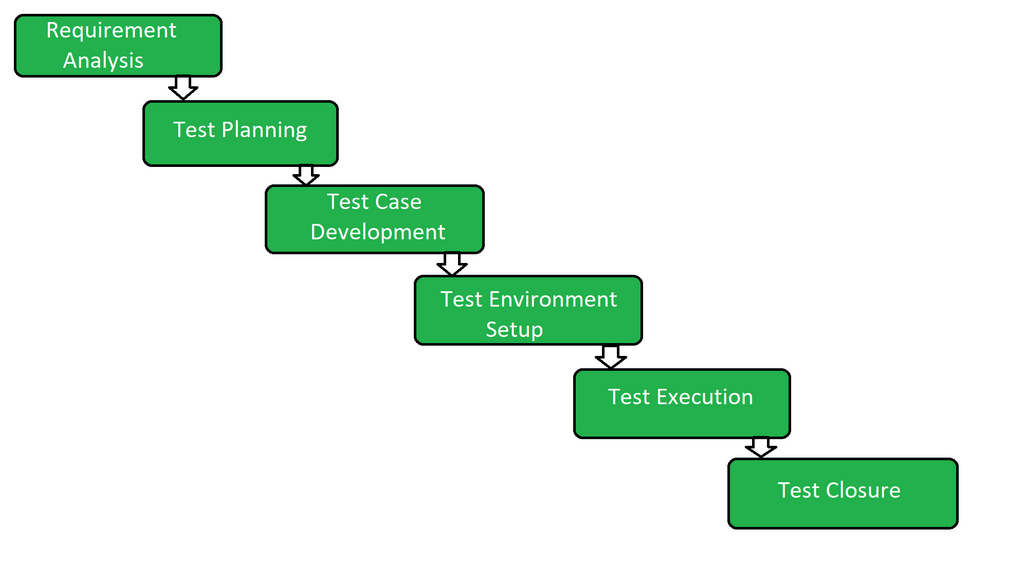
For a network engineer, this means ensuring a new script for automating device configuration works perfectly on its own before you even think about running it on a live network switch that is part of a larger, complex system. This foundational step is critical for building reliable and stable networks.
Ready to check your understanding of these initial concepts?
What is the primary principle of component testing?
According to the text, which of the following is NOT a primary goal of component testing?
By focusing on one piece at a time, component testing builds a strong foundation for a reliable system.