Network Cable Fundamentals
Introduction to Network Cables
The Unseen Highways
Think of the internet as a massive, global city. Information travels from buildings (servers) to homes (your computer) constantly. While we often think of Wi-Fi as the magic that connects us, the backbone of this city is a vast network of physical roads. Network cables are these roads, the physical highways that carry data from one point to another in a wired network.
At its core, a network cable is a medium through which information travels as electrical signals. It connects devices like computers, routers, and switches, forming the local networks in our homes and offices. These local networks then connect to the wider internet, creating the global web of information we use every day.
Without cables, the stable, high-speed internet connections that power streaming, gaming, and big data transfers wouldn't be possible. They are the essential, physical part of our digital world.
Inside the Cable
If you were to slice open a typical network cable, like the common Ethernet cable, you wouldn't just find a single wire. You'd see a carefully arranged set of components designed to protect the data signal.
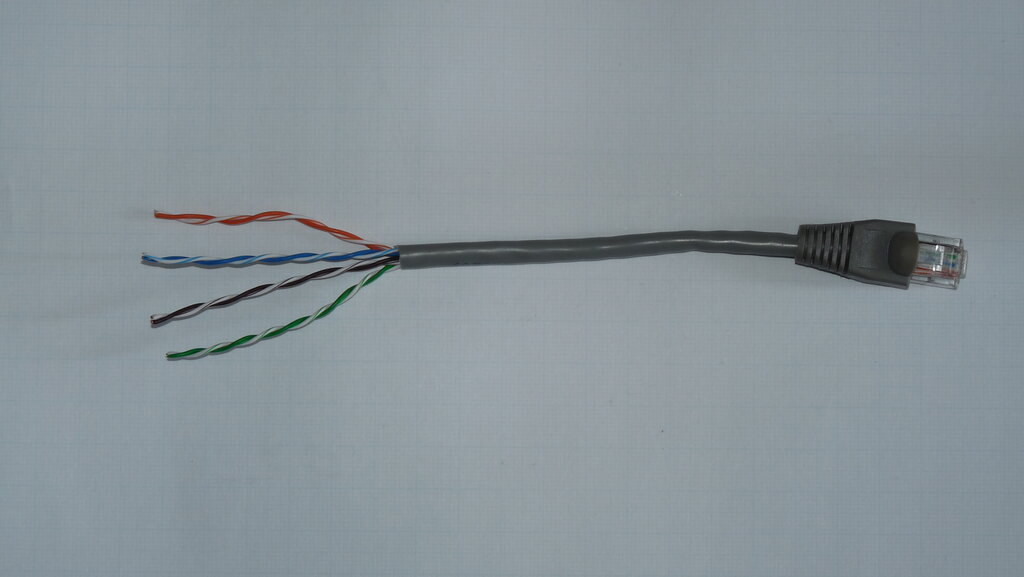
The basic structure includes:
- Outer Jacket: A plastic sheath, usually made of PVC, that protects the internal wires from physical damage, moisture, and UV light.
- Conductor Wires: These are the actual pathways for the electrical signals. They are typically made of copper. You'll find them arranged in pairs.
- Insulation: Each copper wire is coated in its own color-coded plastic insulation to prevent the signals from interfering with each other.
The most important feature is that the wires are twisted together into pairs. This isn't for decoration. Twisting the wires helps cancel out electronic "noise," or interference, from other wires and nearby electrical devices. This simple trick ensures the data signal remains clear and strong over the length of the cable.
Not All Cables Are Equal
Choosing the right network cable is like choosing the right type of road for your vehicle. A sports car can't reach top speed on a bumpy dirt path, and a massive freight truck would be useless on a narrow bike lane. Similarly, your network's performance is heavily dependent on the quality and type of its cables.
A cable's construction determines two key things:
- Speed: How much data it can transmit per second. This is often measured in megabits or gigabits per second (Mbps or Gbps).
- Bandwidth: The maximum capacity of the connection. Think of it as the number of lanes on the highway. Higher bandwidth means more data can travel at the same time without causing a traffic jam.
Using an old, low-quality cable with a brand new, high-speed router is like connecting a fire hose to a garden faucet. You're limiting your network's potential. The cable becomes a bottleneck, slowing everything down, no matter how fast your other equipment is. This can lead to slow downloads, buffering videos, and lag during online games.
The physical cable is often the most overlooked part of a network, but it's one of the most critical for achieving reliable and high-speed performance.
Let's check your understanding of these foundational ideas.
What is the primary reason for twisting the conductor wires into pairs inside a network cable?
If your network performance is slow despite having a fast internet plan and a new router, what is the most likely culprit based on the provided text?
Understanding these basics sets the stage for exploring the different types of cables and where they are used best. The right physical connection is the first step to a strong network.