Nervous System Structural Organization
Brain and Spinal Cord
The Central Command Center
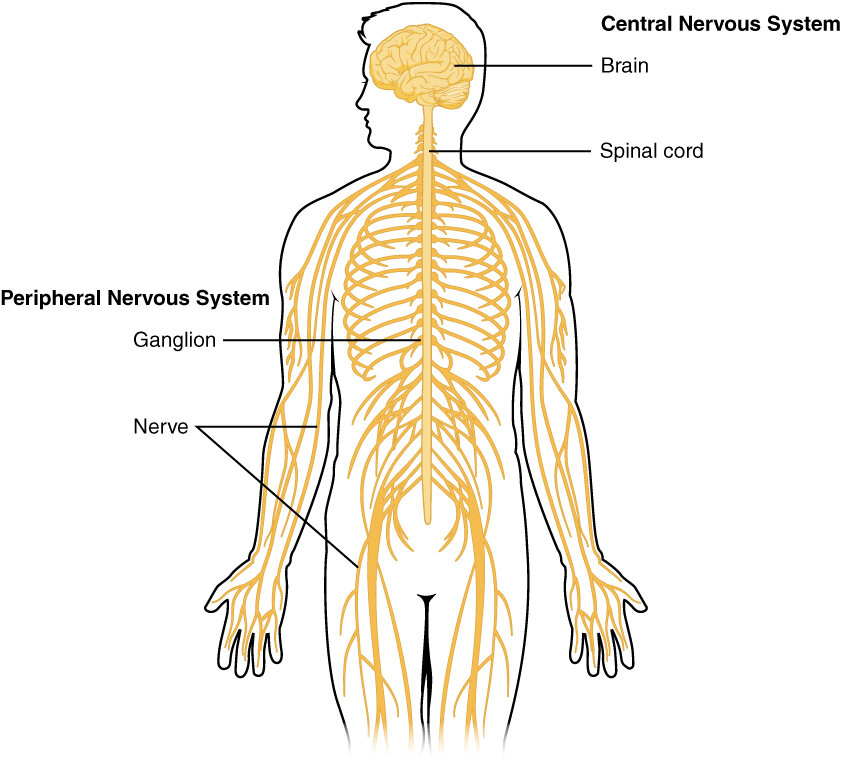
The central nervous system, or CNS, is the body's headquarters. It's composed of two main parts: the brain and the spinal cord. Think of it as a government, with the brain as the executive branch, making high-level decisions, and the spinal cord as the ultra-efficient messenger service, relaying commands and carrying back intelligence from the provinces.
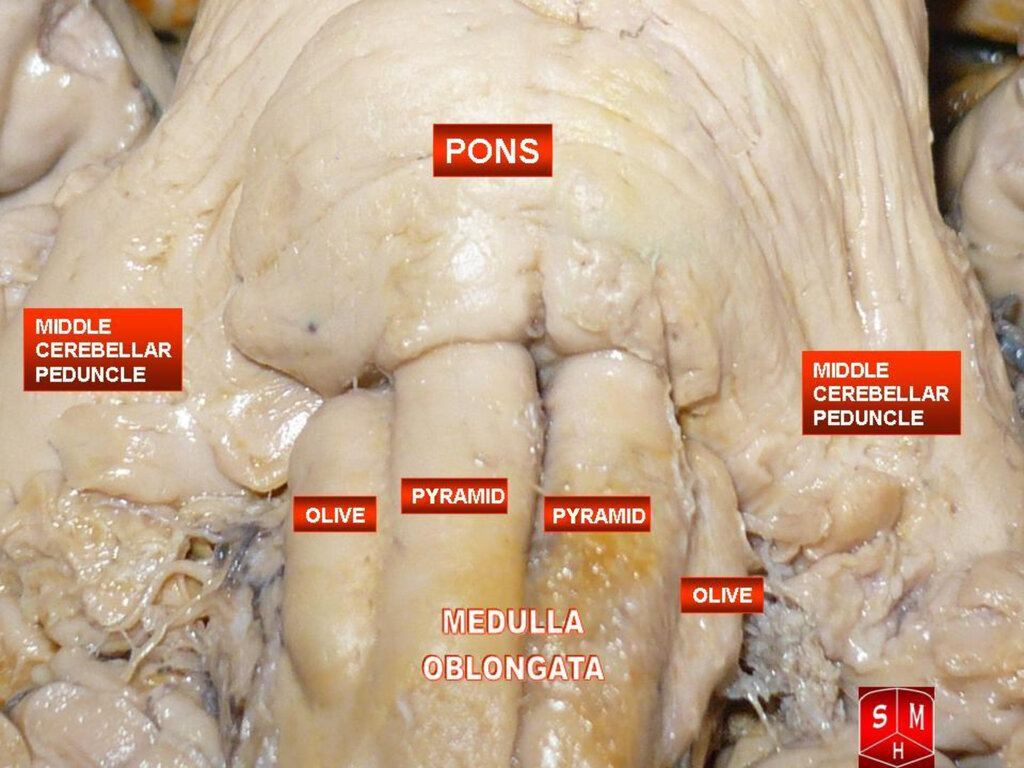
The brain itself isn't a single entity but a federation of specialized regions. We can broadly divide it into three main sections: the forebrain, midbrain, and hindbrain. The hindbrain, which includes the cerebellum and brainstem, handles the most fundamental tasks for survival like breathing, heart rate, and balance. The brainstem acts as a vital bridge, connecting the rest of the brain to the spinal cord.
Above the brainstem sits the forebrain, dominated by the cerebrum. This is the wrinkly, large part of the brain we typically picture, and it's responsible for everything we consider 'higher thought': language, complex problem-solving, and conscious awareness. The cerebrum is split into two hemispheres, and its outer layer, the cerebral cortex, is where the most complex processing happens.
The Information Superhighway
If the brain is the command center, the spinal cord is the main data cable connecting it to the rest of the body. This long bundle of nerve tissue extends from the brainstem down the back. It's segmented, with nerves branching out at each level to specific parts of the body. Information flows in two directions. Sensory information travels up the cord to the brain, and motor commands travel down from the brain to the muscles.
The distinct roles of gray and white matter are clear in the spinal cord. The central, butterfly-shaped area is gray matter, composed mainly of neuron cell bodies. This is where information is processed. The surrounding white matter consists of myelinated axons, the 'wires' that transmit signals over long distances, forming the ascending and descending tracts to and from the brain.
Protective Measures
Such a critical system requires robust protection. The brain and spinal cord are first shielded by bone: the skull and vertebral column. But between the bone and the delicate neural tissue are three protective membranes called the (from the Greek word for 'membrane'). These are the dura mater, arachnoid mater, and pia mater.
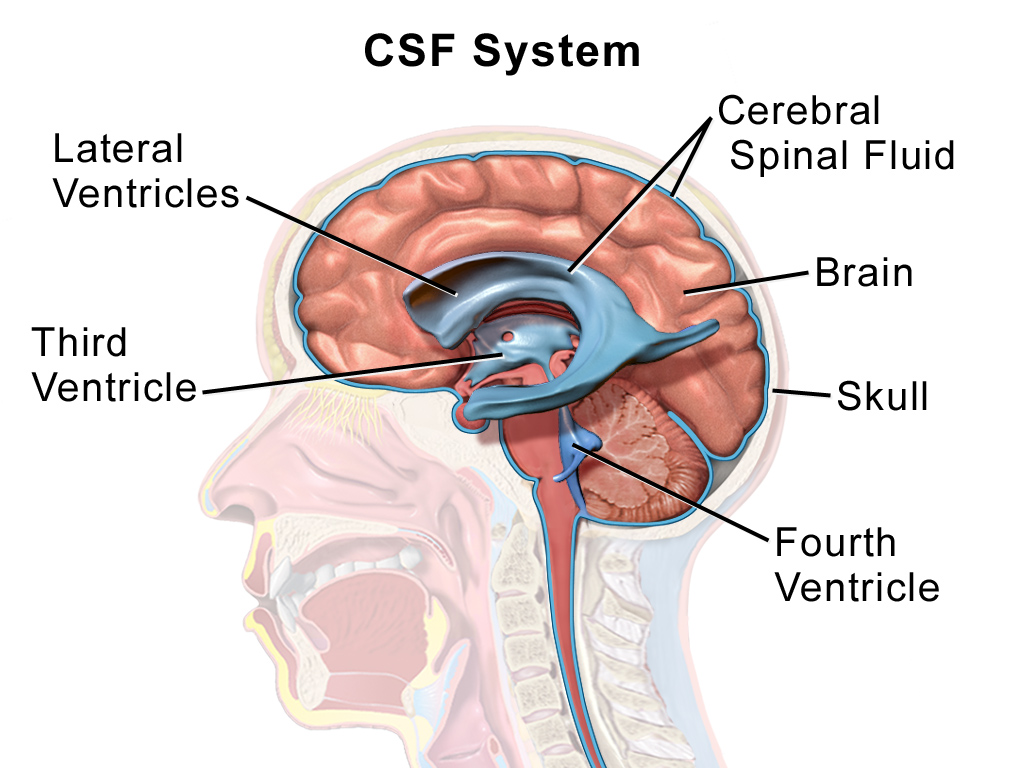
A special fluid called , or CSF, flows within the subarachnoid space and also inside a series of connected cavities in the brain called ventricles. This fluid acts as a shock absorber, cushioning the brain from impacts. It also circulates nutrients and removes waste products, helping to maintain a stable and clean chemical environment for the neurons to function properly.
Beyond the meninges, the brain has another layer of security: the (BBB). This is a highly selective border made of specialized endothelial cells that line the brain's capillaries. The BBB strictly controls which substances can pass from the bloodstream into the brain tissue, protecting it from toxins, pathogens, and other potentially harmful agents while allowing essential nutrients like glucose and oxygen to pass through.
What are the two main components of the central nervous system?
Which structure acts as a highly selective border, protecting the brain from harmful substances in the blood?
Understanding the physical structure of the brain and spinal cord, along with their protective systems, provides the anatomical map for all the complex signaling and processing that defines the nervous system.