Nerve Fiber Classification Unveiled
Introduction to Nerve Fiber Classification
Sorting the Signals
Your nervous system is like a massive telecommunications network, with billions of nerve fibers, or axons, acting as the wiring. These fibers carry electrical signals between your brain and the rest of your body. But not all signals are the same, and not all wires are built for the same job. A message telling your muscle to contract needs to travel incredibly fast, while a signal for a dull, persistent ache can take a more leisurely route.
To make sense of this complexity, scientists classify nerve fibers into different groups. This helps us understand how the nervous system prioritizes information and performs its vast array of functions, from feeling a gentle breeze to reacting instantly to a hot surface.
The Rules of Classification
Nerve fibers are sorted based on a few key physical properties that determine how they perform. The three most important criteria are diameter, myelination, and the resulting conduction velocity.
Fiber Diameter: Think of it like a hose. A wider hose can carry more water, faster. Similarly, a nerve fiber with a larger diameter can transmit an electrical signal more quickly than a thinner one. The bigger the axon, the less resistance the electrical impulse faces as it travels.
Myelination: Many nerve fibers are wrapped in a fatty substance called myelin. This myelin sheath acts like the plastic insulation around an electrical wire, preventing the signal from leaking out. More importantly, it allows the signal to jump between gaps in the myelin, a process called saltatory conduction. This jumping action dramatically speeds up signal transmission. Fibers can be either myelinated (insulated) or unmyelinated (bare).
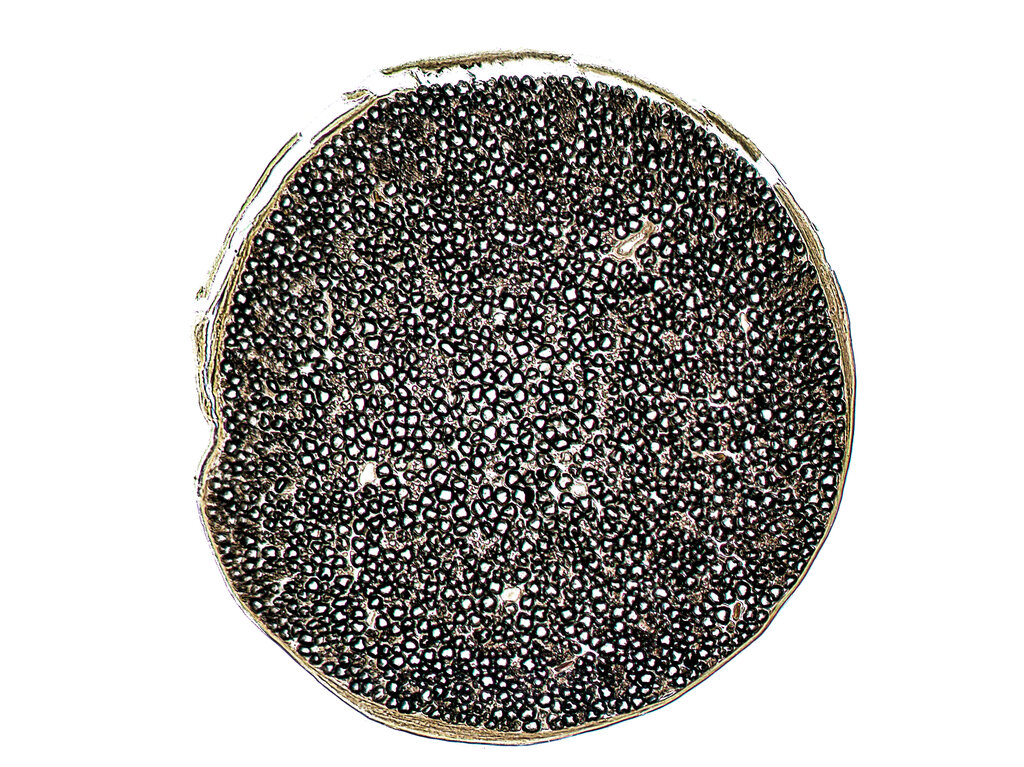
Conduction Velocity: This is the ultimate measure of performance, telling us how fast a signal travels along the fiber. It's measured in meters per second (m/s). Conduction velocity is a direct result of the fiber's diameter and myelination. A large, myelinated fiber will have the fastest conduction velocity, while a thin, unmyelinated fiber will be the slowest.
Erlanger and Gasser's System
In the 1920s and 30s, physiologists Joseph Erlanger and Herbert Gasser developed the most widely used system for classifying nerve fibers. By studying the conduction velocities of different axons, they discovered that fibers fell into distinct groups. They labeled these groups with letters: A, B, and C.
This system provides a clear framework for understanding the basic hierarchy of nerve fibers. Group A fibers are the fastest, group C are the slowest, and group B falls in the middle. The differences are based entirely on the physical characteristics we just discussed.
| Fiber Group | Myelination | General Diameter | General Conduction Velocity |
|---|---|---|---|
| A fibers | Myelinated | Large | Fastest (5 - 120 m/s) |
| B fibers | Myelinated | Small | Medium (3 - 15 m/s) |
| C fibers | Unmyelinated | Smallest | Slowest (0.5 - 2 m/s) |
As you can see, the combination of myelination and large diameter gives Group A fibers their incredible speed. The A group is actually a diverse category that is further subdivided, but for now, this simple A-B-C classification gives us a solid foundation for exploring the specifics of the nervous system's wiring.