Nero's Manifested Knowledge
Nero's Early Life
A Prince in Waiting
Before he was the infamous Emperor Nero, he was Lucius Domitius Ahenobarbus, born in 37 AD. His family tree was a tangled web of Roman power. His mother, Agrippina the Younger, was the great-granddaughter of Emperor Augustus. This connection to the Julio-Claudian dynasty, the first imperial family of Rome, placed him near the throne, but not directly in line for it.
His early years were turbulent. When he was just two years old, his mother was exiled by her own brother, the erratic Emperor Caligula. Lucius was sent to live with his aunt, where he grew up with little luxury. His fate changed dramatically when Caligula was assassinated and his uncle, Claudius, became the new emperor. Claudius recalled Agrippina from exile, setting in motion a chain of events that would propel her son to the height of power.
A Mother's Ambition
Agrippina was a master of political maneuvering. After the death of her husband, she seduced and married her uncle, Emperor Claudius. This was a scandalous move, but it placed her in the perfect position to advance her son's future. She persuaded Claudius to adopt Lucius, who was then renamed Nero Claudius Caesar Drusus Germanicus.
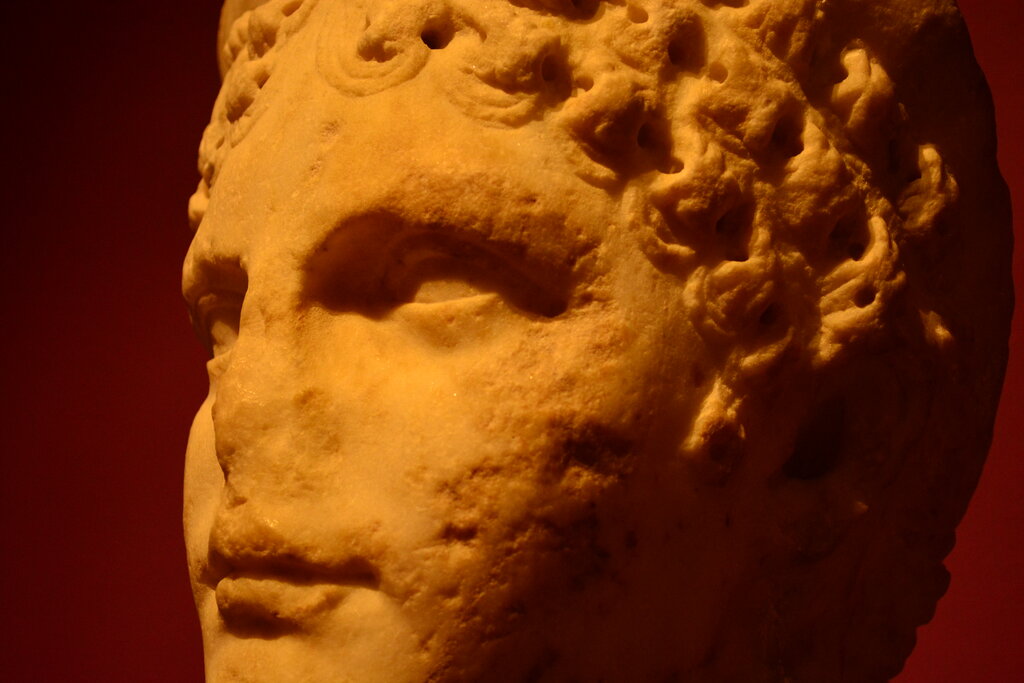
Through Agrippina's influence, Nero was officially designated as Claudius's heir, sidelining the emperor's biological son, Britannicus. She ensured Nero received a public profile, appearing at state events and gaining recognition among the Roman elite. Every step was calculated to make his eventual succession seem natural and inevitable. The political climate was thick with intrigue, as Agrippina cleared the path for her son, one rival at a time.
The Philosopher and the Prince
To prepare Nero for rule, Agrippina enlisted one of the finest minds in Rome: the Stoic philosopher Seneca the Younger. Recalled from an exile of his own, Seneca was tasked with molding the young prince into a just and wise leader. His curriculum was heavy on rhetoric, literature, and moral philosophy.
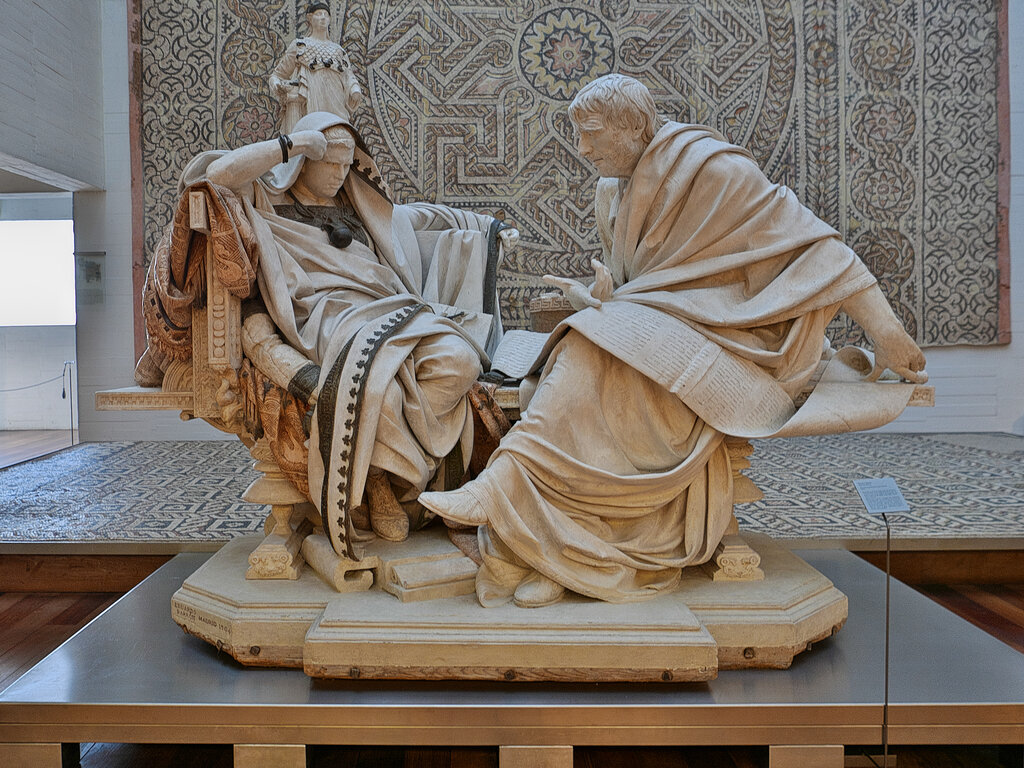
Seneca tried to instill the virtues of moderation, mercy, and duty. He aimed to shape Nero into a ruler who would respect the Senate and govern with a steady hand. However, the young prince had other passions. Nero was drawn to the arts, particularly music, poetry, and chariot racing. He loved performing on stage, a pursuit considered undignified and scandalous for a Roman aristocrat, let alone a future emperor.
While Seneca preached Stoic restraint, Nero was drawn to the passion of the stage and the roar of the crowd.
This created a fundamental tension in his education. Seneca and another influential advisor, the military commander Burrus, worked to steer Nero's energies toward governance. They managed to temper his more extravagant tastes, at least for a time. When Emperor Claudius died in 54 AD, a 16-year-old Nero was ready to take the throne, shaped by his mother's ambition and his tutor's philosophy.
What was Emperor Nero's birth name?
Who was primarily responsible for Nero's education in Stoic philosophy and rhetoric?