NEET The Living World Explained
Characteristics of Life
What Makes Something Alive?
It seems like a simple question. A rock is not alive. A bird is. But what about a virus, or a complex crystal that grows over time? The line can get blurry. To tell the difference, biologists look for a specific set of shared traits. Something isn't considered alive unless it checks all the boxes.
All groups of living organisms share several key characteristics or functions: order, sensitivity or response to stimuli, reproduction, adaptation, growth and development, regulation/homeostasis, energy processing, and evolution.
Let's explore four of these essential characteristics that set living things apart from the non-living world.
Growth and Development
All living things grow and develop. This isn't just about getting bigger, the way a snowball gets bigger as it rolls downhill. The growth of living organisms is an intricate, internally programmed process. It involves cell division and differentiation, where cells take on specialized jobs.
A seed sprouting into a tree follows a complex genetic blueprint. It doesn't just add more material; it transforms, developing roots, stems, leaves, and flowers. This directed change from a simpler to a more complex form is a hallmark of life.
Reproduction
Life makes more life. Organisms reproduce to pass their genetic information to the next generation. This ensures the continuation of their species.
There are two main strategies. In asexual reproduction, a single parent produces offspring that are genetically identical to itself. Think of a bacterium splitting in two. In sexual reproduction, two parents combine their genetic material to create a unique offspring. This process creates the variation that fuels evolution.
Reproduction isn't just a biological process; it's the mechanism by which life persists through time.
Metabolism
Metabolism
noun
The complete set of chemical reactions that occur in living cells, providing energy for life processes and synthesizing new organic material.
Living things are chemical factories. They take in energy and matter from their environment and use it to power their activities. This sum total of chemical reactions is called metabolism. It includes breaking down nutrients to release energy (like in digestion and cellular respiration) and using that energy to build complex molecules and structures (like proteins and DNA).
Whether it's a plant using sunlight to make sugar or an animal eating that plant to fuel its own body, this constant processing of energy is essential for staying alive.
Responsiveness
Living organisms actively sense and respond to their environment. A plant turns its leaves toward the sun to maximize light absorption. A bacterium moves away from a toxic chemical. You pull your hand away from a hot stove. These are all examples of responding to stimuli.
This ability allows organisms to find food, avoid danger, and maintain a stable internal condition, a state known as homeostasis. Unlike a rock that is passively weathered by the wind and rain, living things interact with their surroundings to improve their chances of survival.
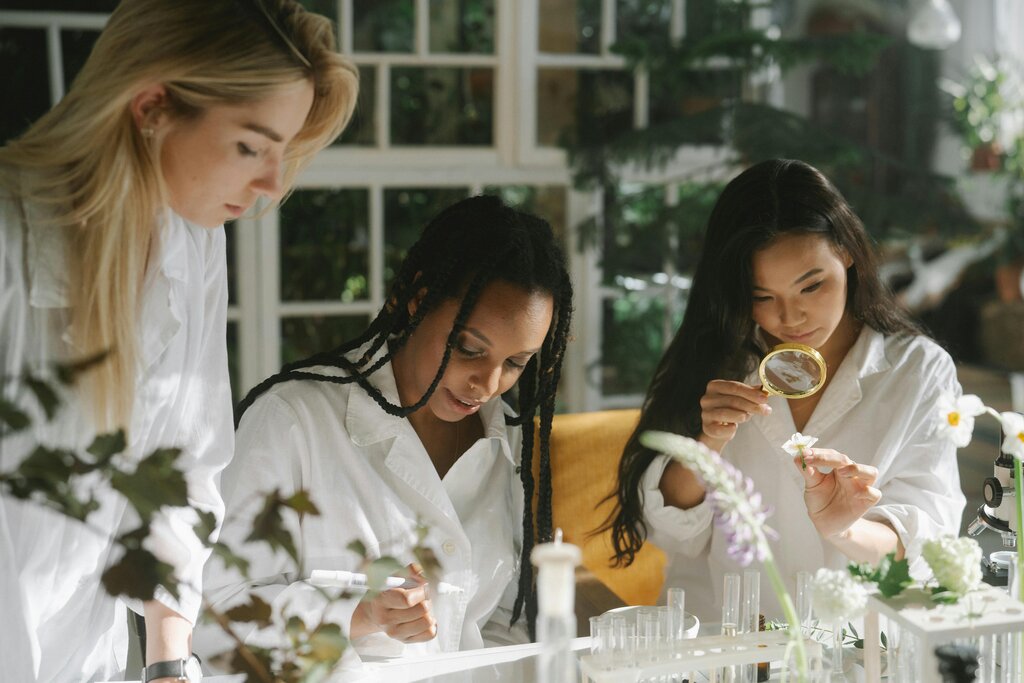
These four traits—growth, reproduction, metabolism, and responsiveness—are some of the core pillars that define what it means to be alive. They work together in a complex dance, allowing organisms to thrive, adapt, and perpetuate themselves in a vast and varied world.
What is the term for the sum total of all chemical reactions that occur within an organism to sustain life, including breaking down nutrients and building new molecules?
A sunflower turning its head to follow the sun across the sky is a direct example of which characteristic of life?