Nazism and the Rise of Hitler CBSE Class 9 History
Weimar Republic Instability
A Republic Born from Defeat
In late 1918, Germany was broken. World War I had ended in defeat, and the German emperor, Kaiser Wilhelm II, abdicated and fled. Out of the ashes of the German Empire, a new democratic government was formed. It was called the Weimar Republic, named after the city where its constitution was written.
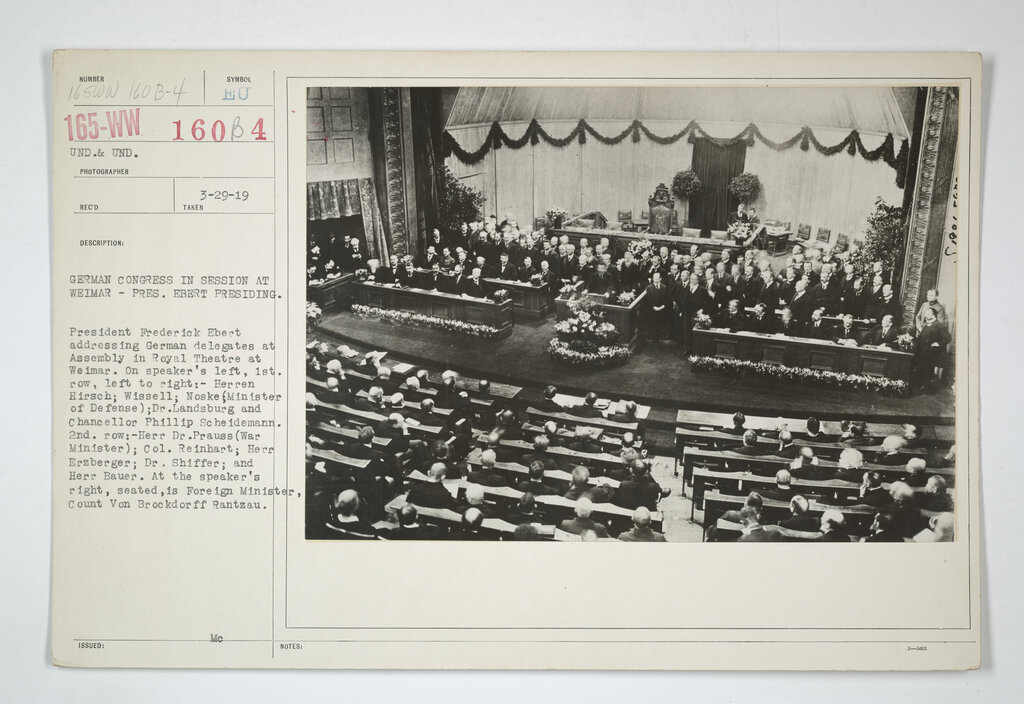
This new government faced a monumental task: rebuilding a shattered nation while navigating a hostile post-war world. Its very first challenge came from the victors of the war. In 1919, Germany was forced to sign the Treaty of Versailles, a peace treaty that felt more like a punishment. The terms were severe. Germany lost all its overseas colonies, significant territory in Europe like Alsace-Lorraine, and had its military drastically reduced.
Financially, the treaty imposed crippling reparations payments totaling 132 billion gold marks. Worse, Article 231, the infamous 'War Guilt Clause,' forced Germany to accept sole responsibility for starting the war. This was a deep national humiliation.
Many Germans never accepted these terms. A powerful and destructive myth began to spread: the idea that the German army hadn't actually been defeated on the battlefield but was betrayed by politicians at home. The leaders who signed the armistice were labeled the "", and this "stab-in-the-back" narrative poisoned the political atmosphere, undermining faith in the new democracy from its inception.
Economic Collapse
The economic pressure of reparations proved to be unsustainable. By late 1922, Germany defaulted on its payments. In response, France and Belgium occupied the Ruhr, Germany's industrial heartland, in January 1923. Their goal was to seize goods like coal as payment in kind.
The German government called for passive resistance, urging workers in the Ruhr to strike and not cooperate with the occupying forces. To support these striking workers and meet its own expenses, the government did the only thing it could: it printed more and more money. This decision triggered one of the most catastrophic economic events in history: in 1923.
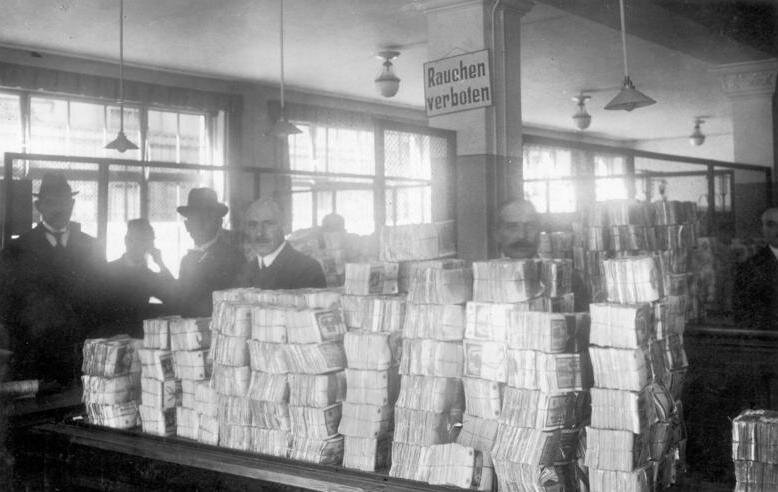
The German mark became virtually worthless. Prices skyrocketed to absurd levels. A loaf of bread that cost 250 marks in January 1923 cost 200 billion marks by November. People carried money in wheelbarrows. Life savings, pensions, and investments were wiped out overnight, destroying the financial security of the middle class and creating widespread desperation.
A Flawed System
Beyond the external pressures and economic chaos, the Weimar Republic's own constitution had critical weaknesses. The system of proportional representation meant that a party's share of seats in the Reichstag (parliament) was directly proportional to its share of the popular vote. While this seems fair, in practice it led to a proliferation of small parties. No single party could ever win a majority, resulting in a constant string of weak, unstable coalition governments that struggled to pass laws or make decisive choices.
The constitution also included , an emergency provision that gave the president the power to rule by decree, suspend civil rights, and use the armed forces if public order was threatened. Intended as a safety valve, it became a tool to bypass the deadlocked parliament. This normalized the idea of ruling without democratic consent, a dangerous precedent that would later be exploited.
The Weimar Constitution’s structural flaws—proportionalrepresentation, reliance on emergency decrees (Article 48), andfragmented parties—allowed Nazis to exploit democratic processes.
By the end of 1923, the Republic seemed on the verge of collapse. Yet, a period of temporary stability was on the horizon. A new currency, the Rentenmark, was introduced to halt hyperinflation. More importantly, international help arrived in the form of the in 1924.
This plan restructured Germany's reparation payments to be more manageable and facilitated large loans, mostly from the United States. This injection of cash stabilized the economy and kicked off a few years of relative prosperity. But the Republic's foundations remained shaky, built on foreign loans and lingering public resentment. The deep scars of Versailles, hyperinflation, and political instability had not healed.
What was the direct cause of the catastrophic hyperinflation in Germany in 1923?
What was the name given to the German leaders who signed the armistice, according to the powerful "stab-in-the-back" myth?