Navigating the Pathless Path
Default Path Scripts
The Default Path
Go to a good school, get a safe job, climb the ladder, buy a house, and retire. This is the script many of us follow without question. It’s a pre-approved roadmap for a successful life, handed down through generations. It prioritises stability, predictability, and achievements that are easy for others to recognise.
This well-trodden route is what author Paul Millerd calls the 'Default Path'. It’s the career trajectory society understands and applauds. But it’s built on a set of assumptions from a world that, for many, no longer exists.
Where Did the Script Come From?
The Default Path wasn't born overnight. Its roots run deep into the post-World War II economic boom. In this era of corporate giants, a new kind of professional emerged: the . This was the white-collar worker who pledged lifelong loyalty to a single company in exchange for job security and a steady climb up the corporate ladder.
This career model was underpinned by what sociologist William H. Whyte called the 'Social Ethic' — the belief that the group was the source of creativity and belonging, and the individual’s primary duty was to the organisation. This mindset established a powerful, linear career script that valued conformity and institutional loyalty over individual passion or curiosity.
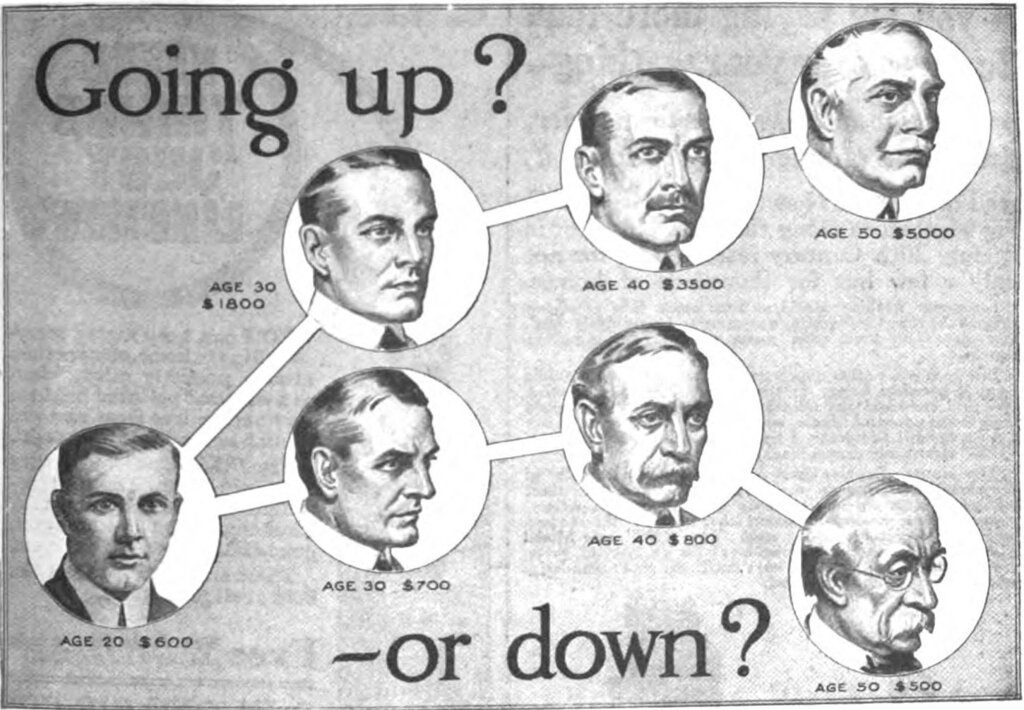
While the world of lifetime employment has largely vanished, the ideas that powered it have not. They persist as — the unconscious beliefs we hold about what a career should look like. These are the internal rules we follow, often without realising they are choices.
Common invisible scripts about work include:
- You must use your degree in your career.
- You should always be aiming for the next promotion.
- Changing jobs more than every two years looks bad on a CV.
- Success means earning more money and having a better title.
The Problem with the Script
Following these scripts often leads to what is called 'legible success'. Your job title, salary, and company are easily understood and respected by others. It looks good on paper and sounds impressive at parties. You've checked all the boxes.
The problem is that legible success can come at the cost of personal aliveness. There's often a quiet tension between the career that earns external approval and the work that brings genuine meaning and energy. This disconnect is the core weakness of the Default Path. It optimises for society's definition of success, not your own.
Recognising this tension is the first step toward finding an alternative. Paul Millerd's counter-proposal is the '', a framework for designing a work life based on curiosity and personal definition of success, rather than following a predetermined script. It’s about consciously choosing your direction, one step at a time.
Millerd therefore urges readers to explore the "Pathless Path" and develop a more conscious, individual relationship with work and life, rather than relying on the random meanings of the past.
Before we explore how to build your own path, let's test your understanding of the scripts that might be holding you back.
What is the core idea behind the 'Default Path' as described in the text?
The concept of the 'Organization Man' emerged in the post-World War II era, based on an exchange of lifelong loyalty for what?
Understanding the origins and limitations of the Default Path is crucial. It allows you to see the script for what it is: one option among many, not the only way forward.