Navigating the Indian Stock Market
Introduction to Indian Stock Market
The Two Giants of Indian Trading
At its heart, a stock market is a marketplace, but instead of fruits and vegetables, people buy and sell tiny pieces of companies called shares. In India, two main marketplaces dominate this activity: the Bombay Stock Exchange (BSE) and the National Stock Exchange (NSE).
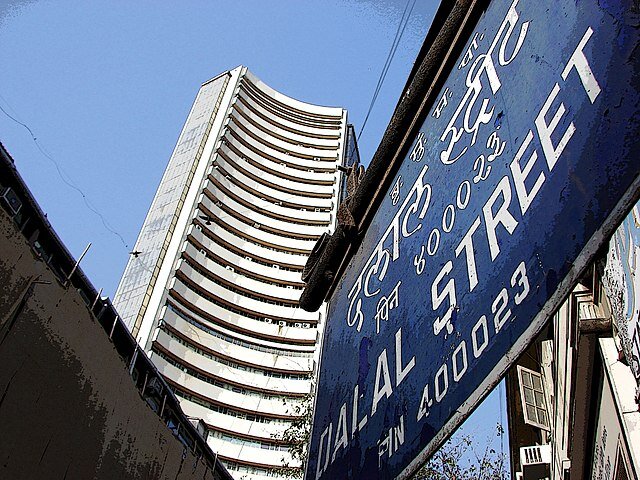
The Bombay Stock Exchange (BSE) is one of the oldest stock exchanges in Asia and is located in Mumbai, India.
Established in 1875, the BSE is not just India's oldest stock exchange, but Asia's as well. It's located on Dalal Street in Mumbai, a name that has become synonymous with the Indian stock market itself. For decades, it was the primary place where Indian companies raised money by selling shares to the public.
The other major player is the National Stock Exchange, or NSE. It was established much more recently, in 1992. The NSE was a game-changer because it introduced a modern, fully automated, screen-based trading system across the country. This made trading more accessible, efficient, and transparent for investors everywhere, not just in Mumbai.
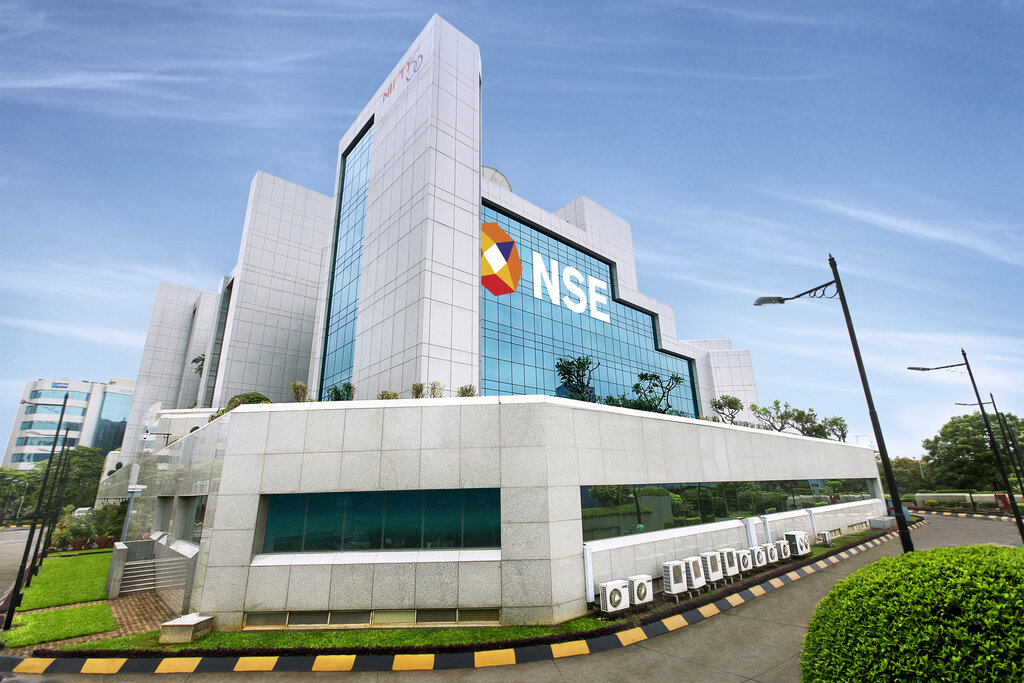
Today, most of India's largest and most significant companies are listed on both the BSE and the NSE. This allows investors to buy and sell their shares on either exchange.
Taking the Market's Temperature
How do we know if the stock market is having a good day or a bad one? With thousands of companies listed, tracking each one is impossible. Instead, we use a stock market index, which is like a quick snapshot of the market's overall performance. An index tracks a select group of top stocks to give a general sense of the market's direction.
Each of India's major exchanges has its own flagship index.
The BSE's benchmark index is the SENSEX. The name is a blend of the words "Sensitive" and "Index." It tracks the performance of 30 of the largest and most actively traded stocks listed on the BSE, representing various sectors of the Indian economy.
The NSE's benchmark index is the NIFTY 50. As the name suggests, it is made up of 50 of the largest and most liquid Indian stocks. Like the SENSEX, it provides a broad view of how the market is performing.
When you hear news reports saying "the market is up" or "the market is down," they are usually referring to the performance of these two indices. If the SENSEX and NIFTY 50 are rising, it generally means the stocks of India's biggest companies are doing well, and investor confidence is high. If they are falling, it suggests the opposite.
The Rule Makers
A busy marketplace needs rules to ensure everything runs smoothly and fairly. In the Indian stock market, two key bodies set and enforce these rules: the Securities and Exchange Board of India (SEBI) and the Reserve Bank of India (RBI).
Think of SEBI as the primary referee for the stock market. Its main job is to protect the interests of investors. SEBI sets the rules for stock exchanges, stockbrokers, and all companies that sell shares to the public. It works to prevent fraud and ensure that the market is fair and transparent for everyone involved.

The Reserve Bank of India (RBI) is the country's central bank. While it doesn't regulate the stock market directly in the same way SEBI does, its influence is enormous. The RBI controls the country's money supply and sets key interest rates. Its decisions can affect how much money people have to invest, the cost of borrowing for companies, and overall economic growth, all of which have a major impact on stock prices.
Together, these exchanges, indices, and regulators form the backbone of the Indian stock market, creating a structured environment for buying and selling shares.