Navigating the Dark Web
Introduction to the Internet
An Ocean of Information
When you browse the web, you're only seeing a tiny fraction of what's out there. The internet is often compared to an ocean or an iceberg. Most of it is hidden from plain view, existing in layers below the surface that you interact with every day.
Let's break down these different layers: the surface web, the deep web, and the dark web. Understanding them is key to knowing how the internet is actually structured.
The Surface Web is the visible, searchable part of the internet. It's everything that search engines like Google or Bing can find and index. When you read the news, shop on an e-commerce site, or watch a video on YouTube, you are on the surface web. It’s the portion of the iceberg that sticks out of the water.
Think of the surface web as the public library of the internet. Anyone can walk in and browse the shelves.
Beneath the surface lies the Deep Web. This is the largest part of the internet by far. It consists of all the web pages that search engines can't find. This isn't because they are secret or illegal, but because they are protected behind a password, a paywall, or simply aren't linked to from other sites.
Your email inbox, online banking portal, private social media profiles, and subscription-based content like Netflix are all part of the deep web. You access it every day without thinking about it. You need a specific login or a direct URL to get there.
Finally, there's the Dark Web. It's a small, specific part of the deep web that is intentionally hidden and requires special software to access. The most common tool is The Onion Router, or Tor. The dark web is designed for maximum anonymity, masking who you are and where you are connecting from. While it has legitimate uses for journalists and activists in repressive countries, it's also notorious for illegal activities.
Rules of the Road
For all these layers to work, computers need a shared set of rules to communicate. These rules are called protocols. The two most fundamental are the Transmission Control Protocol (TCP) and the Internet Protocol (IP).
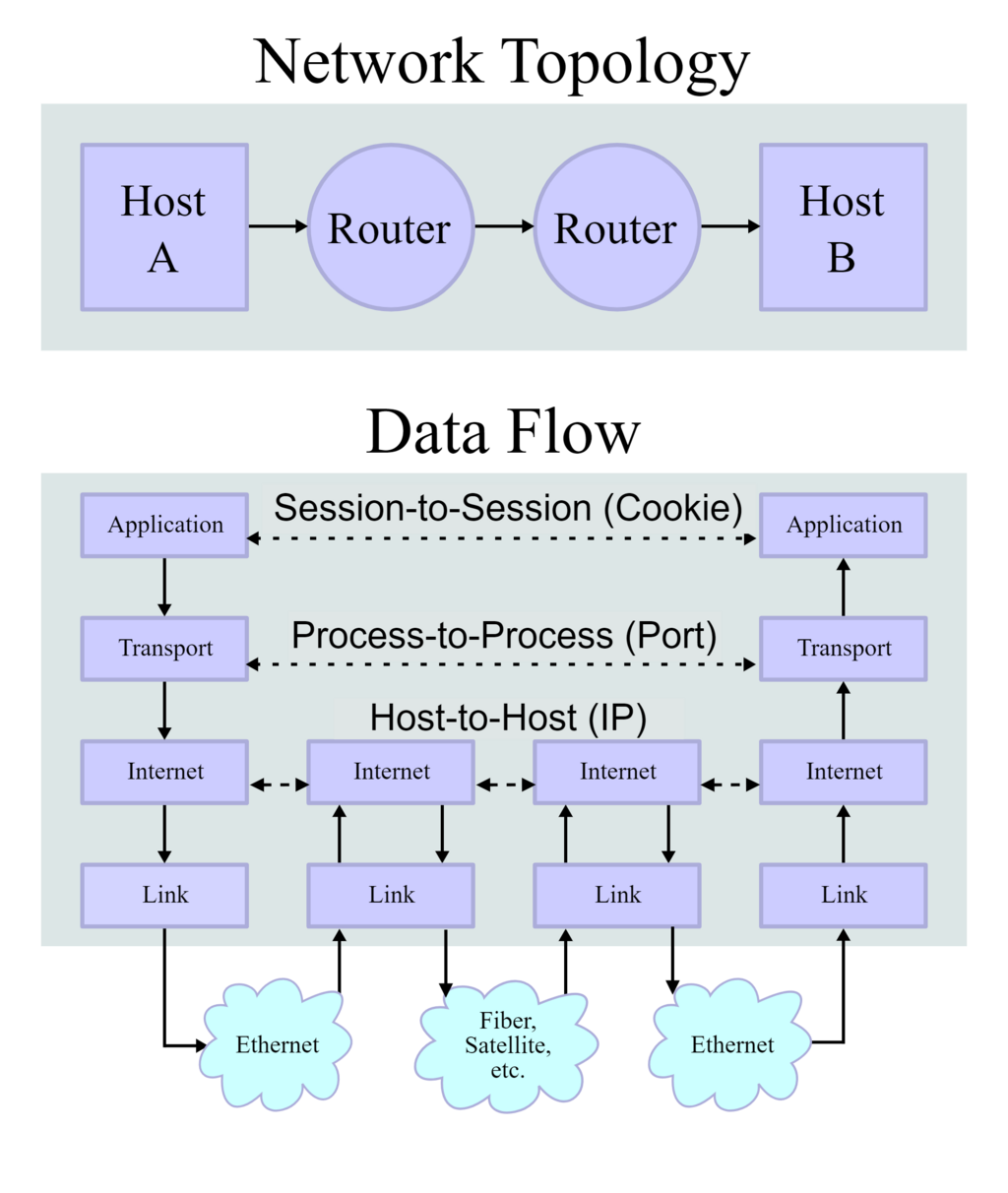
Think of sending a large book through the mail. You wouldn't send it all in one giant box. Instead, you'd break it into smaller packets, maybe sending one chapter at a time. This is what TCP does. It breaks down data into smaller chunks called packets on the sender's end and reassembles them in the correct order on the receiver's end.
IP is like the postal service. Each packet gets a destination address (an IP address) so it knows where to go. Routers across the internet act like mail carriers, looking at the IP address and forwarding the packet along the best path toward its final destination.
Together, TCP/IP ensures that data gets from your computer to its destination reliably and in the right order.
But how does your computer know the IP address for google.com? That's where the Domain Name System (DNS) comes in. DNS is the internet's phonebook. It translates the human-friendly domain names we type into our browsers into the numerical IP addresses that computers use to find each other.
So, whether you're on the surface or deep web, these core protocols are working behind the scenes, making sure your requests find their way across the vast, layered network of the internet.