Navigating College Financial Aid
Understanding Financial Aid
Paying for College
The price tag on a college education can seem intimidating, but very few students pay the full sticker price. Financial aid is money provided to students and their families to help pay for college. Its purpose is to bridge the gap between what college costs and what you can afford to pay.
Think of it as a toolkit. Just as you'd use different tools for different jobs, there are different types of financial aid designed to meet various needs. Understanding these tools is the first step toward making higher education affordable.
The Four Types of Aid
Financial aid isn't a single thing; it's a package that can be made up of several different components. A helpful way to think about them is to categorize them by whether you have to pay the money back.
When a school sends you a financial aid offer, you'll want to look for free money first (scholarships and grants), earned money second (work-study programs), and borrowed money last (federal student loans).
Let's break down each of these categories.
Grants and Scholarships are often called "gift aid" because they are free money that you do not have to repay. Grants are typically need-based, meaning they're awarded based on your family's financial situation. Scholarships, on the other hand, can be awarded for all sorts of reasons: academic achievement, artistic talent, athletic skill, community service, or your field of study.
Work-Study is earned money. If you're awarded work-study, you'll get a part-time job, often on campus, to help pay for your educational expenses. The money isn't applied directly to your tuition bill; you receive a paycheck for the hours you work, just like any other job.
Loans are borrowed money that you must pay back, with interest. While this might sound daunting, student loans are a common way to finance an education. It's important to understand the terms of any loan you take out. Federal loans, offered by the government, generally have more flexible repayment options and lower interest rates than private loans from banks.
Where Aid Comes From
Financial aid comes from a variety of sources. The largest provider is the federal government, which offers grants, work-study, and loans.
State governments also have their own financial aid programs. These are often restricted to residents attending a college within that state.
Colleges and universities themselves are a major source of aid. They offer their own scholarships and grants to attract a diverse and talented student body. This is often called institutional aid.
Finally, private organizations like corporations, foundations, and community groups offer thousands of different scholarships. These often require a separate application and can be very competitive, but they are worth exploring.
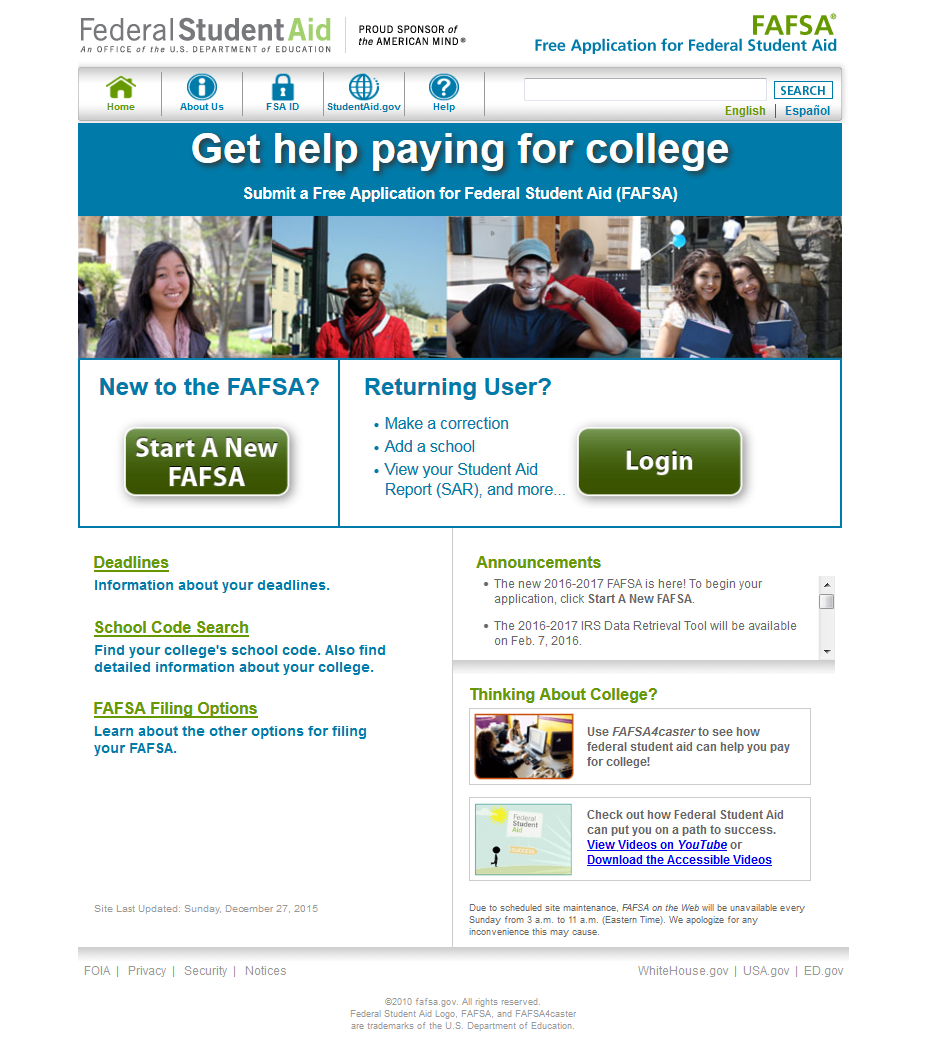
So how do you access all this potential funding? For most students, the journey starts with one form.
The Free Application for Federal Student Aid, or FAFSA, is the key that unlocks most financial aid.
This single application collects information about your family's finances to determine your eligibility for federal aid. But its reach goes much further. Most state governments and many colleges use the information from your FAFSA to determine how much of their own aid you can receive. Filling it out, even if you don't think you'll qualify for need-based aid, is a crucial step for nearly every college-bound student.
Now, let's test your understanding of these core financial aid concepts.
What is the main purpose of financial aid?
Which of the following are considered "gift aid" because they do not need to be repaid?
Understanding these building blocks is the first major step in navigating the process of paying for your education.