Natural Language Processing Systems
Advanced Embedding Strategies
Beyond One Word, One Vector
Representing text numerically is the foundation of modern natural language processing. While simple methods can count words, they don't capture a word's meaning or its relationship to other words. This is where embeddings come in. They are dense vectors that position words in a high-dimensional space, where similar words are closer together. For years, the standard was static embeddings, where each word gets a single, fixed vector.
One of the most popular static models is Word2Vec. It uses a shallow neural network to learn word associations from a large corpus of text. It comes in two main flavors: Continuous Bag-of-Words (CBOW), which predicts a target word from its surrounding context words, and Skip-gram, which does the opposite by using a current word to predict its neighbors. Both are prediction-based and computationally efficient, making them excellent for training on specialized, domain-specific vocabularies.
For example, in a medical corpus, Word2Vec can learn that 'atrial' and 'ventricular' are semantically close because they frequently appear near words like 'fibrillation' and 'tachycardia'.
Another popular approach is , which stands for Global Vectors. Unlike the prediction-based Word2Vec, GloVe is a count-based model. It constructs a large co-occurrence matrix that records how frequently each pair of words appears together in the corpus. Then, it uses factorization to distill this massive matrix down into lower-dimensional word vectors. The core idea is that the ratio of co-occurrence probabilities can encode meaning.
Handling Unknown Words
A major weakness of Word2Vec and GloVe is their fixed vocabulary. If a word appears during use that wasn't in the training data, the model has no vector for it. This is the out-of-vocabulary (OOV) problem. It’s a common issue when dealing with misspellings, slang, or highly specialized terminology.
FastText, developed by Facebook's AI Research lab, provides an elegant solution. It treats each word not as a single unit, but as a bag of character . For example, the word "apple" with n=3 would be broken into <ap, app, ppl, ple, le>, plus the full word itself <apple>.
By learning vectors for these smaller parts, FastText can generate a vector for any word, even ones it has never seen. This makes it highly effective for user-generated content or languages with complex word formations.
Context Is Everything
Static embeddings have a fundamental limitation: they assign the same vector to a word regardless of its context. But language is ambiguous. The word "bank" means very different things in "I sat on the river bank" versus "I need to go to the bank."
This is where contextual embeddings, powered by Transformer architectures like BERT, represent a major leap forward.
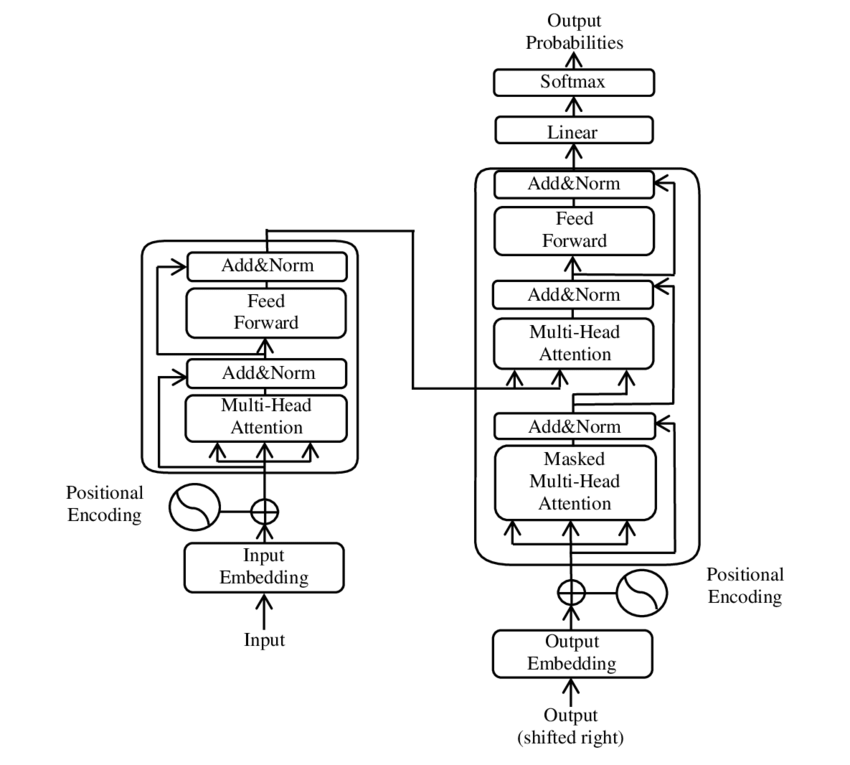
(Bidirectional Encoder Representations from Transformers) reads the entire sequence of words at once, using a self-attention mechanism to understand how all the words in a sentence relate to one another. Because it looks in both directions (left and right), its understanding is truly bidirectional.
As a result, BERT generates a different embedding for "bank" in each of the example sentences, capturing the specific meaning intended by the context. This dynamic, context-aware representation is far more powerful and nuanced than a single static vector.
Contextualized embeddings, exemplified by BERT, consider the context in which words appear.
Choosing the Right Tool
With great power comes great computational cost. BERT and other large transformer models are massive, requiring significant memory and processing power. This creates a crucial trade-off between performance and practicality.
In a real-world application with strict latency requirements, like real-time bidding or on-device translation, a heavy model like BERT might be too slow. A lightweight model like FastText could be a much better choice. It's faster, uses less memory, and its ability to handle OOV words is a significant advantage in messy, real-world text.
| Model | Type | Handles OOV? | Contextual? | Size / Latency |
|---|---|---|---|---|
| Word2Vec | Static (Prediction) | No | No | Small / Low |
| GloVe | Static (Count) | No | No | Small / Low |
| FastText | Static (Subword) | Yes | No | Small / Low |
| BERT | Dynamic (Transformer) | Yes | Yes | Large / High |
Choosing an embedding strategy isn't about always picking the newest, largest model. It's about understanding the architectural trade-offs and matching the tool to your specific constraints, whether they involve a low-resource language, a highly specialized domain, or the need for millisecond response times.