Natural Gas Processing and Field Monitoring
Introduction to Natural Gas Processing
From Wellhead to Burner Tip
Natural gas is a fossil fuel that forms deep beneath the earth's surface. When it's extracted from a well, it's called raw natural gas. But this raw gas isn't what gets piped into your home to fuel your stove or furnace. It's more like a cocktail of different gases and impurities that needs to be cleaned up first.
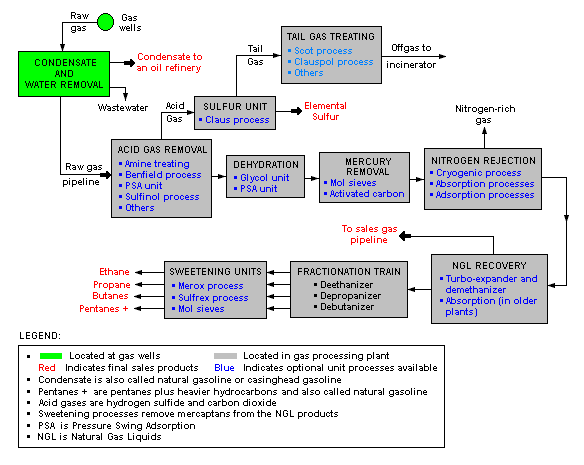
Think of it like getting coffee beans from a plant. You can't just pick them and brew a cup. They need to be processed, cleaned, shelled, and roasted. Similarly, raw natural gas goes on a long journey through a series of complex facilities before it's ready for use. This entire journey is the natural gas processing industry, a critical link between the gas well and the end consumer.
What's in Raw Natural Gas?
The exact composition of raw natural gas varies from well to well, but it's always a mix of valuable hydrocarbons and unwanted contaminants. The main ingredient, and the one we're usually after, is methane.
Methane
noun
The simplest hydrocarbon, consisting of one carbon atom and four hydrogen atoms (). It is the primary component of natural gas.
Along with methane, raw gas contains other valuable hydrocarbons known as Natural Gas Liquids, or NGLs. These are heavier than methane and are separated out during processing to be sold as separate products. They include ethane, propane, and butanes.
Here’s a quick look at these key hydrocarbons and what they're used for:
| Hydrocarbon | Formula | Common Uses |
|---|---|---|
| Methane | Fuel for heating, cooking, electricity generation | |
| Ethane | Feedstock for plastics production (ethylene) | |
| Propane | Grilling, home heating, vehicle fuel (LPG) | |
| Butanes | Lighter fluid, blending into gasoline, refrigerant |
Besides these useful components, raw gas also contains a number of impurities that must be removed:
Water Vapor (): Almost all raw gas is saturated with water.
Acid Gases: This group includes hydrogen sulfide () and carbon dioxide (). Gas with high levels of is called "sour gas."
Nitrogen (): A non-combustible gas that reduces the heating value of the final product.
Other Contaminants: Trace amounts of helium, mercury, and other substances can also be present.
Why Processing Matters
Processing isn't just about purifying the gas; it's about safety, efficiency, and meeting strict quality standards. Each component removed has a specific reason for its removal. If left in, these impurities would cause significant problems in the vast network of pipelines that transport gas across the country.
Water vapor is a major culprit. Under the high pressure and low temperatures inside pipelines, water can freeze and form solid, ice-like structures called hydrates. These can plug a pipeline completely, stopping the flow of gas.
Acid gases like hydrogen sulfide and carbon dioxide are corrosive, especially when water is present. They can eat away at the metal of pipelines and equipment, leading to dangerous leaks. is also extremely toxic, even at low concentrations.
Finally, non-combustible gases like nitrogen and carbon dioxide dilute the natural gas. This lowers its heating value, meaning you’d have to burn more of it to get the same amount of heat. Pipeline companies have strict specifications for the minimum heating value of the gas they transport.
The goal of processing is twofold: remove impurities to create pipeline-quality dry gas (methane) and separate out the valuable NGLs for sale.
By the time natural gas reaches your home, it's almost pure methane, ready to burn cleanly and efficiently. The complex processing it undergoes ensures it can be transported safely over thousands of miles and used reliably by millions of people.
What is the primary component of the natural gas that is ultimately delivered to a consumer's home?
Why must water vapor be removed from raw natural gas before it enters long-distance pipelines?