Nathaniel Hawthorne's Literary World
Introduction to Nathaniel Hawthorne
The Man from Salem
Nathaniel Hawthorne was a central figure in the American literary scene of the 19th century. Born in 1804 in Salem, Massachusetts, his life and work were deeply intertwined with New England's Puritan past. One of his ancestors was John Hathorne, a judge during the infamous Salem witch trials who never repented for his actions. This ancestral connection haunted Hawthorne and became a powerful engine for his writing, which often explores themes of sin, guilt, and hypocrisy.
Hawthorne's father, a sea captain, died when Nathaniel was only four. He grew up in a household of women, living a relatively isolated childhood. For college, he attended Bowdoin College in Maine, where his classmates included the future poet Henry Wadsworth Longfellow and Franklin Pierce, who would later become the 14th President of the United States.
Finding His Voice
After graduating in 1825, Hawthorne returned to his mother’s home in Salem. He spent the next twelve years in relative seclusion, a period he called his "solitary years." During this time, he dedicated himself to learning the craft of writing. He read widely and wrote countless stories, many of which he later burned, judging them unworthy.
Slowly, he began to publish short stories in magazines and literary annuals. These early works were collected in his first successful book, Twice-Told Tales, published in 1837. The stories were not immediate bestsellers, but they earned him respect in literary circles for their psychological depth and masterful style.
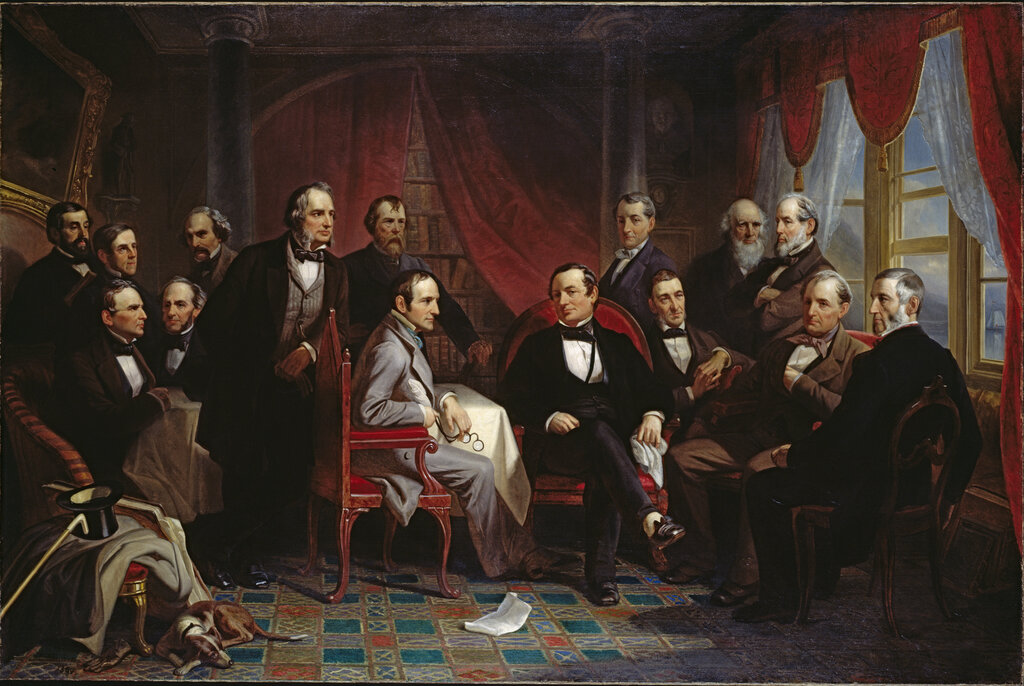
To support himself, he worked at the Boston Custom House and later invested in a utopian community called Brook Farm, though he quickly grew disillusioned with communal living. His experiences, however, provided rich material for his later work.
Major Works and Significance
Hawthorne’s breakthrough came in 1850 with the publication of The Scarlet Letter. The novel, a powerful story of adultery, guilt, and social judgment in a Puritan community, was an immediate success and secured his fame. He followed it with other significant novels, including The House of the Seven Gables (1851) and The Blithedale Romance (1852).
Hawthorne's writing is a cornerstone of American Romanticism, but he represents a darker, more skeptical branch of the movement, often called Dark Romanticism. Unlike contemporaries such as Ralph Waldo Emerson, who saw divinity in nature and human potential, Hawthorne focused on the darker side of human nature.
His work is celebrated for its deep psychological exploration and its use of symbolism and allegory. He delved into the complexities of the human heart, examining the hidden motivations and moral conflicts that lie beneath the surface of everyday life. His focus on America's Puritan roots helped shape the nation's literary identity, providing a critical look at its past that continues to resonate.
Ready to check your understanding of Hawthorne's life and legacy?
What historical event, involving one of his own ancestors, deeply influenced Nathaniel Hawthorne's writing and its recurring themes of sin and guilt?
Which of these works was Hawthorne's first commercially successful book and a collection of his early short stories?
Hawthorne's influence is still felt today, as writers and readers continue to grapple with the complex questions of morality and the human condition that he so masterfully explored.