NASM Corrective Exercise Specialist Certification Prep
Introduction to Corrective Exercise
Why Corrective Exercise?
Think of your body like a car. For it to run efficiently and last a long time, the wheels need to be properly aligned. If they're not, you might not notice a problem right away. But over time, the tires wear down unevenly, and other parts of the car start to feel the strain. The car still drives, but it's not working as well as it could, and a breakdown becomes more likely.
Corrective exercise is like a wheel alignment for your body. It's a systematic approach to identifying and fixing movement imbalances or dysfunctions. The goal isn't just to treat pain after it starts, but to improve your overall movement quality. This reduces the risk of future injuries and helps you perform better, whether you're lifting weights, running a marathon, or just carrying groceries.
It's about moving better to feel better, preventing problems before they begin.
The Science of Movement
To understand corrective exercise, we need to look at human movement science. This field studies how and why the body moves. A core principle is the concept of the kinetic chain. This idea treats the body as a system of linked segments, where movement in one segment affects the others. Your feet, ankles, knees, hips, and spine are all connected.
Imagine a chain. If you pull on one link, the whole chain moves. Similarly, if one part of your body isn't moving correctly, it can cause problems up or down the chain. For example, weak hip muscles might cause your knees to cave inward when you squat, which could eventually lead to knee pain. This is called a movement compensation—when the body finds a less-than-ideal way to complete a task because of a weakness or imbalance somewhere else.
Human movement science draws on several disciplines:
- Biomechanics: The study of the mechanical laws relating to the movement of living organisms.
- Neuromuscular Control: How the brain and nervous system coordinate muscle actions to produce movement.
- Motor Learning: The process of acquiring and refining motor skills.
Together, these fields help us understand the ideal way for the body to move and identify where things might be going wrong.
Integrating Science into Training
Corrective exercise isn't about just stretching tight muscles or strengthening weak ones at random. It's a strategy that integrates these scientific principles into a practical, step-by-step process.
First, a professional will assess your movement patterns to identify any compensations or imbalances. This could involve watching you perform basic movements like a squat, a lunge, or a push-up. They're looking for those subtle signs that the kinetic chain isn't working optimally, like a hip dropping during a single-leg stance or shoulders rounding forward.
Once the issue is identified, a specific plan is created. This plan typically involves a combination of techniques:
- Inhibit: Using techniques like foam rolling to release tension in overactive muscles.
- Lengthen: Stretching to improve flexibility and range of motion.
- Activate: Performing specific exercises to strengthen underactive muscles.
- Integrate: Practicing compound movements that reinforce the new, correct movement pattern.
This process retrains your body. It teaches the nervous system to use the right muscles at the right time, creating more efficient and safer movement.
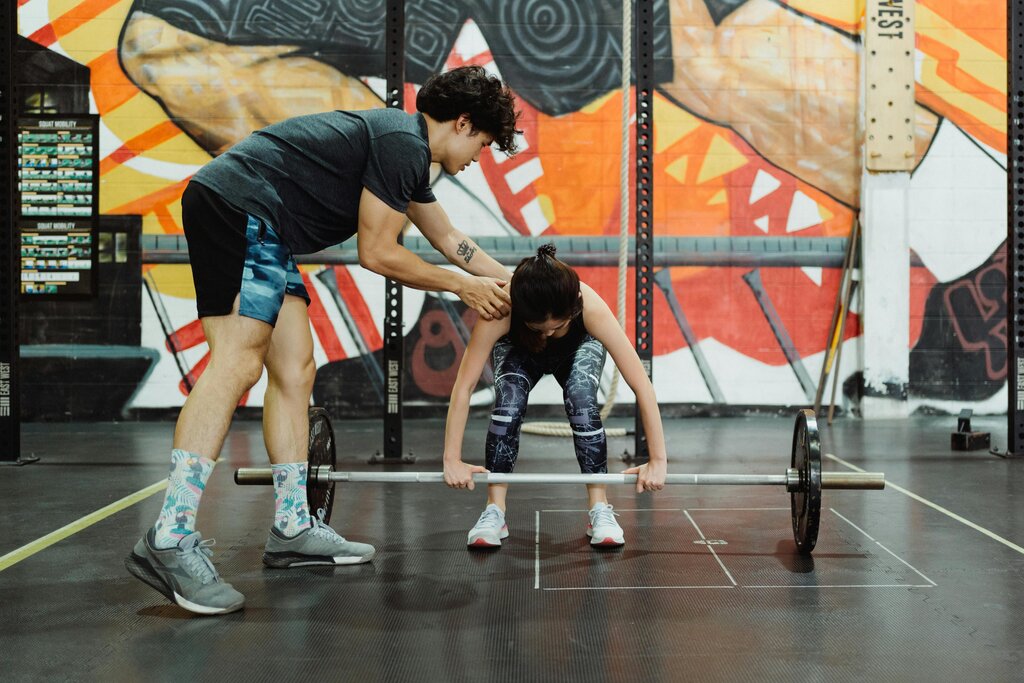
By following this structured approach, corrective exercise bridges the gap between scientific principles and real-world training. It helps you build a solid foundation of quality movement, which is essential for achieving any fitness goal and staying healthy for the long term.
Proper technique in foundational movements builds a strong base and prevents injury.
Ready to check your understanding of these core ideas?
The text compares corrective exercise to a 'wheel alignment for your body'. What is the primary purpose of this analogy?
According to the principle of the kinetic chain, why might weak hip muscles lead to knee pain?
Understanding these foundations is the first step toward better movement. By focusing on quality over quantity, you can build a more resilient and capable body.